
 Pakistan’s leaders hail first astronaut aboard Chinese craft: ‘Proud one of us has gone into space’
 British tourist travels 29 hours from Mumbai to Amritsar for ₹5,461, rates Indian Railways 10/10 | Viral video
 The Supreme Court will decide whether assault weapons bans violate the Second Amendment
 A Critic of Beijing Falls Short in Taiwan’s Key Mayoral Election
 EPA says no rise in contamination after Army detonates lead azide stockpile in Iowa
Indian Railways launches weekly Janakpur–Ayodhya
**
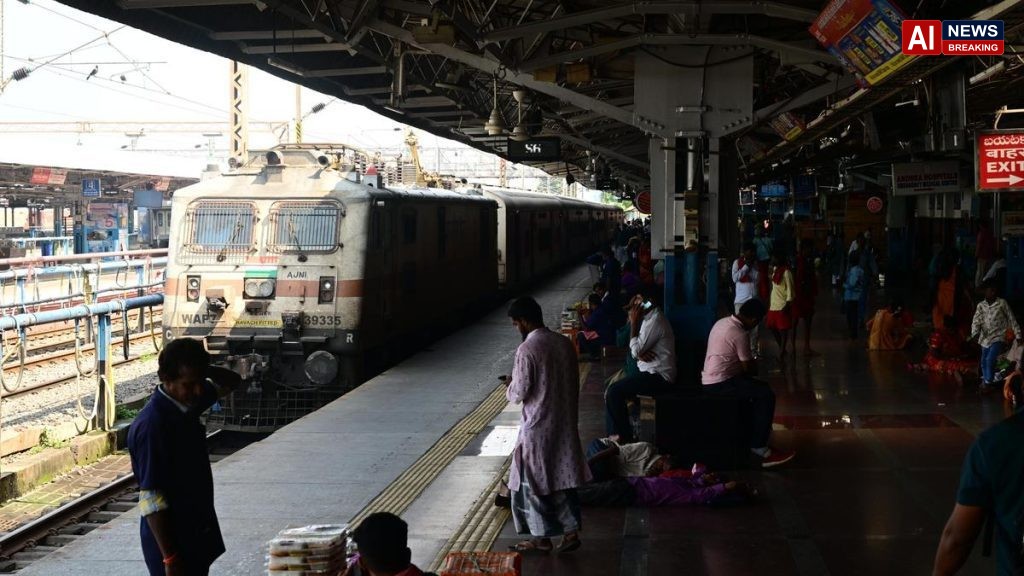
Indian Railways to connect Nepal’s Janakpur Dham with Ayodhya through weekly train service - AI News Breaking
Indian Railways has announced a new weekly train service that will link Nepal’s holy city of Janakpur Dham with Ayodhtha Dham in Uttar Pradesh, India, marking a significant step in cross‑border connectivity and religious tourism. The service, scheduled to commence later this year, will operate under a bilateral agreement between the governments of India and Nepal and will be the first regular passenger train to traverse the Indo‑Nepal border on this specific route. Officials say the initiative reflects a broader strategy to deepen people‑to‑people ties and boost economic interaction in the region..
The train will originate from Janakpur Dham, a revered pilgrimage site associated with the Hindu goddess Sita, and travel through a series of Indian towns before terminating at Ayodhya Dham, the birthplace of Lord Rama. Along the way it will make scheduled stops at Jaynagar, Madhubani, Shisho, Sitamarhi, Raxaul, Narkatiaganj, Gorakhpur, Basti and Mankapur, providing residents of these districts with direct access to two of the subcontinent’s most important religious destinations. The service will run once a week, with departure and arrival times coordinated to accommodate both pilgrim traffic and local commuters..
Transport ministers from both countries attended a joint press conference in Kathmandu last week, where they highlighted the symbolic and practical importance of the link. “This train is more than a mode of transport; it is a bridge that unites cultures, economies and families separated by a border,” said Indian Railway Minister Ashwini Vaishnaw. Nepalese Transport Minister Bina Magar echoed the sentiment, noting that the route will also facilitate trade in perishable goods, textiles and agricultural produce, given the short transit time and reduced logistics costs..
Infrastructure upgrades are already underway on both sides of the border to accommodate the new service. Indian Railways has allocated funds to refurbish the tracks between Gorakhpur and Ayodhya, installing modern signalling systems and improving station amenities. In Nepal, the Janakpur railway station is being expanded to include additional platforms, customs facilities and a waiting lounge designed for international travelers..
Both governments have pledged to ensure that security checks are streamlined, allowing passengers to clear immigration formalities within an hour of arrival at either terminal. The weekly train will be operated by Indian Railways’ North Eastern Railway zone, using a modern LHB (Linke Hofmann Busch) rake equipped with air‑conditioned coaches, sleeper berths and a pantry car offering regional cuisine. Seats will be allocated in three classes – AC 2‑tier, AC 3‑tier and sleeper – with fare structures designed to be affordable for pilgrims and tourists alike..
Ticket sales are expected to open three months before the inaugural run, and authorities have promised an online booking platform that will accept both Indian rupees and Nepalese rupees. Economic analysts predict that the new connection will generate a measurable boost to the local economies of the intermediate towns. Jaynagar and Raxaul, already bustling market hubs, are likely to see increased footfall from travelers purchasing local handicrafts, spices and textiles..
Small‑scale vendors at each stop have been encouraged to register with railway authorities to set up stalls within station premises, creating micro‑enterprise opportunities and formalising informal trade networks that have long existed along the border. Cultural scholars also see the train as a catalyst for deeper intercultural exchange. Janakpur and Ayodhya share mythological narratives that are central to Hindu tradition, and the ease of travel may encourage joint festivals, academic conferences and heritage projects..
Universities in both countries have expressed interest in organising exchange programmes for students of history, archaeology and religious studies, taking advantage of the convenient rail link to conduct fieldwork in each other’s historic sites. Environmental considerations have been factored into the project’s planning stage. The railway line will employ energy‑efficient locomotives that meet Indian Railways’ emissions reduction targets, and the route has been surveyed to minimise disruption to wildlife corridors in the Terai region..
NGOs monitoring the project have called for continuous impact assessments, urging authorities to mitigate any potential harm to riverine ecosystems that the train will cross, particularly near the Gandak and Koshi rivers. While the initiative has garnered widespread support, some logistical challenges remain. Customs and immigration procedures for a cross‑border passenger train are more complex than for domestic services, requiring coordinated staffing and shared databases between the two nations..
Additionally, seasonal flooding in the flood‑plains of northern Bihar could affect track stability, prompting engineers to reinforce embankments and install advanced drainage systems. Both governments have pledged to address these issues promptly to ensure uninterrupted service. Local communities have reacted with optimism, seeing the train as a lifeline that could reverse years of economic stagnation..
In a recent survey conducted by the Madhubani district administration, over 78 % of respondents indicated that the weekly service would improve access to education and healthcare facilities located in larger cities such as Gorakhpur and Ayodhya. Similarly, residents of Sitamarhi expressed hope that the train would provide a reliable transport option for students traveling to universities in Uttar Pradesh. The inauguration ceremony is slated for early December, with senior officials from both nations expected to board the inaugural run..
The event will be attended by religious leaders, business representatives and members of the diaspora, underscoring the train’s multi‑dimensional significance. Media coverage is anticipated to be extensive, with live broadcasts planned on national television channels in both countries, highlighting the symbolic journey from Janakpur’s ancient temples to Ayodhya’s newly rebuilt Ram Temple complex. If successful, the Janakpur–Ayodhya weekly train could serve as a template for future.
Updated: November 14, 2026
Indian Railways will launch a weekly train linking Janakpur Dham in Nepal with Ayodhya Dham in India later this year, a move aimed at boosting pilgrimage traffic and cross‑border trade. The service, running under a bilateral agreement, will stop at key towns such as Raxaul and Gorakhpur, offering a new conduit for cultural exchange and regional economic development.






