
 Pakistan’s leaders hail first astronaut aboard Chinese craft: ‘Proud one of us has gone into space’
 British tourist travels 29 hours from Mumbai to Amritsar for ₹5,461, rates Indian Railways 10/10 | Viral video
 The Supreme Court will decide whether assault weapons bans violate the Second Amendment
 A Critic of Beijing Falls Short in Taiwan’s Key Mayoral Election
 EPA says no rise in contamination after Army detonates lead azide stockpile in Iowa
Tantri does not have ownership of assets belonging to deity, says Kerala HC
**
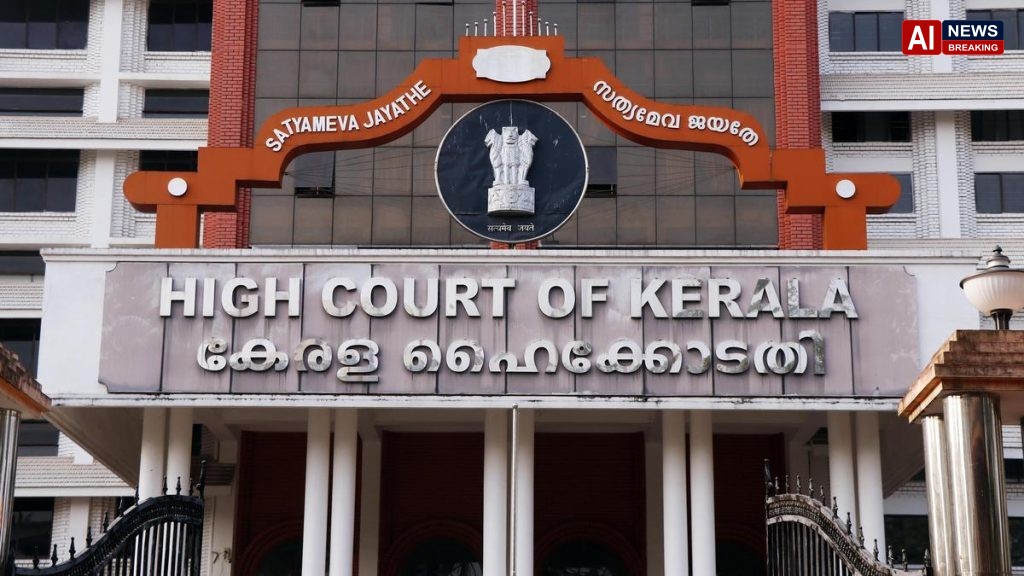
Tantri does not have ownership of assets belonging to deity, says Kerala HC - AI News Breaking
tantri does have ownership:
The Kerala High Court on Monday delivered a detailed judgment in a case that has drawn the attention of religious scholars, legal experts and the wider public, ruling that a temple tantri – the priest responsible for performing rituals – does not have ownership rights over assets that belong to the deity. The bench, comprising Justice R. Sankar and Justice P. S. Jain, examined the distinction between the authority to conduct and supervise religious ceremonies and the legal ownership of temple property, concluding that the two are not interchangeable.The dispute originated in the historic Sree Mahadeva Temple at Thrissur, where a group of devotees alleged that the incumbent tantri, V. Madhavan Namboothiri, had been exercising control over temple lands, cash reserves and valuable ornaments in a manner that exceeded his ritual responsibilities. The petitioners claimed that the tantri’s actions, which included leasing temple land to private entities and authorising the sale of gold ornaments, amounted to an unlawful appropriation of assets that, under Hindu law, are held in trust for the deity and ultimately for the worshippers..
The case was initially filed in the district court, which dismissed the petition on the grounds that the tantri’s role inherently included such powers. The appellants then approached the High Court, seeking a definitive clarification of the legal status of temple property.In its judgment, the court referred to a body of jurisprudence that has evolved over decades, tracing the legal concept of “deity as a juristic person” back to the landmark 1958 Supreme Court decision in the case of Sri Venkateswara Swamy Temple v. Muthyalu. That ruling established that a deity can be treated as a legal entity capable of owning property, with the temple trustees acting as its “soul trustees.” The High Court reaffirmed this principle, noting that while the tantri is entrusted with the spiritual stewardship of the temple, the management of its material assets is a separate function that must be carried out by legally appointed trustees or a board of management recognised under the Kerala Hindu Places of Worship (Administration) Act, 2008.Justice Sankar highlighted that the tantri’s responsibilities are confined to the performance of puja, rites of passage, and the supervision of ritual purity, duties that are rooted in centuries‑old customs and theological doctrine..
“The authority to invoke the divine and to ensure that rites are conducted in accordance with scriptural injunctions does not, by itself, confer any right to alienate, lease or otherwise dispose of the deity’s property,” the judgment read. The bench warned that conflating religious authority with property rights could lead to the misuse of sacred assets and erode the fiduciary safeguards that protect communal heritage.The court also examined the statutory framework governing temples in Kerala, particularly the provisions that mandate the establishment of a management committee composed of elected members, government appointees and representatives of the local community. These committees are charged with overseeing the administration of temple lands, finances and charitable activities, and they are required to maintain transparent accounts that are subject to audit by the State’s Department of Hindu Religious Affairs..
The judges noted that the tantri’s role, while revered, does not automatically place him within this administrative structure, and any attempt to bypass the committee’s authority would be inconsistent with the law.In a crucial segment of the judgment, the bench addressed the argument put forward by the defence that the tantri’s involvement in financial decisions was based on historical precedent, wherein priests traditionally managed temple wealth to fund festivals and charitable works. The court acknowledged the historical context but emphasized that contemporary legal standards demand clear demarcation between religious duties and secular administration. “Customary practice cannot override statutory obligations,” Justice Jain wrote..
“Where the law prescribes a specific governance model, adherence to that model is essential for accountability and the protection of public interest.”The decision has immediate practical implications for the Sree Mahadeva Temple. The court ordered that all transactions undertaken by the tantri in his personal capacity be reviewed by the temple’s board of trustees, and it directed the State’s Department of Hindu Religious Affairs to conduct an audit of the temple’s assets within three months. Any irregularities identified are to be rectified, with the possibility of restitution to the temple’s coffers..
The tantri was also instructed to refrain from entering into any further agreements concerning temple property until the audit is completed and the board gives explicit approval.Legal commentators have welcomed the ruling as a reinforcement of the principle that religious institutions must operate within a transparent and accountable framework, especially when they manage substantial economic resources. Professor K. Ramanathan of the National Law School of India, New Delhi, noted that the judgment “clarifies the boundary between spiritual leadership and property management, which has often been a grey area in Indian jurisprudence.” He added that the decision could serve as a precedent for similar disputes across the country, where temples and other places of worship are increasingly being scrutinised for financial irregularities.The verdict also resonates with broader societal debates on the role of religion in public life. Activists advocating for greater oversight of religious institutions have long argued that the lack of clear governance structures creates opportunities for corruption and mismanagement..
While the court’s ruling stops short of mandating state intervention in ritual matters, it underscores the necessity of separating sacred functions from secular administration to safeguard both religious integrity and public trust.In response to the judgment, the temple’s managing committee released a statement expressing its commitment to cooperate fully with the audit and to ensure that the deity’s assets are protected in line with legal requirements. The tantri, who has served at the temple for over three decades, issued a brief comment indicating his willingness to comply with the court’s orders, while also asserting that his intention has always been to serve the deity and the devotees faithfully.The case is expected to be cited in future litigation involving temple governance, especially in Kerala where a dense network of historic shrines draws significant donations and land holdings. As the state continues to modernise its legal approach to religious endowments, the High Court’s clear articulation of the distinction between ritual authority and property ownership may prove pivotal in shaping a more accountable and transparent management paradigm for places of worship throughout India..
Updated: November 14, 2026
Kerala’s High Court ruled that a temple priest’s ritual duties do not confer ownership or management rights over the deity’s assets, directing control to legally appointed trustees. The judgment orders a review of the priest’s past transactions and an audit of the Sree Mahadeva Temple’s holdings to ensure transparent governance.






