
 Pakistan’s leaders hail first astronaut aboard Chinese craft: ‘Proud one of us has gone into space’
 British tourist travels 29 hours from Mumbai to Amritsar for ₹5,461, rates Indian Railways 10/10 | Viral video
 The Supreme Court will decide whether assault weapons bans violate the Second Amendment
 A Critic of Beijing Falls Short in Taiwan’s Key Mayoral Election
 EPA says no rise in contamination after Army detonates lead azide stockpile in Iowa
A Year On, Canada’s Mark Carney Returns to China a Political Star
**
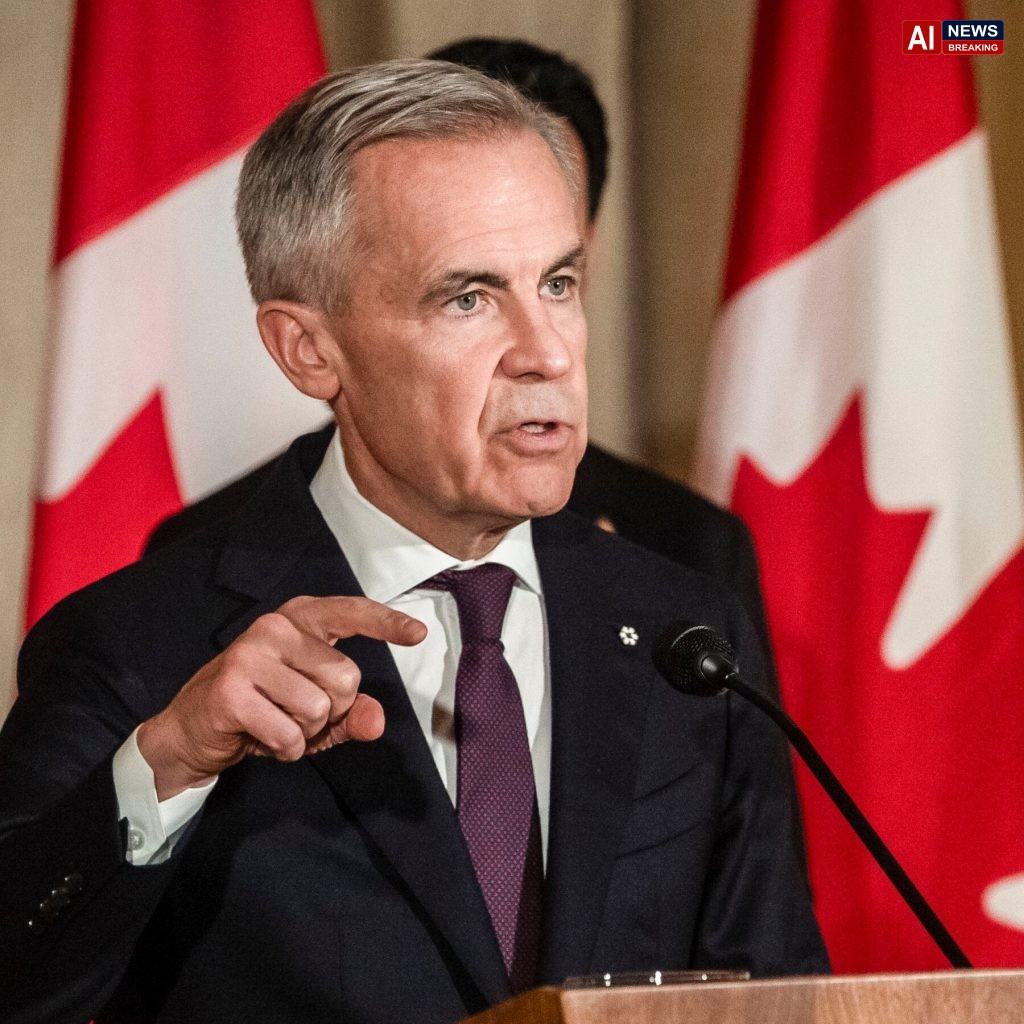
A Year On, Canada’s Mark Carney Returns to China a Political Star - AI News Breaking
year canadas mark carney:
Justin Trudeau’s government has long spoken of diversifying Canada’s diplomatic and trade relationships beyond its traditional reliance on the United States, and a year after stepping down as governor of the Bank of England, former central‑bank chief Mark Carney is now at the centre of that strategy. Returning to Beijing for the first time since his appointment as Canada’s special envoy for climate and finance, Carney is set to appear on a packed summit agenda that also includes China’s President Xi Jinping, Russian President Vladimir Putin and former US President Donald Trump. The visit underscores a subtle shift in Ottawa’s foreign‑policy calculus, signalling a willingness to engage with a broader spectrum of global powers in pursuit of economic and environmental objectives.Carney’s appointment as Canada’s climate and finance envoy in 2023 was part of a broader cabinet reshuffle that saw the prime minister elevate climate change to a top‑tier diplomatic priority..
In that role, Carley has been tasked with leveraging Canada’s financial expertise to promote green investment, while also exploring avenues for greater economic cooperation with Asian markets. His background – a Canadian born in Fort Smith, Northwest Territories, who later served as governor of the Bank of England and chaired the Financial Stability Board – makes him an unusual but potentially effective bridge between Western financial institutions and the rapidly evolving regulatory landscape of China’s market.The itinerary for Carney’s Beijing trip is unusually crowded. The first day will see him speak at a joint China‑Canada summit on green finance, where he is expected to outline a framework for cross‑border investment in renewable energy, electric vehicles and carbon‑capture technologies..
The summit, co‑hosted by the Ministry of Ecology and Environment and Canada’s Ministry of Natural Resources, is part of a series of bilateral dialogues that began in 2022 and have intensified after the signing of a new memorandum of understanding on climate cooperation. Analysts say the timing is deliberate: both nations are looking to cement supply‑chain resilience after the pandemic and the war in Ukraine vulnerabilities in energy imports.Later in the week, Carney will join a high‑profile gathering of world leaders at the Beijing International Forum on Global Governance, an event that has drawn criticism for providing a platform to heads of state whose policies are at odds with Western democratic norms. The inclusion of Xi, Putin and Trump – the latter attending as a private citizen following his 2024 electoral defeat – highlights Beijing’s ambition to position itself as a neutral stage for great‑power dialogue..
Carney’s presence, however, is not merely symbolic. He has been invited to chair a panel on “Financing the Energy Transition in Emerging Markets”, a topic that aligns closely with Canada’s own commitments under the Paris Agreement and its domestic push to increase clean‑technology exports.Canada’s trade data support the strategic rationale for such engagement. In 2023, China accounted for roughly 7 % of Canadian merchandise exports, up from 5 % a decade earlier, driven largely by agricultural products, aerospace components and, increasingly, clean‑technology equipment..
Conversely, Chinese imports – principally electronics, machinery and consumer goods – remain a significant share of Canada’s trade basket. Ottawa’s recent announcement of a $2 billion fund to support Canadian firms entering Asian markets, administered by the Canadian Trade Commissioner Service, reflects a desire to deepen these ties while reducing reliance on the United States for export growth.Yet the political optics of Carney’s high‑profile visit are complex. Domestically, the Liberal government has faced criticism from environmental groups who argue that engagement with China – a country still heavily reliant on coal and with a contentious human‑rights record – could dilute Canada’s climate ambitions..
Opposition parties have also raised concerns about the potential for technology transfer that could advantage Chinese firms in sectors where Canada is seeking a competitive edge. In response, the Prime Minister’s Office has stressed that the envoy’s mandate is strictly limited to facilitating investment that meets rigorous environmental standards, and that any partnership will be subject to Canadian and international regulatory oversight.Security analysts note that Carney’s participation in a forum alongside Putin and Trump could be a diplomatic gamble. The United States, Canada’s most important ally, has warned its partners to be cautious about normalising relations with Moscow after its 2022 invasion of Ukraine..
While Canada maintains sanctions on Russian financial institutions, the presence of a former senior central‑bank official at a joint summit may be viewed as an attempt to keep communication channels open for economic issues, such as grain exports and energy cooperation. The Canadian government has not publicly addressed how it will reconcile this with its broader sanctions regime, leaving observers to wonder whether the climate‑finance agenda will be sufficient to offset geopolitical sensitivities.The visit also arrives at a moment when China’s own foreign‑policy posture is evolving. Beijing has been seeking to project an image of openness and multilateralism after a period of heightened tension with the West, exemplified by the recent release of several high‑profile foreign detainees and the invitation of a larger cohort of Western business leaders to the 2025 Belt and Road summit..
By hosting Carney, China signals its willingness to collaborate on climate initiatives, even as it continues to assert sovereignty over its domestic financial markets. Chinese officials have repeatedly emphasized that “green development” is a national priority, and they are keen to attract foreign capital that can help bridge the gap between policy ambition and implementation.From a financial‑market perspective, Carney’s expertise in macro‑prudential regulation could prove valuable in navigating the complexities of cross‑border green bonds, a sector that has seen explosive growth in the past two years. Canada’s domestic green‑bond market, still nascent compared with Europe’s, stands to benefit from Chinese investors looking for stable, high‑quality assets..
Conversely, Chinese green‑bond issuers may see Canadian participation as a badge of credibility, potentially easing concerns about “green‑washing” that have plagued the sector. Market commentators suggest that a successful partnership could unlock up to $15 billion of new financing for clean‑energy projects over the next decade, a figure that would significantly advance Canada’s target of net‑zero emissions by 2050.Despite the optimism, there are practical hurdles. Differences in regulatory standards, particularly around carbon‑pricing mechanisms and disclosure requirements, could impede seamless collaboration..
Canada’s carbon‑pricing system, which imposes a national price on emissions, is often cited as a model for market‑based climate policy, yet its application in a jurisdiction as large and diverse as China would require substantial adaptation. Moreover, intellectual‑property protections remain a perennial concern for Canadian firms wary of technology leakage. The Canadian Trade Commissioner Service has pledged to provide “robust legal support” to companies entering the Chinese market,.
Carney’s Beijing swing isn’t just about greener finance—it’s Canada’s quiet bet that a climate‑first partnership can sidestep the geopolitical tug‑of‑war between Washington and Beijing.
If the green‑bond bridge clicks, it could yank a hefty chunk of investment away from U.S





