
 Pakistan’s leaders hail first astronaut aboard Chinese craft: ‘Proud one of us has gone into space’
 British tourist travels 29 hours from Mumbai to Amritsar for ₹5,461, rates Indian Railways 10/10 | Viral video
 The Supreme Court will decide whether assault weapons bans violate the Second Amendment
 A Critic of Beijing Falls Short in Taiwan’s Key Mayoral Election
 EPA says no rise in contamination after Army detonates lead azide stockpile in Iowa
TDP MLA inducts 30 e-buses into Gajuwaka bus depot in Visakhapatnam
**
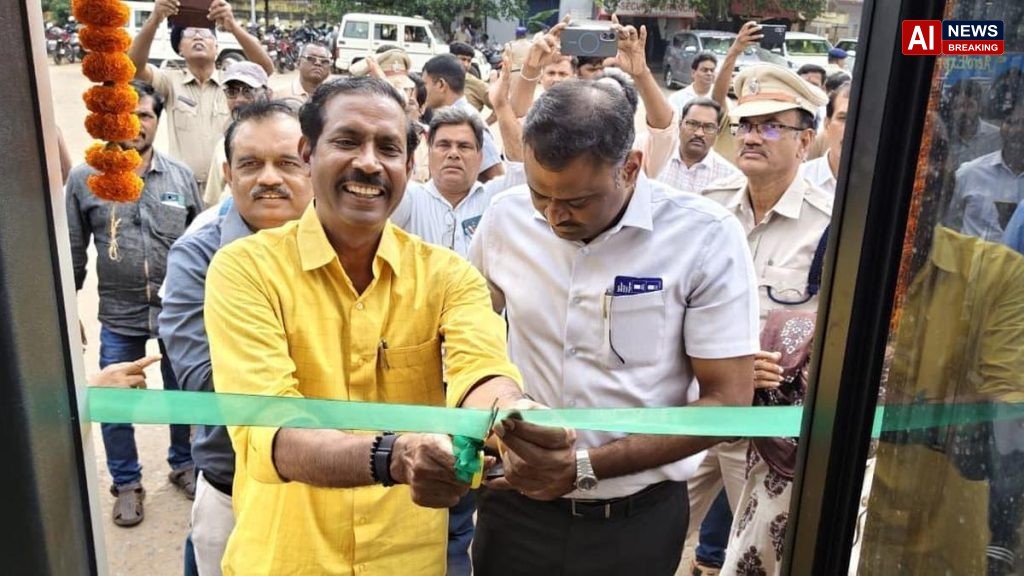
TDP MLA inducts 30 e-buses into Gajuwaka bus depot in Visakhapatnam - AI News Breaking
inducts ebuses gajuwaka depot:
Visakhapatnam’s Gajuwaka bus depot has received a fleet of thirty new electric buses, an event marked by the induction ceremony presided over by TDP MLA K. Raghavendra Rao on Tuesday. The ceremony, attended by senior officials of the state transport department, representatives of the National Democratic Alliance (NDA) and local civic leaders, highlighted the growing emphasis on sustainable mobility in Andhra Pradesh. The e‑buses, supplied by a consortium of Indian manufacturers, are expected to replace a comparable number of ageing diesel units that have long formed the backbone of public transport in the city’s southern suburbs.The new electric buses are equipped with lithium‑ion battery packs capable of delivering a range of up to 250 kilometres on a single charge, a figure that comfortably covers the typical daily routes operated from Gajuwaka..
Each vehicle features low‑floor entry, air‑conditioned cabins and a suite of passenger‑friendly amenities such as LED information displays and Wi‑Fi connectivity. The procurement, which cost the state approximately ₹1.5 billion, was funded through a combination of central government grants, state allocations and a modest loan from a green finance institution, reflecting the multi‑layered financial model often employed for green transport projects.State transport minister K. V. N. Kishore, who arrived later in the day to inspect the buses, underscored the strategic importance of the induction. “This is not merely a fleet upgrade; it is a concrete step towards a low‑carbon future for Visakhapatnam,” he said, adding that the e‑buses would reduce diesel consumption by an estimated 6,000 litres per month and cut greenhouse‑gas emissions by roughly 15 tonnes annually..
He noted that the move aligns with the broader objectives of the NDA‑led central government, which has pledged to electrify 30 percent of the country’s public bus fleet by 2030.The deployment of electric buses in Gajuwaka is part of a larger rollout plan that the Andhra Pradesh Transport Corporation (APTC) unveiled last year. The plan envisages the gradual introduction of 500 e‑buses across the state’s major urban centres, with Visakhapatnam slated to receive the highest concentration due to its status as a commercial hub and its growing population of over two million. According to APTC’s transport director, the Gajuwaka depot will serve as a pilot hub for testing operational protocols, charging infrastructure and maintenance regimes before scaling the model to other depots in the state.Charging infrastructure at the Gajuwaka depot has been upgraded to accommodate the new fleet..
Four fast‑charging stations, each capable of delivering 250 kW, have been installed in a newly constructed charging yard adjacent to the depot. The stations are powered by a dedicated solar‑plus‑grid system that combines rooftop photovoltaic panels with a reliable supply from the state grid, ensuring that the buses can be recharged during off‑peak hours without straining the local electricity network. Officials claim that the solar installation will offset approximately 20 percent of the energy consumed for charging, further enhancing the environmental credentials of the project.Local commuters have expressed cautious optimism about the introduction of electric buses..
“If the rides are reliable and the fares remain affordable, this could be a real improvement over the old diesel buses that break down frequently,” said S. Mohan, a daily commuter who travels from Gajuwaka to the city centre for work. Similar sentiments were echoed by a group of senior citizens who noted that the air‑conditioned cabins would make journeys more comfortable during the region’s scorching summer months. However, some residents raised concerns about the availability of charging slots during peak demand periods, a challenge that the transport department acknowledges and is addressing through real‑time monitoring and dynamic scheduling software.The political dimension of the induction was evident in the remarks of MLA Raghavendra Rao, who highlighted the initiative as a testament to the NDA’s commitment to modernising public transport..
“Our government is delivering tangible benefits to the people of Visakhapatnam. By investing in electric mobility, we are not only improving daily travel but also creating new skill‑sets and employment opportunities in the emerging green economy,” he said. Rao also hinted at plans to set up a training centre at the depot to equip mechanics and drivers with the technical expertise required to maintain and operate electric buses, a move that could generate around 200 jobs over the next two years.Industry observers point out that the success of the Gajuwaka e‑bus project will hinge on several operational factors, including battery longevity, maintenance turnaround times and the robustness of the charging network..
A recent report by the Centre for Sustainable Transportation noted that while Indian electric buses have made significant strides in reliability, challenges remain in ensuring consistent performance under the high‑temperature conditions typical of coastal Andhra Pradesh. The report recommended that fleet operators adopt predictive maintenance tools and maintain a buffer stock of spare battery modules to mitigate downtime.Looking ahead, the APTC has scheduled a series of performance reviews for the Gajuwaka fleet, with the first comprehensive evaluation slated for six months after induction. The review will assess key metrics such as average daily ridership, on‑time performance, energy consumption per kilometre and passenger satisfaction..
Findings from the evaluation will inform decisions on the pace of further e‑bus acquisitions and the possible expansion of charging facilities to nearby depots in Anakapalli and Vizianagaram. Should the pilot meet its targets, officials anticipate that the state could accelerate its transition to a fully electric public transport system ahead of the 2030 national deadline.The induction of the thirty electric buses marks a visible milestone in Andhra Pradesh’s broader strategy to integrate sustainable technologies into its urban infrastructure. As the vehicles roll out onto the streets of Gajuwaka, they carry not only passengers but also the aspirations of a city seeking cleaner air, reduced noise pollution and a modernised transport network..
If the operational challenges can be managed effectively, the Gajuwaka depot may well become a model for other Indian cities embarking on the shift from diesel to electric public transport, illustrating how political will, financial ingenuity and technological innovation can converge to reshape everyday mobility..
Updated: November 16, 2026
Visakhapatnam’s Gajuwaka depot has added thirty lithium‑ion‑powered electric buses, complete with fast‑charging stations powered partly by solar energy, aiming to replace aging diesel units and cut fuel use and emissions. The rollout, backed by state and central funds, serves as a pilot for Andhra Pradesh’s broader plan to electrify its urban fleet and create green‑technology jobs.
Visakhapatnam’s gamble on a solar‑backed e‑bus hub could turn a local commuter pain point into a showcase for India’s green‑jobs agenda—if the charging glitches stay just a blip.
Success here may force other metros to rewrite diesel‑phase‑out






