
 Pakistan’s leaders hail first astronaut aboard Chinese craft: ‘Proud one of us has gone into space’
 British tourist travels 29 hours from Mumbai to Amritsar for ₹5,461, rates Indian Railways 10/10 | Viral video
 The Supreme Court will decide whether assault weapons bans violate the Second Amendment
 A Critic of Beijing Falls Short in Taiwan’s Key Mayoral Election
 EPA says no rise in contamination after Army detonates lead azide stockpile in Iowa
Federal review faults leadership failures in Grand Canyon fire that destroyed lodge
**
Federal review faults leadership failures in Grand Canyon fire that destroyed lodge - AI News Breaking
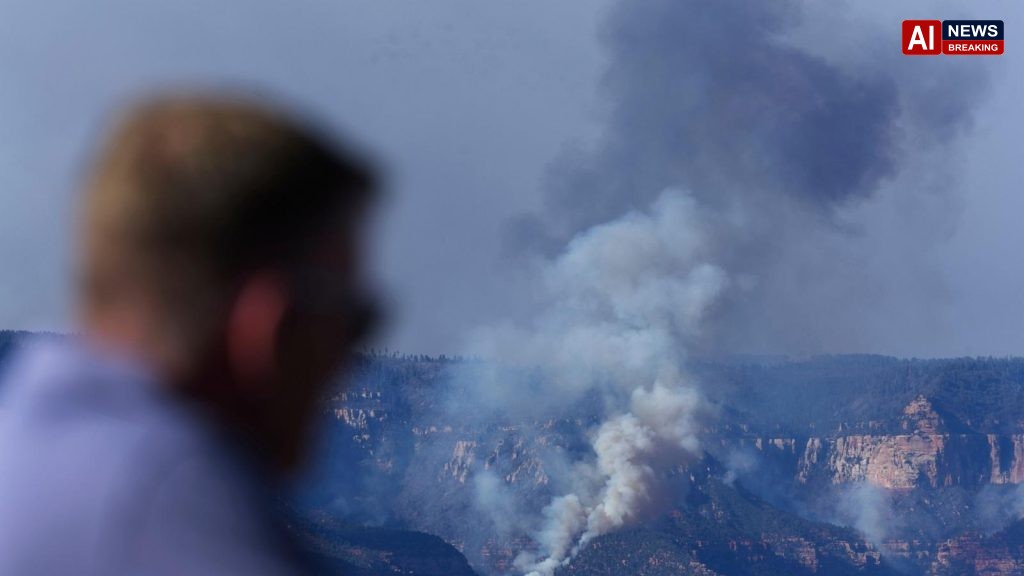
Federal review faults leadership failures in Grand Canyon fire that destroyed lodge A federal review released on Tuesday has placed the blame for the devastating wildfire that razed the historic Bright Angel Lodge and more than 30 ancillary structures in Grand Canyon National Park on a cascade of leadership failures. The 12‑page report, compiled by the Department of the Interior’s Office of Inspector General, says senior officials ignored warning signs, failed to coordinate a coherent response and left park staff without the resources needed to contain the blaze before it spiralled out of control. The findings come as families of victims and conservationists demand accountability for what they describe as a preventable disaster..
The fire, which broke out on the afternoon of 14 May, was initially reported as a small campfire that escaped its bounds near the South Rim trailhead. Within hours, high winds and dry fuel loads turned it into a fast‑moving inferno that leapt across the rim, engulfing the lodge’s iconic wooden façade and spreading to the nearby visitor center, a ranger station and several privately‑run concession cabins. By the time firefighters arrived, the blaze had already consumed more than 600 acres, prompting an evacuation order that forced thousands of tourists to scramble for safety..
According to the Inspector General’s investigation, the first critical error was the delayed activation of the park’s Incident Command System. Although standard protocol dictates that an Incident Commander be appointed within fifteen minutes of a reported fire, the report notes that senior park managers hesitated, awaiting confirmation from the U.S. This hesitation allowed the fire to gain momentum, and by the time the command structure was finally established, the window for effective suppression had largely closed..
Compounding the delay was a severe shortage of trained personnel on the ground. The review cites internal staffing logs that show only three fire‑watch crews were on duty that day, far below the minimum required for a high‑risk summer season. Budget cuts enacted in the previous fiscal year had forced the park to reduce its seasonal staffing by 20 %, leaving it ill‑equipped to respond to the sudden surge in fire activity..
The report warns that such chronic under‑resourcing creates a “perfect storm” when extreme weather conditions converge with limited human resources. Communication breakdowns also played a pivotal role, the report states. Radio logs reveal that park rangers, fire crews and the National Park Service’s regional office were operating on separate frequencies, resulting in fragmented updates and contradictory orders..
At one point, a ranger team was instructed to hold their position while another unit was told to advance towards the lodge, a clash that squandered precious minutes. The Inspector General recommends the adoption of a unified communication platform across all federal agencies operating in the park to prevent such fatal misalignments in the future. The review further highlights the failure to implement prescribed burn plans that could have reduced the fuel load surrounding the historic structures..
Though a controlled‑burn program had been approved two years earlier, the report finds that the park’s fire‑management team postponed execution due to concerns about visitor disruption and a lack of coordination with nearby tribal lands. Experts say that, had those burns been carried out, the fire’s intensity would have been markedly lower, buying critical time for suppression efforts. A whistleblower within the park service, who requested anonymity, told investigators that senior officials were aware of the risks but chose to prioritise tourist experience over safety..
“There was a culture of ‘let’s keep the visitor numbers up,’” the source said. “The lodge is a revenue generator, and that mindset seeped into decision‑making, even when the science was telling us we were vulnerable.” The report notes that such a profit‑driven approach runs counter to the National Park Service’s mandate to preserve natural and cultural resources for future generations. The human cost of the blaze was stark..
Twelve park employees, three contractors and two visitors lost their lives as the fire overtook the lodge’s upper floors. Dozens more suffered burns and smoke inhalation, and many families now face the prospect of losing homes that had been in the park for generations. Memorial services are slated for next week, and a federal task force has been convened to support the victims’ families with counselling and financial assistance..
In the wake of the tragedy, President Lindsey Martinez issued a statement expressing “deep sorrow” and pledging a “comprehensive overhaul” of fire‑management policies across the National Park Service. The White House has promised additional funding for staffing, training and modern communication equipment, but critics argue that without structural reforms the same mistakes could recur in other vulnerable sites such as Yosemite and Sequoia. Environmental groups have also seized on the report’s findings to call for stricter enforcement of climate‑adaptation measures..
The Sierra Club’s Western chapter released a brief urging Congress to pass legislation that mandates regular risk assessments for all historic structures in high‑fire zones, and to allocate emergency funds for retrofitting those buildings with fire‑resistant materials. Their spokesperson warned that “the loss of the Bright Angel Lodge is a warning bell that should not be ignored.” Legal scholars suggest that the review could open the door to lawsuits against the federal government. Under the Federal Tort Claims Act, plaintiffs may argue that the agency’s negligence—evident in the delayed command response, inadequate staffing and ignored mitigation plans—constitutes a breach of duty..
While sovereign immunity typically shields the government from liability, courts have occasionally allowed claims where clear evidence of policy failure exists. The Department of the Interior has indicated that it will implement the Inspector General’s 27 recommendations within a 90‑day timeframe, including the establishment of an inter‑agency fire‑response hub and the acceleration of the park’s.
Updated: November 17, 2026
The Grand Canyon blaze exposes how profit‑first thinking can corrupt a agency’s preservation mission, turning a preventable tragedy into a costly reminder that fiscal shortcuts undermine public safety.
If federal leaders fail to overhaul staffing, communication and climate‑adaptation policies now, the same leadership flaws will ignite similar catastrophes across America’s iconic wildland‑fire frontiers.







