
 Pakistan’s leaders hail first astronaut aboard Chinese craft: ‘Proud one of us has gone into space’
 British tourist travels 29 hours from Mumbai to Amritsar for ₹5,461, rates Indian Railways 10/10 | Viral video
 The Supreme Court will decide whether assault weapons bans violate the Second Amendment
 A Critic of Beijing Falls Short in Taiwan’s Key Mayoral Election
 EPA says no rise in contamination after Army detonates lead azide stockpile in Iowa
Supreme Court to review Delhi High Court decision on Lokpal show‑cause notice
**
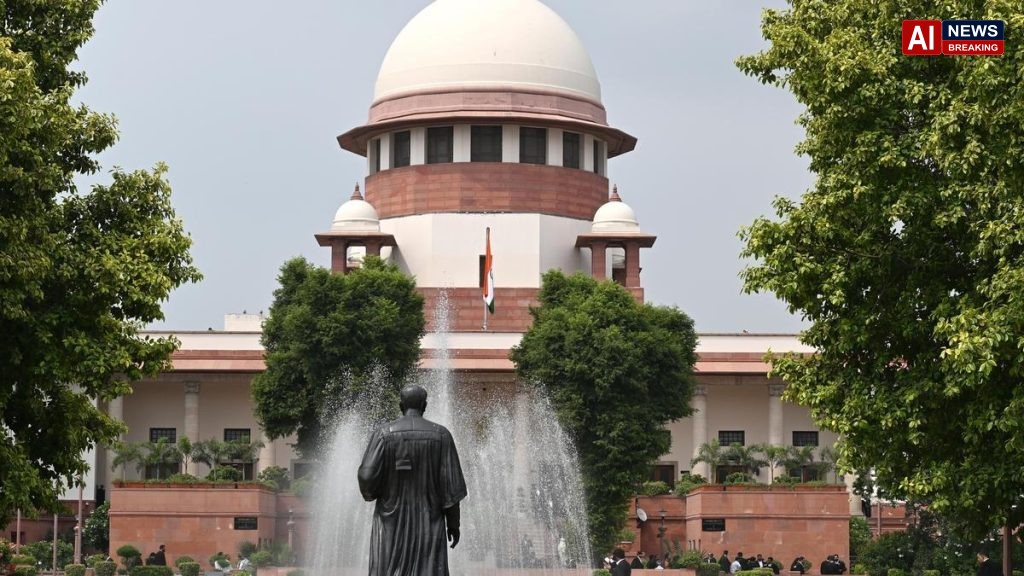
SC notice to Lokpal on plea against HC verdict saying hearing not needed before show-cause notice - AI News Breaking
supreme court review delhi:
SC notice to Lokpal on plea against HC verdict saying hearing not needed before show‑cause notice The Delhi High Court on 15 April dismissed a petition lodged by senior civil servant Chin Moyjit Sen, who had sought to set aside a Lokpal order dated 25 February and a subsequent show‑cause notice. Sen argued that the Lokpal had acted beyond its jurisdiction and that the high court should have allowed a pre‑show‑cause hearing. The bench, however, held that the petition was premature, noting that the statutory machinery of the Lokpal already provides for an internal review before any punitive step..
Consequently, the court ruled that the matter was best left to the anti‑corruption body’s own procedural timeline. Sen’s challenge stemmed from a corruption allegation related to the awarding of a government contract for a public‑works project in West Bengal. The Lokpal, after an initial enquiry, had concluded that Sen had “unduly favoured” a private contractor and issued a show‑cause notice demanding an explanation for alleged misconduct..
Sen maintained that the evidence was circumstantial and that the notice was issued without giving him an opportunity to be heard, thereby violating the principles of natural justice. The High Court’s dismissal was therefore a setback for his claim of procedural unfairness. The Supreme Court’s notice, issued on 22 April, signals that the apex court is now being asked to consider whether the Delhi High Court erred in refusing a pre‑show‑cause hearing..
In its petition, Sen’s counsel contended that the High Court’s decision undermines the constitutional guarantee of “audi alteram partem”. The petition further alleged that the Lokpal’s own Rules of Procedure, while allowing for internal review, do not exempt it from the requirement of an initial hearing when the accused seeks judicial relief. The Supreme Court has therefore been asked to interpret the intersection of statutory provisions and fundamental rights..
Legal experts note that the case raises a novel question about the extent of judicial oversight over the Lokpal’s quasi‑judicial functions. Professor Ananya Mukherjee of Delhi University points out that “the Lokpal was created as an independent body with a degree of insulation from courts, but it is not above the law”. She adds that the Supreme Court’s intervention could clarify whether the anti‑corruption institution must observe a hearing before issuing any punitive notice, a matter that has not been squarely addressed since the Lokpal Act came into force in 2014..
The outcome could have far‑reaching implications for future investigations. The petition also draws attention to a clause in the Lokpal (Procedure) Rules, which states that a show‑cause notice may be served “after an inquiry, if the evidence so far gathered indicates prima facie misconduct”. Critics argue that this language is vague and grants the Lokpal discretionary power to bypass a hearing..
In response, the Lokpal’s legal cell submitted an affidavit asserting that the notice was issued in accordance with the Rules and that a preliminary hearing would have delayed the investigative process, potentially allowing evidence to be tampered with. The Supreme Court will have to weigh these competing narratives. Meanwhile, the Ministry of Law and Justice has issued a statement affirming the independence of the Lokpal while emphasizing that “all statutory bodies must operate within the constitutional framework”..
It added that the Ministry is monitoring the Supreme Court proceedings closely and stands ready to assist, if required, in ensuring that due process is upheld. The statement refrains from commenting on the merits of Sen’s allegations, reflecting the delicate balance the government seeks to maintain between supporting anti‑corruption mechanisms and safeguarding civil‑service rights. Public reaction to the case has been mixed..
Transparency‑India, a watchdog group, welcomed the Supreme Court’s involvement, describing it as “a vital check on an institution that wields significant investigative power”. Conversely, the Indian Administrative Service (IAS) officers’ association warned that “premature judicial interference could cripple the Lokpal’s ability to act swiftly against corruption”. Social media discourse mirrors this divide, with hashtags such as #LokpalDueProcess and #ProtectBureaucrats trending across platforms, highlighting the polarized views on accountability versus procedural safeguards..
In the background, the Lokpal has been under scrutiny for a series of high‑profile cases involving senior officials and politicians. Recent reports indicate a backlog of over 3,000 pending investigations, prompting calls for reforms to streamline its processes. The Supreme Court’s decision may therefore set a precedent that either eases the burden on the Lokpal by limiting pre‑notice hearings or imposes additional procedural layers that could slow down investigations..
Stakeholders from both sides are keenly watching how the apex court frames its judgment. If the Supreme Court finds that the High Court erred, it could issue a direction for a fresh hearing before the Lokpal proceeds with any punitive action. Such a directive would effectively mandate that the anti‑corruption body incorporate a formal hearing stage into its workflow, aligning it more closely with conventional judicial practices..
This would not only impact ongoing cases but also reshape the procedural blueprint of the Lokpal, possibly prompting legislative amendments to the Lokpal Act. On the other hand, should the Supreme Court uphold the High Court’s stance, it would reinforce the existing framework that permits the Lokpal to issue show‑cause notices without an antecedent hearing, provided there is prima facie evidence. This outcome would likely embolden the body to act more decisively in future inquiries, reinforcing its reputation as a “no‑nonsense” watchdog.
Updated: November 18, 2026
The Supreme Court’s looming verdict could become the litmus test for how much judicial breathing‑room an anti‑corruption body can retain without trampling procedural fairness. A ruling that forces a pre‑show‑cause hearing would push the Lokpal toward conventional court‑like safeguards, while upholding the status quo






