
 Pakistan’s leaders hail first astronaut aboard Chinese craft: ‘Proud one of us has gone into space’
 British tourist travels 29 hours from Mumbai to Amritsar for ₹5,461, rates Indian Railways 10/10 | Viral video
 The Supreme Court will decide whether assault weapons bans violate the Second Amendment
 A Critic of Beijing Falls Short in Taiwan’s Key Mayoral Election
 EPA says no rise in contamination after Army detonates lead azide stockpile in Iowa
Xi meets Takaichi in Shenzhen to discuss bilateral ties
**
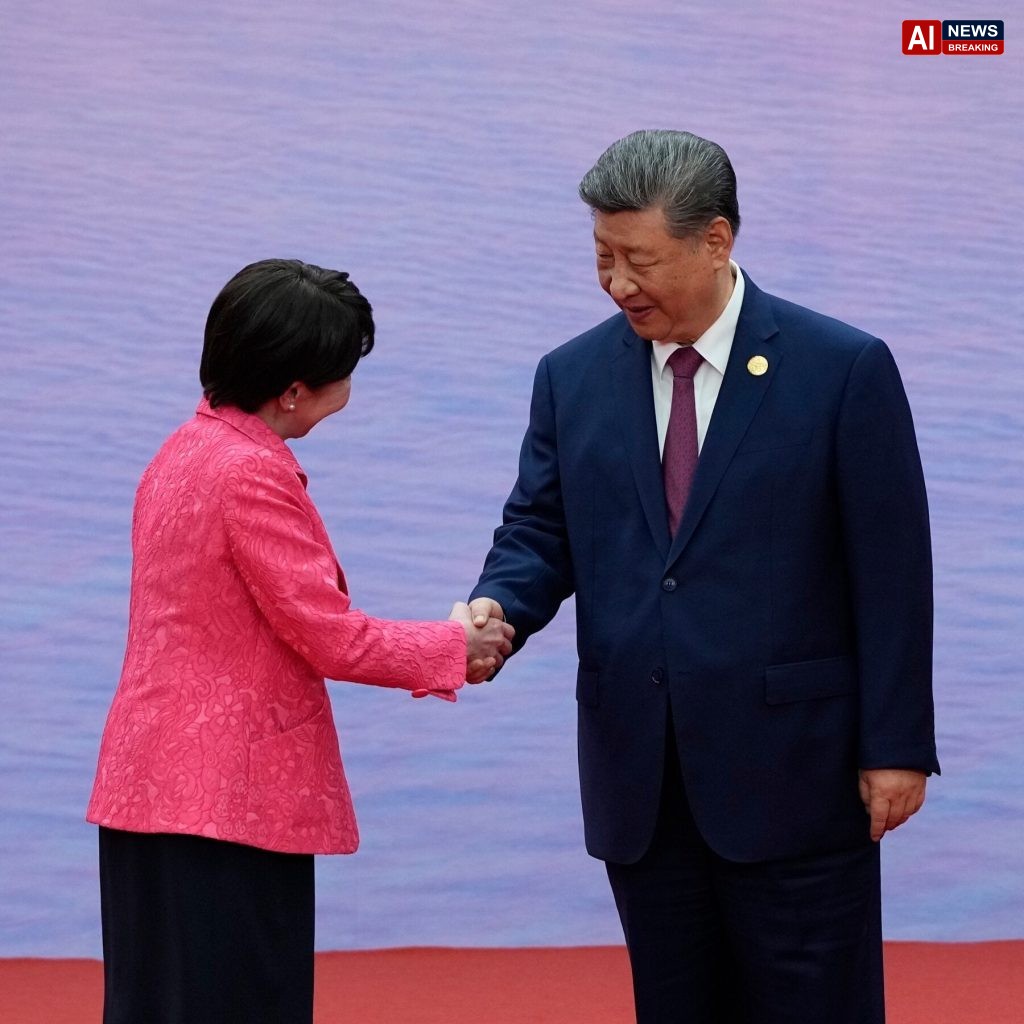
Leaders of China and Japan Meet Amid Political Feud - AI News Breaking
meets takaichi shenzhen discuss:
Leaders of China and Japan Meet Amid Political Feud Xi Jinping, China’s leader, greeted Sanae Takaichi, Japan’s prime minister, in Shenzhen a year after China began punishing Japan over her comments on Taiwan. The meeting, held at the Shenzhen Convention Centre, marked the first high‑level contact since diplomatic tensions escalated in early 2023. Both sides framed the encounter as a “constructive dialogue” aimed at stabilising bilateral ties, yet analysts warn that underlying frictions – from security pacts to historical grievances – remain stark..
The press conference that followed was tightly controlled, with Chinese officials emphasizing mutual respect and Japan stressing the need for “peaceful coexistence.” Takaichi, who took office in October after a turbulent election, arrived accompanied by a delegation of senior cabinet members, including the foreign minister and trade minister. In a short statement, she reiterated Japan’s “unwavering commitment” to the One‑China policy while also urging Beijing to refrain from “politicising” issues concerning Taiwan and the East China Sea. Her remarks were carefully calibrated; they echoed Tokyo’s longstanding diplomatic line but stopped short of endorsing any of the United States’ regional security initiatives that have irked Beijing in recent years..
The Shenzhen meeting was preceded by a series of behind‑the‑scenes negotiations mediated by neutral third parties, notably Singapore and the European Union. Sources close to the talks disclosed that both capitals pressed for a “reset” mechanism that would allow rapid consultation in the event of accidental military incidents. While the mechanism was not formally signed, a draft memorandum was reportedly exchanged, hinting at a possible framework for crisis management that could be tabled at a later summit in Tokyo..
Economically, the two nations stand at a crossroads. China remains Japan’s largest trading partner, accounting for roughly 25 % of Japanese exports, while Japan is a key source of high‑tech components for Chinese manufacturers. Yet trade has been hampered by a series of non‑tariff barriers imposed by Beijing after Takaichi’s earlier remarks on Taiwan, which saw Japanese seafood and agricultural products temporarily blocked from Chinese markets..
Both sides hinted that the Shenzhen talks could pave the way for a gradual easing of these restrictions, though concrete timelines were not disclosed. Security considerations dominate the strategic calculus of both capitals. Tokyo has deepened its defence partnership with Washington, signing a trilateral security cooperation pact that includes joint naval exercises in the South China Sea..
Beijing has repeatedly condemned the arrangement as a “containment strategy” aimed at curbing China’s rise. During the meeting, Xi warned that “any attempt to encircle China will only heighten regional instability,” while Takaichi responded that Japan “will continue to act in accordance with its constitutional commitment to self‑defence and allied cooperation.” Human rights and historical memory also featured, albeit indirectly. In the background of the press conference, a banner displayed at the venue highlighted the “friendship of peoples” between the two countries, a subtle nod to the shared cultural heritage that both governments often invoke..
Yet NGOs in Tokyo and Beijing have staged simultaneous protests, accusing their governments of glossing over issues such as wartime forced labour and the treatment of Uyghurs. The diplomatic choreography of the event sought to minimise these flashpoints, but observers note that civil society will continue to test the limits of any political thaw. The meeting’s timing is significant..
It comes as the United Nations General Assembly convenes in New York, where both leaders are expected to deliver separate speeches. Their remarks are being closely watched for any indication of a coordinated narrative or, conversely, a renewed rhetorical battle. In Shenzhen, Xi’s speech highlighted China’s “peaceful rise” and the importance of “mutual benefit,” whereas Takaichi is likely to underscore Japan’s role as a “stable democratic partner” in the Indo‑Pacific..
The juxtaposition of these messages could shape the diplomatic tone for the next six months. Regional actors have already begun to read the outcome of the Shenzhen talks. South Korea’s foreign ministry issued a statement welcoming “any initiative that reduces the risk of miscalculation in East Asian waters,” while the United States, through its embassy in Beijing, described the meeting as “a positive step, though substantive outcomes remain to be seen.” Analysts in Washington argue that the US will monitor the situation closely, ready to intervene should either side appear to shift the strategic balance in favour of the other..
Within China, state media framed the encounter as a triumph of “peaceful diplomacy over external pressure.” Headlines in the People’s Daily praised Takaichi’s “constructive attitude” and lauded the two leaders for “advancing the cause of regional stability.” Conversely, Japanese newspapers such as Asahi Shimbun ran more cautious pieces, noting that while the dialogue was a diplomatic win, “substantive progress on trade and security issues is still lacking.” The divergent narratives underscore the delicate balancing act each government must perform domestically. The economic stakes are further complicated by the looming renewal of the Comprehensive and Progressive Agreement for Trans‑Pacific Partnership (CPTPP), of which Japan is a key member and China is a prospective applicant. If Beijing secures entry, it could reshape supply‑chain dynamics and potentially lessen the leverage Japan currently enjoys through its technology exports..
During the Shenzhen talks, senior officials from both sides exchanged views on the CPTPP, signalling a tentative willingness to discuss China’s possible accession, albeit without committing to a timetable. Environmental cooperation also entered the agenda, reflecting a growing trend of “green diplomacy” in the region. Both countries have pledged to achieve carbon neutrality by 2060, and they agreed to explore joint research on renewable.
China and Japan’s Shenzhen handshake signals a cautious “reset” rather than a cure: they’re willing to touch base on trade and crisis‑management, but the underlying security and historical rifts keep the relationship tethered to a fragile status‑quo. In the meantime, each side is sharpening its domestic narrative





