Pakistan’s leaders hail first astronaut aboard Chinese craft: ‘Proud one of us has gone into space’
 British tourist travels 29 hours from Mumbai to Amritsar for ₹5,461, rates Indian Railways 10/10 | Viral video
 The Supreme Court will decide whether assault weapons bans violate the Second Amendment
 A Critic of Beijing Falls Short in Taiwan’s Key Mayoral Election
 EPA says no rise in contamination after Army detonates lead azide stockpile in Iowa
Grand Theft Auto: An American Icon, Born in Britain
**
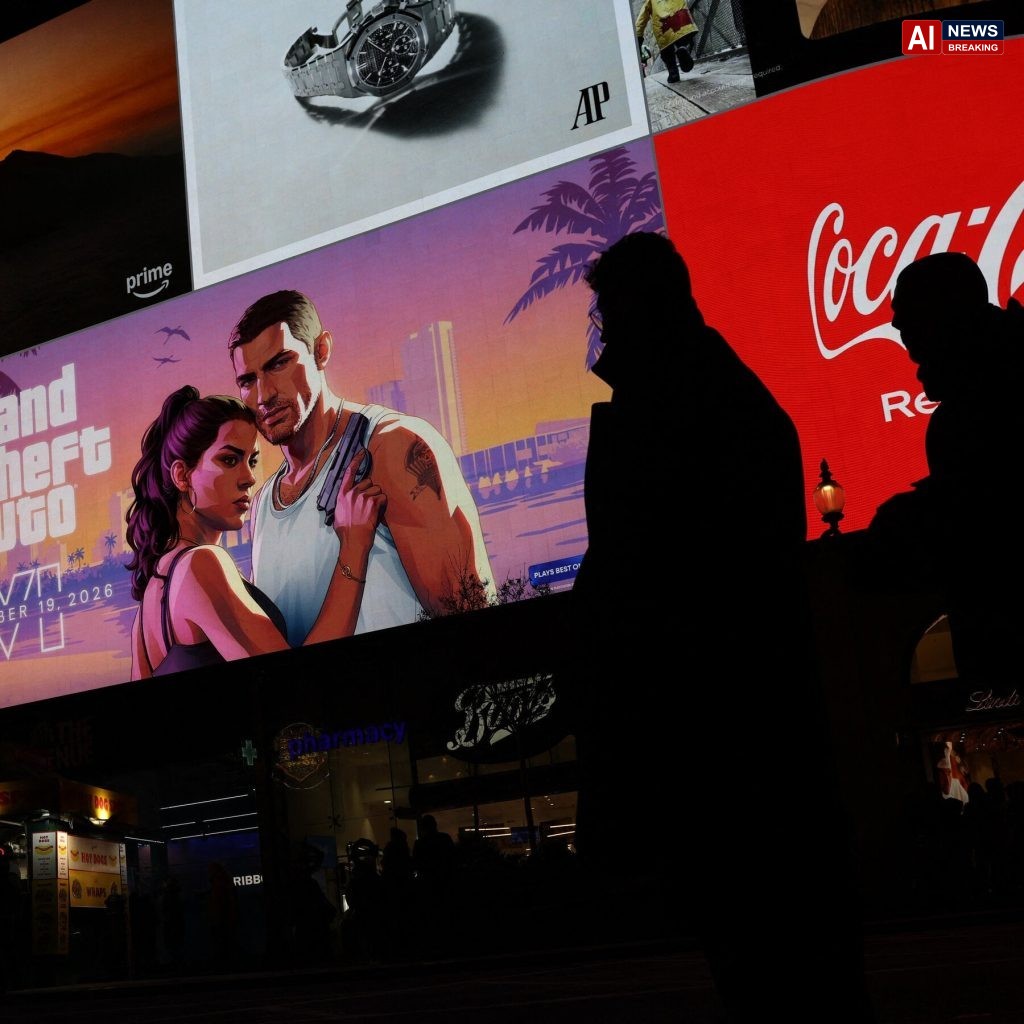
Grand Theft Auto: An American Icon, Born in Britain - AI News Breaking
grand theft auto american:
The Grand Theft Auto series, now synonymous with sprawling open‑world crime drama, is widely recognised as an American cultural export. Its streets echo the neon glow of Los Angeles, the gritty alleys of Liberty City and the sun‑baked highways of San Andreas, and its protagonists speak in a vernacular that feels unmistakably U.S. Yet the franchise’s origins lie far from the United States, in the studios of a small Scottish development house that first turned a modest computer game into a global phenomenon.In 1997, DMA Design, a Dundee‑based company founded by David Jones and Mike Dailly, released the inaugural Grand Theft Auto for the PlayStation and PC..
At the time, the gaming market was dominated by linear shooters and platformers, and the concept of an open‑world urban sandbox was virtually unheard of. DMA’s vision was to create a game that let players roam a city at will, interact with traffic, and engage in criminal activity without the constraints of scripted levels. The result was a top‑down, pixelated representation of three fictional cities – Liberty City, San Andreas and Vice City – each a loose pastiche of American metropolises, built from the developers’ fascination with Hollywood films, music videos and television dramas.The decision to set the game in the United States was not accidental..
In the mid‑1990s, American popular culture enjoyed a surge of global influence, propelled by Hollywood blockbusters, rap music and the rise of cable television. DMA’s staff, many of whom grew up watching American movies and listening to MTV, saw an opportunity to tap into that allure. Interviews from the period reveal that the team deliberately stitched together references to films such as “Heat” and “Scarface,” TV series like “The Sopranos,” and the gritty realism of 1990s hip‑hop lyrics..
The result was a collage that felt both familiar and exotic to a worldwide audience hungry for an interactive slice of the American Dream – or its darker counterpart.The game’s success in the United Kingdom and Europe was immediate. Critics praised its unprecedented freedom, while players were drawn to the provocative premise of a digital outlaw. Grand Theft Auto sold over 1.5 million copies in its first year, a remarkable figure for a title that had emerged from a modest studio in a country better known for its football and whisky than for crime simulations..
The commercial triumph caught the eye of larger publishers, and in 1999, Rockstar Games – a label created by Take‑Two Interactive to focus on more mature, narrative‑driven titles – acquired DMA Design, renaming it Rockstar North.Under the Rockstar banner, the series underwent a radical transformation. Grand Theft Auto III, released in 2001 for the PlayStation 2, marked the series’ shift to full 3D graphics and a third‑person perspective, delivering an immersive, living city that could be explored on foot or behind the wheel. While the development team remained based in Dundee, the game’s aesthetic drew heavily on American pop culture of the 1990s, from the soundtrack’s blend of hip‑hop and rock to the story’s focus on gang rivalry and corrupt law enforcement..
The authenticity of the setting was achieved not by on‑site research but by consuming a steady stream of American media, a method that would become a hallmark of Rockstar’s design philosophy.The transatlantic nature of Grand Theft Auto has sparked academic debate about cultural appropriation and authenticity. Some scholars argue that the series, crafted by Scottish developers, presents a stylised, exaggerated vision of America that reinforces stereotypes of urban decay and lawlessness. Others contend that the game functions as a form of cultural commentary, using hyperbole to critique consumerism, media influence and the myth of the self‑made individual..
Regardless of perspective, the franchise’s ability to shape global perceptions of American urban life is undeniable; its imagery has been referenced in everything from music videos to political cartoons, underscoring the power of a virtual world to inform real‑world narratives.The Scottish roots of the series have also become a point of pride within Dundee’s burgeoning tech community. Following the success of Grand Theft Auto, the city invested heavily in game‑development education, establishing the Dundee International Book Festival’s digital arm and partnering with local universities to create specialized curricula. By the mid‑2000s, Dundee had earned the moniker “Silicon Glen,” attracting talent from across the UK and Europe and spawning a cluster of independent studios..
Rockstar North’s continued presence has provided high‑profile employment opportunities, while also contributing to the city’s cultural identity as a hub for innovative storytelling.In recent years, the franchise’s evolution has mirrored broader industry trends. Grand Theft Auto V, launched in 2013, combined a meticulously rendered Los Santos – a fictional Los Angeles – with an online component, Grand Theft Auto Online, that has generated billions in revenue through microtransactions. The game’s narrative, while still anchored in American motifs, incorporates a more global sensibility, featuring characters of diverse ethnic backgrounds and storylines that reference contemporary issues such as economic disparity and surveillance..
Yet, even as the series expands its thematic scope, the core design ethos remains rooted in the original Scottish ambition to deliver unfettered player agency.The franchise’s impact extends beyond entertainment. Law enforcement agencies have cited Grand Theft Auto’s realistic vehicle physics and city layouts in training simulations, while urban planners have referenced its traffic models when discussing the challenges of modern city design. Conversely, the series has faced criticism for its portrayal of violence and its potential influence on youth..
Several courts across the United States and Europe have examined whether the game constitutes a form of artistic expression protected by free speech, ultimately concluding that it falls within the realm of protected media, albeit with age‑appropriate restrictions.Grand Theft Auto’s journey from a Dundee basement to a worldwide cultural touchstone underscores the fluidity of modern media creation. A game conceived by Scottish developers, inspired by American film and music, has, in turn, reshaped the global imagination of American urban life. It exemplifies how cultural products can traverse borders, be reinterpreted, and emerge as icons that belong to no single nation..
As Rockstar North continues to develop new installments, the dialogue between its Scottish origins and its American‑centric narratives will likely persist, reminding audiences that behind every pixelated highway lies a complex tapestry of transnational influences..
Updated: November 18, 2026
Insight: Even a Scottish basement can weaponize Hollywood mythmaking, turning the U.S. into a global sandbox that sells both escapism and a critique of the American Dream.
The franchise’s cross‑border alchemy shows how digital cultures now rewrite national identities, making “American” gameplay a shared