Pakistan’s leaders hail first astronaut aboard Chinese craft: ‘Proud one of us has gone into space’
 British tourist travels 29 hours from Mumbai to Amritsar for ₹5,461, rates Indian Railways 10/10 | Viral video
 The Supreme Court will decide whether assault weapons bans violate the Second Amendment
 A Critic of Beijing Falls Short in Taiwan’s Key Mayoral Election
 EPA says no rise in contamination after Army detonates lead azide stockpile in Iowa
Colombia’s Petro Pushes Back Against US Troop Involvement in Anti-Drug Operations Amid Diplomatic Tensions
**
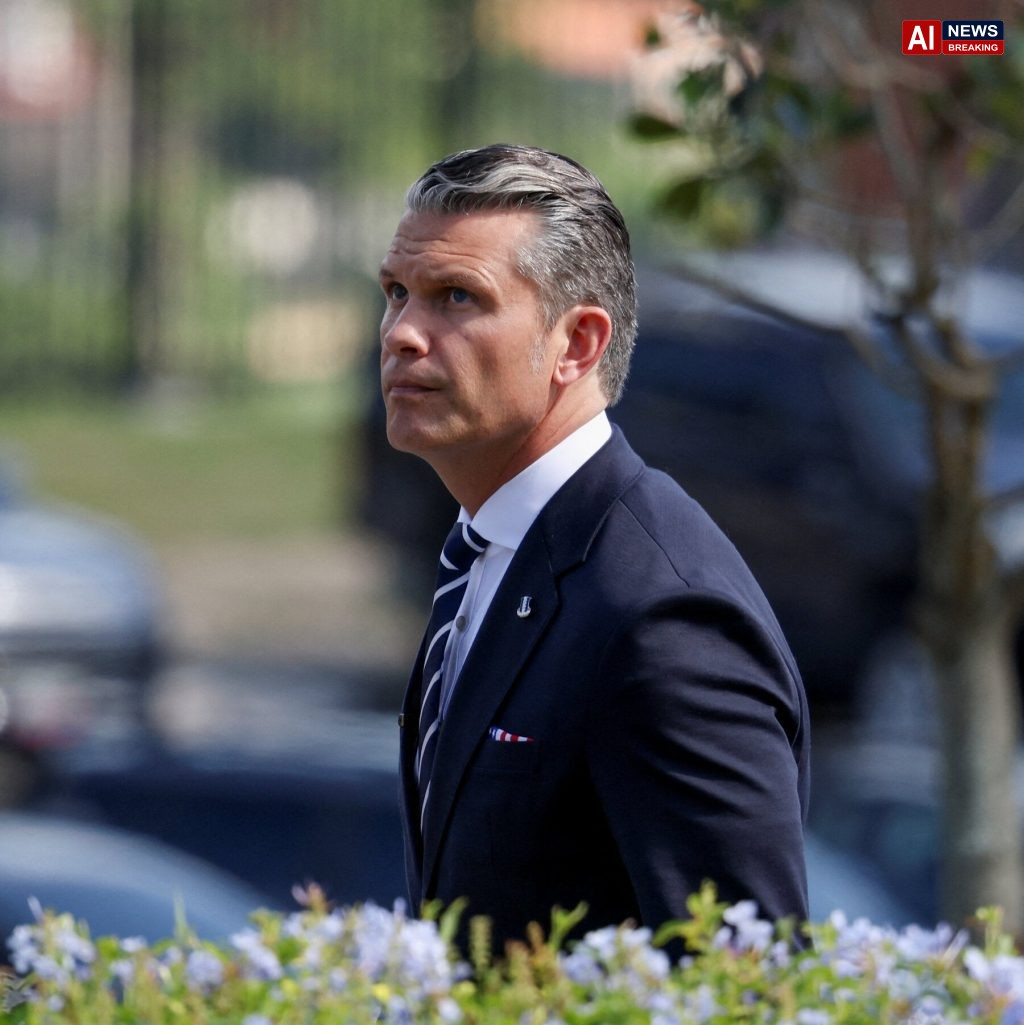
Colombia Rejects Joint Plan With U.S. to Target Drug Gangs - AI News Breaking
colombias petro pushes back:
Colombian President Gustavo Petro has signalled a decisive stance on the presence of U.S. forces in the country’s ongoing fight against drug trafficking, rejecting a proposal that would have seen American troops join Colombian military operations against powerful cartels. The move has sparked a diplomatic tug‑of‑war, with U.S..
officials insisting the plan was presented as a collaborative effort to curb the flow of cocaine into North America, while the Colombian government has since denied that any such proposal had been formally rejected.In a televised address on Thursday, Petro underscored the sovereignty of Colombia’s armed forces, stating that any foreign involvement in internal security matters would have to be “strictly limited” and subject to “rigorous parliamentary oversight.”
He added that the nation’s security strategy is “rooted in a comprehensive approach that blends law enforcement, social development and international cooperation, but not foreign troops on Colombian soil.” The remarks came after reports in the U.S. media that Washington had offered to deploy a contingent of special‑operations personnel to assist Colombian units in dismantling the networks of the notorious Clan del Golfo and other criminal organisations.U.S. State Department spokesperson Victoria Nuland responded to Petro’s comments by saying the United States had “proposed a joint plan that respects Colombian sovereignty while providing critical capabilities that can help save lives and reduce the drug trade.” She clarified that the proposal was not a request for a permanent base or large‑scale deployment, but rather a limited, time‑bound support operation involving intelligence sharing, training and, if approved, a small number of tactical advisers embedded with Colombian forces..
Nuland emphasized that any deployment would be contingent upon a formal request from the Colombian government and would be subject to the host nation’s legal framework.The apparent miscommunication has highlighted the fragile nature of the bilateral relationship, which has been strained in recent years by divergent policies on drug control, human rights and peace negotiations with guerrilla groups. Since taking office in August 2022, Petro has pursued a left‑leaning agenda that includes a re‑evaluation of the country’s longstanding “plan Colombia” partnership with the United States, a programme that has poured billions of dollars into counter‑narcotics and anti‑insurgency operations since the early 2000s. Critics of the plan argue that it has militarised the drug war and contributed to human‑rights abuses, while supporters maintain that it has been essential in reducing coca cultivation and cartel influence.Inside Bogotá, the president’s office issued a statement on Friday refuting claims that Petro had “rejected” a cooperation plan outright..
The communiqué described the media reports as “misleading” and asserted that the administration is still “evaluating all options” for enhanced collaboration with Washington. It added that any decision regarding foreign military involvement will be taken only after “a thorough assessment of the legal, operational and political implications.” The statement also reiterated Petro’s commitment to “strengthening the capabilities of the National Police and the Armed Forces through domestic investment and regional partnerships.”Analysts note that the diplomatic frictions may reflect a broader shift in how Latin American governments view U.S. In recent months, Mexico, Brazil and Chile have each voiced concerns over the perceived expansion of U.S..
military influence in the region, prompting Washington to recalibrate its outreach strategies. In Colombia’s case, the government’s emphasis on “integrated development” – coupling eradication efforts with rural investment, education and health services – suggests a desire to move beyond a purely militaristic model of drug control.Nevertheless, the drug trade continues to pose a severe challenge to public safety and the national economy. According to the latest figures from Colombia’s National Narcotics Agency (ANNC), cocaine production rose by 12 percent in 2023, reaching an estimated 1,400 metric tonnes, while seizures by Colombian authorities increased only modestly..
The surge has been attributed to the resurgence of armed groups that have filled the vacuum left by the 2016 peace deal with the FARC, as well as the entry of transnational criminal organisations that diversify their operations across the Andes and the Caribbean coast.The United Nations Office on Drugs and Crime (UNODC) has warned that the “global demand for cocaine remains robust,” and that without coordinated international action, supply chains are likely to expand further. In a recent briefing, UNODC Executive Director Antonio Maria Costa called for “enhanced multilateral cooperation that respects national sovereignty while providing the tools needed to dismantle sophisticated trafficking networks.” He suggested that technology transfer, financial intelligence and capacity‑building could be more effective than direct troop deployments in curbing the flow of narcotics.Back in Washington, senior officials in the Department of Defense have reportedly prepared a contingency plan that outlines the logistics of a potential advisory mission, should the Colombian leadership give the green light. The draft includes provisions for deploying a limited number of Special Forces personnel to train elite Colombian units in jungle warfare, intelligence analysis and counter‑IED techniques..
The plan also earmarks funding for joint aerial surveillance platforms that could track coca cultivation in remote areas, a capability that Colombian authorities have struggled to maintain due to budget constraints.Public opinion in Colombia appears divided on the issue. A recent poll conducted by the Universidad de los Andes found that 48 percent of respondents support greater U.S. involvement in the fight against drug cartels, while 42 percent prefer a solely national approach, and the remainder were undecided..
Among urban dwellers, the appetite for foreign assistance is higher, reflecting concerns over rising violence in cities like Medellín and Cali, where cartel-related homicides have climbed sharply over the past year. Rural communities, however, remain wary of foreign troops, recalling past incidents where military operations have resulted in forced displacement and human‑rights violations.As the dialogue between Bogotá and Washington continues, the next steps will likely hinge on the political calculus within Colombia’s own Congress, where opposition parties have pledged to scrutinise any agreement that could permit foreign soldiers on domestic soil. The outcome may set a precedent for future cooperation on transnational threats, from drug trafficking to cyber‑crime, shaping the contours of U.S.–Latin American relations for years to come..
Updated: November 19, 2026
Petro’s pushback signals a broader Latin‑American pivot from “big‑gun” aid to home‑grown, development‑first strategies, forcing Washington to trade boots for brains if it wants to stay relevant.