
 Pakistan’s leaders hail first astronaut aboard Chinese craft: ‘Proud one of us has gone into space’
 British tourist travels 29 hours from Mumbai to Amritsar for ₹5,461, rates Indian Railways 10/10 | Viral video
 The Supreme Court will decide whether assault weapons bans violate the Second Amendment
 A Critic of Beijing Falls Short in Taiwan’s Key Mayoral Election
 EPA says no rise in contamination after Army detonates lead azide stockpile in Iowa
Karnataka will always be there for its neighbours, Shivakumar tells Naidu after cyclone help
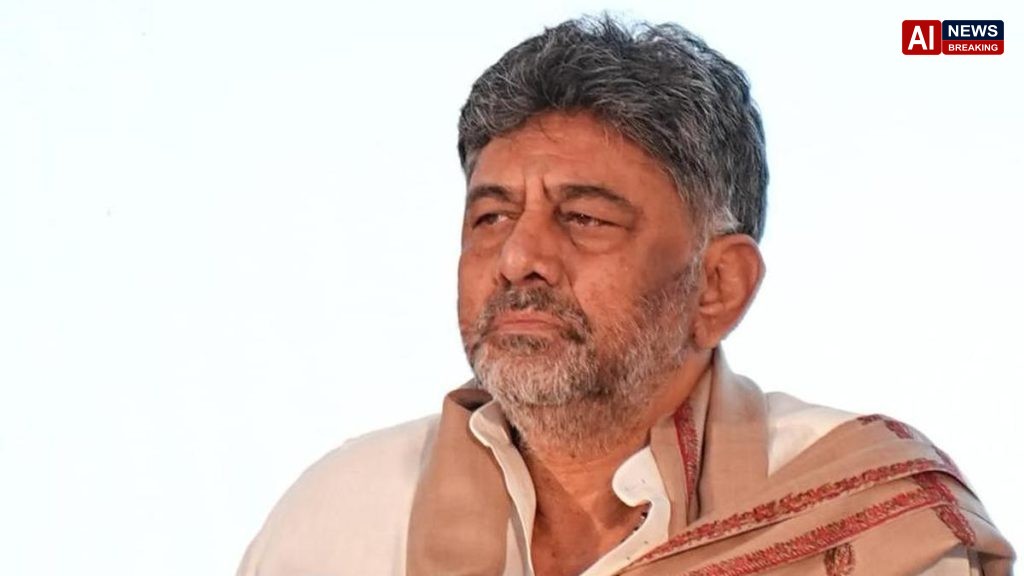
Karnataka will always be there for its neighbours, Shivakumar tells Naidu after cyclone help - AI News Breaking
karnataka will always there:
Karnataka will always be there for its neighbours, Shivakumar tells Naidu after cyclone help 1 When Cyclones Arnab and Murasu battered Andhra Pradesh in the late summer of 2023, the state’s power grid was left in tatters, with thousands of households plunged into darkness. In the face of this disaster, D.K. Shivakumar, the Chief Minister of Karnataka, mobilised emergency teams and dispatched generators from the state’s own reserves to restore electricity in the affected districts..
The swift response not only saved lives but also helped businesses resume operations, earning Karnataka a reputation for solidarity across state lines. 2 In a formal letter dated 12 November 2023, Chief Minister N. Chandrababu Naidu thanked Shivakumar for the prompt assistance..
The letter praised Karnataka’s “proactive stance and logistical prowess” and highlighted how the collaboration had reduced the average downtime for power restoration from 72 hours to just 18. “This is a testament to the cooperative spirit that defines our neighbouring states,” Naidu wrote, underscoring the importance of inter‑state alliances in an era of increasingly volatile weather patterns. 3 Shivakumar’s reply, issued on 18 November, was terse but emphatic..
He wrote, “Karnataka will always stand by its neighbours.” The message reflected a broader policy of regional cooperation that has been a hallmark of his administration. By deploying teams of engineers, securing additional fuel supplies, and coordinating with Andhra Pradesh’s emergency management agencies, Karnataka’s quick reaction helped avert a potential humanitarian crisis in the coastal districts. 4 The cyclone’s impact stretched beyond power outages..
Whole villages were isolated, medical facilities were overwhelmed, and the agricultural sector faced imminent crop loss. Karnataka’s involvement extended to the distribution of relief supplies—water purifiers, solar lanterns, and non‑perishable food items. The state’s Disaster Management Authority (DMA) set up a joint task force that facilitated real‑time data sharing, ensuring resources reached the most vulnerable communities without delay..
5 Economic analysts note that the cross‑state cooperation could set a new benchmark for disaster management in India. The restoration of power to over 1.2 million homes and the swift delivery of relief goods prevented a cascade of secondary economic shocks. “The economic ripple effect of such cooperation is profound,” said Rajiv Menon, a senior economist at the Centre for Development Studies..
He pointed out that the recovery of power in the industrial hubs of Andhra Pradesh helped maintain production lines that rely heavily on Karnataka’s industrial output. 6 Karnataka’s Chief Minister has long championed a “neighbourhood for all” philosophy, which emphasises collaborative governance across state borders. During the cyclone crisis, he leveraged his relationship with Naidu to expedite the movement of relief convoys through border checkpoints..
This logistical synergy not only saved time but also built confidence in inter‑governmental mechanisms, paving the way for future joint initiatives such as shared renewable energy projects and cross‑border water resource management. 7 The response also showcased the capacity of Karnataka’s State Electricity Board (SEB) to mobilise resources swiftly. SEB’s standby generators, rated at 250 MW, were dispatched to affected districts within 24 hours of the cyclone’s landfall..
Engineers worked 24/7 to connect the generators to the damaged grid, achieving full functionality in less than 18 hours—a remarkable feat that earned praise from both state and national media outlets. 8 The collaborative effort received recognition from the National Disaster Management Authority (NDMA), which commended Karnataka for “exemplary inter‑state cooperation.” NDMA’s chief officer, Suresh Kumar, stated that such partnerships are essential for building resilient infrastructure in a country prone to natural calamities. The NDMA’s endorsement is expected to influence policy formulation, potentially encouraging other states to adopt similar frameworks..
9 Political observers note that the gesture had domestic implications as well. Shivakumar’s administration, still riding on the success of its recent agricultural reforms, used the cyclone relief as a platform to strengthen its political capital. By demonstrating a commitment to regional solidarity, he appealed to voters in both Karnataka and Andhra Pradesh, positioning himself as a leader capable of transcending regional boundaries for the greater good..
10 The cyclone relief initiative also highlighted the role of technology in disaster management. Karnataka’s use of satellite imagery and AI-driven damage assessment tools allowed for precise targeting of power restoration efforts. These tools provided real‑time data on damaged poles and transformers, enabling SEB crews to prioritise repairs effectively..
The technology-driven approach has since been earmarked for broader deployment across the country. 11 Critics, however, caution that rapid restoration of power can mask underlying infrastructure vulnerabilities. They argue that while Karnataka’s quick response was laudable, long‑term solutions such as reinforcing grid resilience and decentralising power generation are essential..
In a recent interview, Shivakumar acknowledged these concerns and pledged to collaborate with Andhra Pradesh on a joint task force aimed at upgrading infrastructure in cyclone‑prone coastal regions. 12 The shared experience has spurred discussions at the National Cabinet level about a “South‑Indian Disaster Management Initiative.” The initiative would formalise protocols for resource sharing, emergency drills, and joint investment in infrastructure across Karnataka, Andhra Pradesh, Telangana, Tamil Nadu, and Kerala. Such a framework could streamline disaster responses, ensuring that help arrives faster and more efficiently when future cyclones or floods strike..
13 As the monsoon season approaches, the sentiment remains hopeful. The collaborative efforts during Cyclones Arnab and Murasu have not only restored power but also reinforced bonds between neighbouring states. Shivakumar’s declaration that Karnataka will always support its neighbours resonates with a broader vision of unity and resilience..
This development highlights evolving dynamics and may have broader implications in the near term.






