
 Pakistan’s leaders hail first astronaut aboard Chinese craft: ‘Proud one of us has gone into space’
 British tourist travels 29 hours from Mumbai to Amritsar for ₹5,461, rates Indian Railways 10/10 | Viral video
 The Supreme Court will decide whether assault weapons bans violate the Second Amendment
 A Critic of Beijing Falls Short in Taiwan’s Key Mayoral Election
 EPA says no rise in contamination after Army detonates lead azide stockpile in Iowa
Iowa residents brace for a lead dust cloud as Army plans to detonate 5 tons of bomb-making chemicals
**
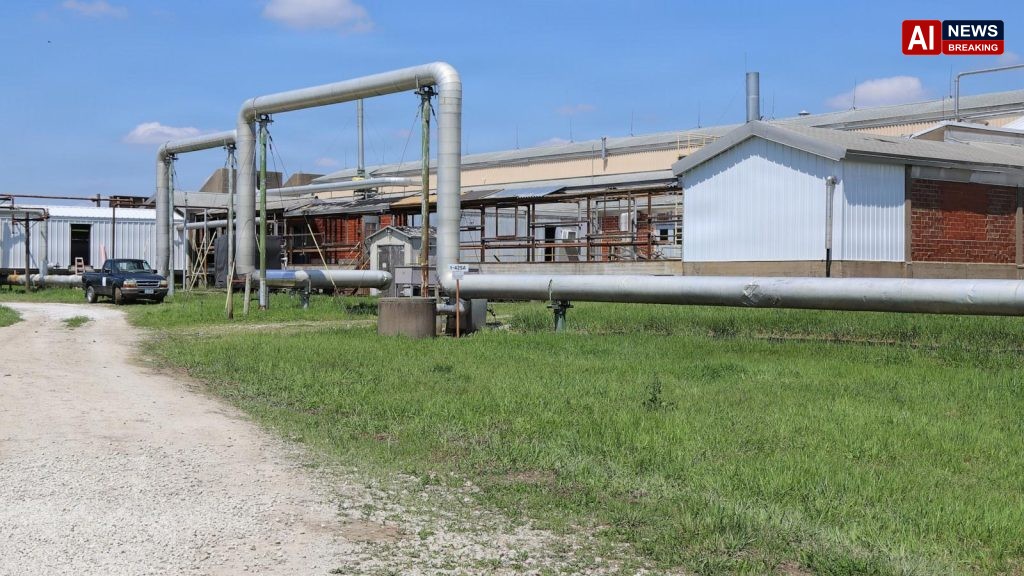
Iowa residents brace for a lead dust cloud as Army plans to detonate 5 tons of bomb-making chemicals - AI News Breaking
iowa residents brace lead:
Iowa residents brace for a lead dust cloud as Army plans to detonate 5 tons of bomb‑making chemicals The U.S. Army’s decision to destroy roughly five tonnes of high‑explosive material at the historic Rock Island Ammunition Plant has sparked a wave of anxiety across southeast Iowa. Officials say the demolition, scheduled for early next month, is a necessary step in the long‑term cleanup of the Cold‑War‑era site, but locals fear the blast could release a cloud of lead‑laden dust over farms and small towns..
Community leaders have called for greater transparency, insisting that safety assessments be made public and that residents be given clear evacuation guidelines should the operation go awry. The ammunition plant, once a bustling hub for the production of mortar shells and artillery rounds, was decommissioned in the 1990s and has since been listed as a Superfund site by the Environmental Protection Agency. Over the decades, the sprawling complex has accumulated a legacy of hazardous substances, including lead, mercury, and perchlorates, all of which pose long‑term health risks..
The Army’s disposal plan, known internally as “Operation Clean Slate,” proposes a controlled detonation of the remaining high‑explosive compounds, followed by a thorough sweep of the surrounding soil for residual contamination. Environmental scientists from the University of Iowa have been monitoring the site for the past two years, collecting baseline data on air and soil quality. Their preliminary findings suggest that a single, well‑contained blast could release particulate matter equivalent to the dust generated by a midsize construction demolition..
While the Army maintains that modern filtration and suppression systems will limit emissions, critics argue that the complex’s aging infrastructure could compromise those safeguards, allowing lead particles to drift into nearby cornfields and residential yards. “I’ve lived on this land for forty years, and I’ve never seen anything like this proposed,” said Mary Whitaker, a 68‑year‑old farmer from nearby Keokuk County. “We grow soybeans and raise livestock; if a lead cloud settles on our fields, it could ruin crops and end up in the food chain..
The Army needs to show us that they’ve thought this through, not just rely on vague assurances.” Whitaker’s concerns echo those of a broader coalition of farmers, teachers, and small‑business owners who have formed the “Iowa Clean Air Alliance” to lobby for stricter oversight. Local government officials have been caught between supporting a federal cleanup initiative and addressing the palpable fear among constituents. County auditor James Liu announced that his office is preparing an emergency response plan, which includes real‑time air‑quality monitoring stations and a hotline for residents to report symptoms..
“We are not opposed to the demolition itself, but we must ensure that the health of our citizens is not jeopardized,” Liu said at a recent town‑hall meeting that drew a packed audience. The Army’s spokesperson, Colonel Rebecca Hayes, reiterated that the operation will comply with all federal and state environmental regulations. “We have conducted extensive modeling of plume dispersion, and the data indicates that any particulate fallout will remain well within EPA‑approved limits,” Hayes told reporters..
She added that the detonation will be preceded by a “pre‑blast sweep” using robotic arms to remove any loose debris that could become airborne, and that a high‑capacity water mist system will be activated to suppress dust at the moment of explosion. Despite these assurances, independent experts caution that models cannot fully predict real‑world outcomes, especially when dealing with aged, corroded munitions. Alan Patel, a toxicologist at the Iowa Institute of Public Health, warned that lead particles as small as 2.5 microns can penetrate deep into the respiratory system, posing risks of neurological damage, especially in children and the elderly..
“Even low‑level exposure over time can have cumulative effects,” Patel explained. “If the community is to a single, high‑concentration event, the health implications could be far more severe than current risk assessments suggest.” State environmental agencies have pledged to conduct on‑site sampling before, during, and after the blast. The Iowa Department of Natural Resources (IDNR) is deploying a mobile laboratory equipped with real‑time spectrometers to measure airborne lead concentrations in the immediate vicinity..
However, critics point out that the agency’s resources are already stretched thin, handling numerous other contamination sites across the state, and question whether adequate staffing will be available to monitor the operation around the clock. Legal challenges are also looming. A coalition of five counties has filed a petition with the U.S..
Court of Federal Claims, seeking an injunction that would delay the detonation until an independent environmental impact assessment is completed. Their filing argues that the Army’s Environmental Impact Statement (EIS) does not sufficiently address cumulative exposure risks or the potential impact on agricultural runoff that could contaminate the Mississippi River watershed downstream. In the meantime, residents are taking personal precautions..
Local pharmacies report a surge in sales of N95 respirators and lead‑testing kits for home soil. Schools in the district have temporarily relocated outdoor activities to indoor gymnasiums, and some parents have opted to keep children home on the day of the planned explosion. “We’re doing what we can, but there’s a feeling that we’re the ones left to protect ourselves while the Army makes the big decisions,” said Tom Reynolds, a high‑school teacher and parent of two..
The broader national context adds another layer of complexity. Across the United States, the Department of Defense is grappling with the safe disposal of aging munitions stockpiles, many of which contain legacy chemicals now recognized as hazardous. Critics argue that the reliance on open.
Updated: November 19, 2026
The Army’s “clean‑slate” blast risks turning Iowa’s rural skies into a lead‑laden smokescreen, a danger that local farmers feel is being underplayed by federal guarantees. If the detonation’s dust escapes containment, the region could see a silent, long‑term poisoning of crops







