
 Pakistan’s leaders hail first astronaut aboard Chinese craft: ‘Proud one of us has gone into space’
 British tourist travels 29 hours from Mumbai to Amritsar for ₹5,461, rates Indian Railways 10/10 | Viral video
 The Supreme Court will decide whether assault weapons bans violate the Second Amendment
 A Critic of Beijing Falls Short in Taiwan’s Key Mayoral Election
 EPA says no rise in contamination after Army detonates lead azide stockpile in Iowa
Karnataka to make fresh bid for ST status for Kadugolla and Hattigolla communities
**
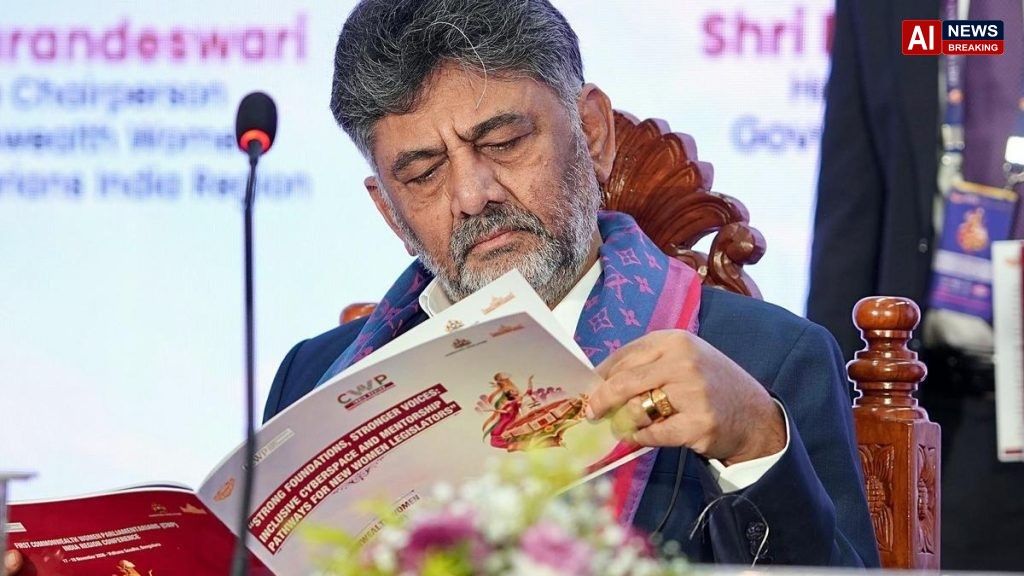
Karnataka to make fresh bid for ST status for Kadugolla and Hattigolla communities - AI News Breaking
karnataka make fresh status:
The Karnataka state cabinet has approved a renewed bid to secure Scheduled Tribe (ST) status for the Kadugolla and Hattigolla communities, a move announced by Chief Minister D.K. The decision follows the commissioning of a comprehensive ethnographic study, which the cabinet said provides fresh evidence of the communities’ socio‑economic marginalisation and cultural distinctiveness—criteria central to the central government’s guidelines for ST classification.The push for ST status, which would grant the two groups access to reservations in education, public employment and a range of welfare schemes, has been a long‑standing demand of community leaders. Earlier attempts to obtain the designation were stalled after the Union Ministry of Tribal Affairs rejected a 2018 application, citing insufficient data on the groups’ tribal characteristics and the extent of their deprivation..
The present cabinet resolution, however, signals a more methodical approach, with the state government now relying on a detailed field report compiled by a team of anthropologists, sociologists and local administrators.The study, conducted over a twelve‑month period across several districts, examined variables such as land ownership patterns, literacy rates, income levels, health indicators and cultural practices. According to the report, both Kadugolla and Hattigolla communities exhibit a high incidence of landlessness, with over 70 per cent of households lacking ownership of agricultural land. Literacy among adults stands at roughly 38 per cent, markedly below the state average of 75 per cent, while child malnutrition rates are twice the state norm..
Moreover, the report documents distinct linguistic traits, ritual customs and traditional governance structures that set the groups apart from neighbouring castes, reinforcing their claim of a unique tribal identity.In a brief statement, Shivakumar highlighted the importance of “evidence‑based policy” and pledged to forward the findings to the central government without delay. He underscored the administration’s commitment to “ensuring that the most vulnerable sections of society are not left behind,” adding that the state would continue to monitor the implementation of existing welfare schemes for the two communities while awaiting a final decision from New Delhi. The chief minister also indicated that the state would seek a “prompt and fair” review by the Ministry of Tribal Affairs, referencing the central government’s stipulated timeframe of six months for deliberations on new ST requests.The announcement was met with cautious optimism by community representatives..
Ramesh Gowda, a spokesperson for the Kadugolla Mahasabha, said the ethnographic report “captures the lived reality of our people” and expressed hope that the renewed application would finally break the bureaucratic deadlock that has persisted for years. Similarly, Hattigolla leader S. Venkatesh remarked that the state’s renewed advocacy “sends a strong signal that our plight is being recognised at the highest levels.” Both leaders urged the central authorities to act swiftly, warning that prolonged uncertainty could exacerbate existing hardships.Critics, however, have raised concerns about the broader implications of expanding the ST list..
Some political analysts argue that the addition of new groups could intensify competition for limited reservation quotas, potentially affecting other already‑designated tribes. Anjali Menon, a sociologist at Bengaluru’s Institute of Social Sciences, warned that “while the need to address genuine deprivation is undeniable, the criteria for ST status must remain stringent to preserve the integrity of affirmative action policies.” She called for a transparent evaluation process and suggested that the central government consider supplementary measures, such as targeted development programmes, for communities that fall short of the tribal classification but still require support.The Union Ministry of Tribal Affairs has not yet issued a formal response to the Karnataka cabinet’s renewed recommendation. Historically, the central government has applied a multi‑tiered assessment framework, weighing factors such as historical isolation, distinct social customs, and demonstrable economic backwardness..
In recent years, several states have successfully secured ST status for additional communities after presenting robust evidence, while others have faced rejections due to perceived inadequacies in documentation. Observers note that the inclusion of ethnographic studies, like the one commissioned by Karnataka, reflects a growing trend of employing academic rigor to substantiate claims of tribal status.If approved, the Kadugolla and Hattigolla communities would join the list of 224 recognized Scheduled Tribes in Karnataka, the state with the second‑largest tribal population in India after Odisha. The designation would unlock a suite of benefits, including a 7.5 per cent reservation in state government jobs and a similar quota in higher education institutions, as well as eligibility for schemes such as the Integrated Tribal Development Project and the National Rural Livelihood Mission..
For many families, these entitlements could translate into increased access to scholarships, skill‑training programmes and financial assistance for small‑scale enterprises.The move also dovetails with the Karnataka government’s broader agenda of addressing social inequities. Over the past year, the administration has rolled out initiatives aimed at improving rural healthcare, expanding digital infrastructure in remote villages and strengthening land‑rights protections for marginalized groups. By seeking ST status for Kadugolla and Hattigolla, the cabinet appears to be consolidating these efforts into a targeted policy thrust, potentially setting a precedent for other states grappling with similar demands.As the application proceeds to the central stage, stakeholders from civil society, academia and the affected communities will be watching closely..
The outcome will not only determine the immediate fortunes of the Kadugolla and Hattigolla peoples but also influence the evolving discourse on how India’s affirmative action framework adapts to new claims of tribal identity in a rapidly changing socio‑economic landscape..
Updated: November 21, 2026
Karnataka’s cabinet, led by CM D.K. Shivakumar, has renewed its push for Scheduled Tribe status for the Kadugolla and Hattigolla communities, citing a year‑long ethnographic study that highlights their economic deprivation and distinct cultural traits. The move aims to secure reservations and welfare benefits for the groups, while awaiting a central‑government decision amid concerns over reservation competition.
If the central government grants ST status, Karnataka will cement a template where data‑driven ethnographies become the new political lever, reshaping how marginalized identities negotiate power in India’s reservation system.
Yet proliferating claims risk diluting the exclusivity of tribal benefits, prompting a reckoning between genuine redress and the fiscal‑political calculus of expanding affirmative‑action quotas.






