The Supreme Court will decide whether assault weapons bans violate the Second Amendment
 A Critic of Beijing Falls Short in Taiwan’s Key Mayoral Election
 EPA says no rise in contamination after Army detonates lead azide stockpile in Iowa
 Israeli Strike Kills 2 Workers at Gaza Clinic, Doctors Without Borders Says
 McQueen Pre-Fall 2027
American vs. Chinese Mahjong: Why the Rivalry Is Stirring Controversy
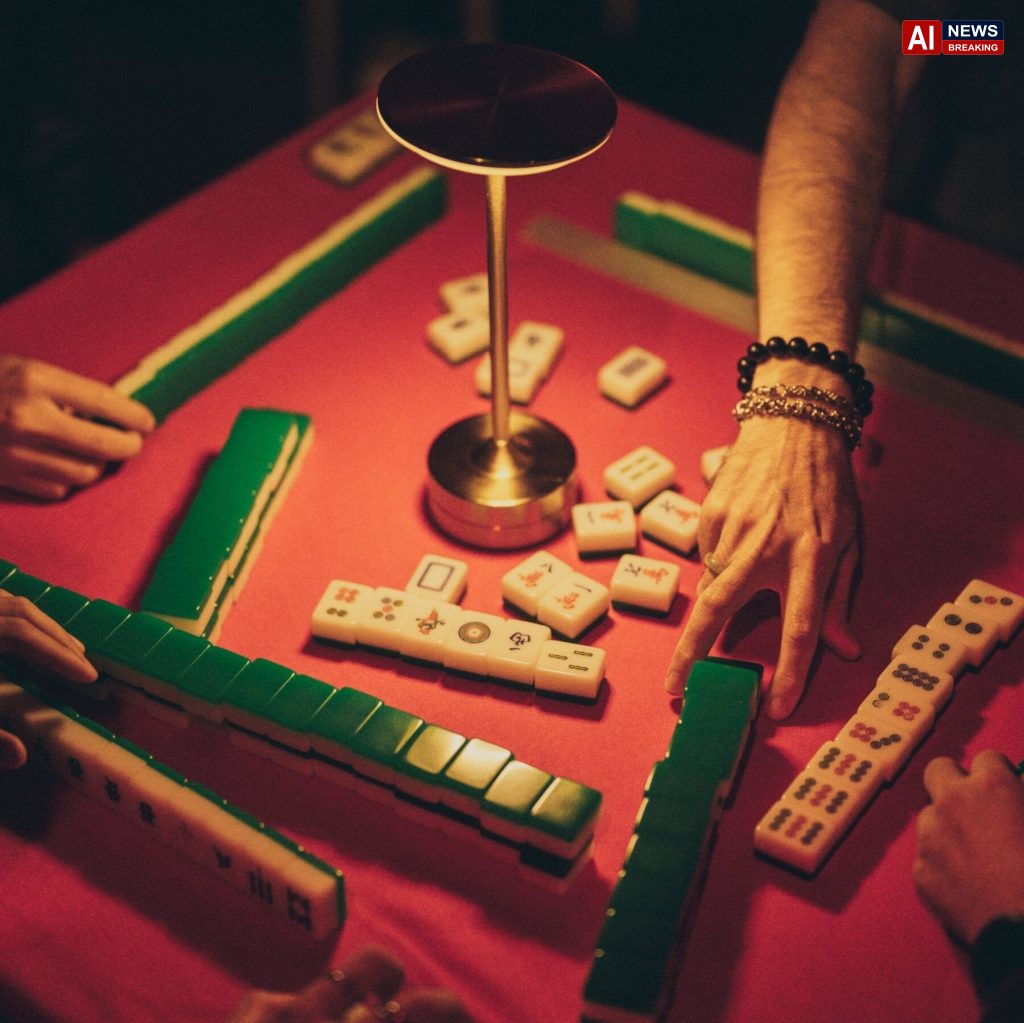
American vs. Chinese Mahjong: Why the Rivalry Is Stirring Controversy - AI News Breaking
american chinese mahjong rivalry:
American mahjong, with its own tiles and colours and a rule set that deviates markedly from the ancestral Chinese game, has taken on a life of its own in recent years. While the game originated in China, it has been adopted, adapted and commercialised across the globe, especially in the United States where a distinct style of play has become popular among community clubs and online platforms alike. The result is a rivalry that extends beyond simple variations in gameplay and touches on issues of cultural identity, intellectual property and the politics of heritage.The core of the dispute lies in the differences between the two systems..
Traditional Chinese mahjong, often played with a set of 144 tiles that includes bamboo, characters, dots, winds, dragons and a small number of honour tiles, follows rules that emphasise a balance between luck and strategic skill. It is a game that has evolved over centuries, with regional styles such as Cantonese, Hong Kong, Taiwanese and Beijing variations, each adding subtle changes in scoring and winning combinations. American mahjong, on the other hand, typically uses a pared‑down set of 144 tiles as well but often replaces the bamboo and character suits with a simpler “bamboo” set or removes certain honour tiles altogether..
The scoring system is usually simplified, with a focus on faster gameplay and easier accessibility for newcomers. These differences are not merely aesthetic; they shape the way players approach the game, the pace of matches and the types of strategies that can be employed.From a cultural perspective, many Chinese players feel that the American version dilutes the spirit of a game that has been part of their heritage for generations. The Chinese community has long defended the sanctity of the original rules, arguing that the adaptations made in the United States have stripped the game of its depth and nuance..
The perception that the American game has “overshadowed” its predecessor is seen by some as a form of cultural appropriation, where the original meanings and traditions have been replaced by a commercially driven product that caters to a different demographic.In the United States, mahjong clubs and tournaments have proliferated, especially in cities with large Asian populations. However, the game’s appeal has extended far beyond these communities. The rise of online mahjong platforms has made it easier for players from all backgrounds to engage with the game, and many of these platforms promote the American variant as the default setting..
This has led to a situation where the most commonly played version of mahjong in the United States is not the version that has been played in China for centuries. The discrepancy has become a point of contention, with Chinese mahjong organisations calling for a return to traditional rules in international tournaments and online play.Another layer of controversy surrounds the question of intellectual property. Traditional Chinese mahjong has no single owner; it is a communal game that has passed through countless hands..
By contrast, American mahjong is often produced and sold by companies that brand the game, design the tiles, and set the rules in a way that can be patented or trademarked. This has led to legal disputes over the use of certain tile designs and rulebooks, with some Chinese mahjong associations accusing American companies of copyright infringement. While the laws governing intellectual property differ between the two countries, the clash between communal heritage and corporate ownership adds a legal dimension to the debate that goes beyond simple cultural preference.The impact on the global mahjong community is significant..
International competitions, such as those organised by the World Mahjong Organisation (WMJ), have struggled to accommodate the divergent rule sets. Some tournaments allow both versions to be played, while others insist on a single standard in order to maintain fairness. This division has caused friction among players, with some viewing the insistence on a unified set of rules as an imposition that erases legitimate variations..
At the same time, there are those who argue that a single standard is necessary to preserve the integrity of the sport and to ensure that players can compare skills across regions. The debate has, in turn, influenced the way mahjong is taught in schools and community centres, as educators must decide which version best serves their curriculum and demographic.The rise of social media has amplified the dispute, providing a platform for both sides to share their perspectives. Chinese mahjong enthusiasts often use forums and video platforms to showcase the complexity of the traditional game, highlighting the intricate patterns of hand combinations and the deep strategies involved..
American mahjong players, meanwhile, use online streams and tutorials to demonstrate the accessibility of the simplified version, arguing that it can attract a wider audience. The polarised nature of these discussions can be seen in the comment sections of popular mahjong channels, where the tone shifts from friendly debate to heated argument with little room for compromise.Amid the controversy, some experts propose a middle ground: the development of a hybrid rule set that respects the traditional elements of Chinese mahjong while incorporating the user‑friendly features of the American version. Such a compromise would require extensive collaboration between mahjong associations, gaming companies and cultural scholars, and would likely need to be supported by a governing body such as the WMJ..
While this idea remains largely theoretical, it reflects a broader trend towards cultural dialogue and mutual respect in the global gaming community.In conclusion, the rivalry between American and Chinese mahjong is more than a dispute over tiles and scoring. It is a clash of cultural narratives, a legal battle over intellectual property and a question of how a centuries‑old pastime should adapt to the modern world. For players on either side, the debate underscores the importance of recognising the roots of the game while also embracing new opportunities for growth and inclusion..
As mahjong continues to evolve, the hope is that future generations will find a balance that honours the past, celebrates the present and invites all to sit at the table..
Updated: November 22, 2026
Insight: American Mahjong’s sleek, fast‑paced format is turning a cultural heirloom into a global consumer product, revealing how market‑driven design can rewrite heritage narratives. If the community can broker a hybrid rule set, it may transform a clash of identities into a model for preserving tradition while