The Supreme Court will decide whether assault weapons bans violate the Second Amendment
 A Critic of Beijing Falls Short in Taiwan’s Key Mayoral Election
 EPA says no rise in contamination after Army detonates lead azide stockpile in Iowa
 Israeli Strike Kills 2 Workers at Gaza Clinic, Doctors Without Borders Says
 McQueen Pre-Fall 2027
Police focus on 1,500 panchayats in Chittoor, Annamayya, Sri Sathya Sai districts ahead of polls
**
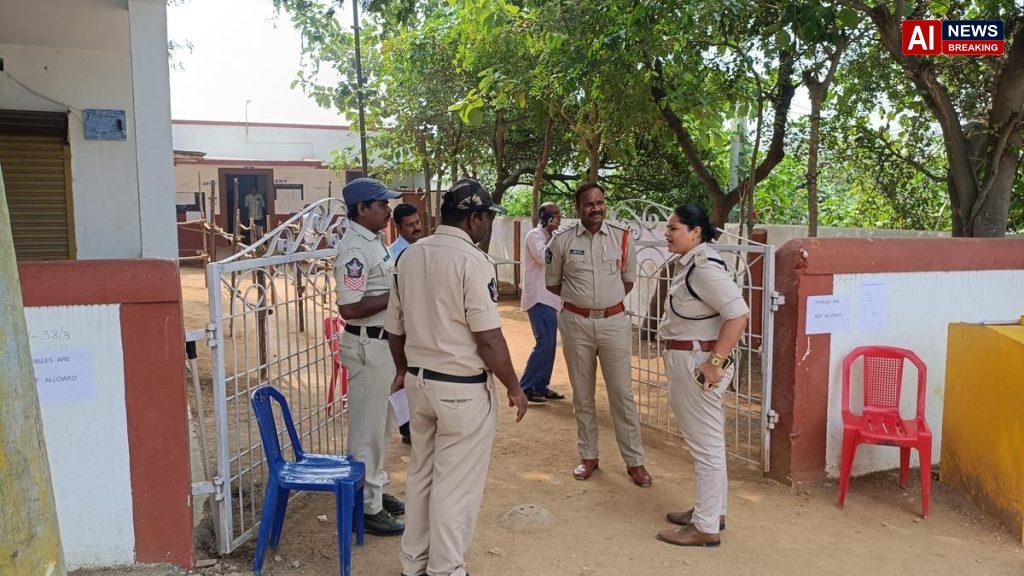
Police focus on 1,500 panchayats in Chittoor, Annamayya, Sri Sathya Sai districts ahead of polls - AI News Breaking
police focus 1500 panchayats:
Police in Andhra Pradesh have turned their attention to roughly 1,500 gram‑panchayats across the districts of Chittoor, Annamayya and Sri Sathya Sai as the state prepares for the upcoming local body elections. The focus follows an announcement by the State Election Commission that voting will be conducted in three phases – on 26 November, 29 November and 2 December – a schedule that has prompted authorities to intensify monitoring of the grassroots political arena where rival parties traditionally vie for influence.The three districts, which together account for a significant proportion of the state’s rural electorate, have historically been hotbeds of political competition between the ruling YSR Congress Party and the opposition Telugu Desam Party, with smaller regional outfits also seeking to make inroads. In the lead‑up to the polls, the police have issued a series of notices to panchayat officials, urging strict compliance with the Model Code of Conduct and warning against the use of muscle power, illicit cash, or any form of intimidation that could sway voters.Senior police officials say the decision to target a specific set of panchayats stems from intelligence inputs that indicated heightened activity by local strongmen and party workers..
“We have identified clusters where there is a risk of disruption, especially in areas where previous elections have seen booth‑capturing and vote‑buying,” explained a senior superintendent of police who requested anonymity. “Our objective is to ensure a free and fair environment for all citizens to exercise their franchise without fear or favour.”The State Election Commission, which oversees the conduct of local body elections, has reiterated its commitment to a transparent process. In a statement released last week, the commission warned that any violation of the Model Code would attract swift action, including the suspension of candidates and the filing of criminal cases..
“The sanctity of the democratic process must be preserved,” the statement read, adding that election officers have been trained to detect irregularities and that a robust grievance redressal mechanism is in place.In addition to police deployments, the administration has mobilised a substantial number of election officials, including returning officers and booth agents, to the identified panchayats. These officials have been instructed to conduct spot checks on the distribution of election materials, verify the authenticity of voter lists, and monitor the conduct of party agents on polling day. The aim is to create a “zero‑tolerance” environment for any form of electoral malpractice, ranging from the use of unauthorised loudspeakers to the distribution of cash or gifts.Local party leaders have reacted with a mixture of caution and defiance..
A spokesperson for the YSR Congress Party, which currently holds power in the state, urged the police to focus on genuine threats rather than “political posturing”. “We welcome any action that upholds the law, but we will not tolerate any attempts to weaponise law enforcement against legitimate political activity,” the spokesperson said. Meanwhile, a senior figure from the Telugu Desam Party accused the ruling government of “trying to intimidate opposition supporters” and called for an independent observer mission to monitor the election process.Civil society groups have also weighed in, urging both the police and the election commission to ensure that the rights of voters, particularly women and marginalised communities, are protected..
A local women’s rights organisation highlighted the need for special attention to gender‑based violence and the intimidation of female candidates, which have been reported in previous election cycles. “Women must be able to vote and contest without fear of harassment or coercion,” the group’s representative said, adding that any incidents should be documented and prosecuted promptly.The three‑phase schedule is intended to minimise the logistical challenges of conducting elections across a large rural expanse, but it also creates a staggered environment where parties can adjust tactics between phases. Analysts note that this could lead to a “feedback loop” where incidents in the first phase influence behaviour in subsequent rounds, making the police’s early interventions all the more critical..
“If the authorities can set a precedent of firm, impartial action in the opening days, it will deter repeat offences later on,” said a political scientist at a regional university.Election observers from the Election Commission of India have been briefed on the situation and are expected to deploy monitoring teams in the targeted panchayats. Their role will be to independently verify the integrity of the voting process and to report any violations to higher authorities. The observers will also be tasked with assessing the effectiveness of police measures, providing an external check on the state’s claims of a clean election.As the first phase approaches, the atmosphere in Chittoor, Annamayya and Sri Sathya Sai districts is a mix of anticipation and anxiety..
Voters in remote villages are preparing to cast their ballots for positions that directly affect local governance, from water supply and sanitation to road maintenance. The outcome of these elections will shape the political landscape at the grassroots level for the next five years, and could serve as an indicator of broader trends ahead of the state’s assembly elections scheduled for 2029.The convergence of police scrutiny, election‑commission oversight and civil‑society vigilance represents a concerted effort to safeguard democratic norms in a region where political rivalries run deep. Whether these measures will be sufficient to deter entrenched malpractices remains to be seen, but the heightened focus on 1,500 panchayats underscores the authorities’ recognition that the legitimacy of the electoral process begins at the village level..
The coming weeks will test the capacity of institutions to uphold the rule of law while allowing the electorate to exercise its fundamental right without undue influence..
The police’s laser‑focus on 1,500 panchayats signals a shift from reactive crackdowns to pre‑emptive policing, turning village booths into early litmus tests for the state’s broader electoral credibility. If the first phase proves clean, it could create a deterrent cascade that forces parties