
 Pakistan’s leaders hail first astronaut aboard Chinese craft: ‘Proud one of us has gone into space’
 British tourist travels 29 hours from Mumbai to Amritsar for ₹5,461, rates Indian Railways 10/10 | Viral video
 The Supreme Court will decide whether assault weapons bans violate the Second Amendment
 A Critic of Beijing Falls Short in Taiwan’s Key Mayoral Election
 EPA says no rise in contamination after Army detonates lead azide stockpile in Iowa
Mumbai police send six assault suspects
**
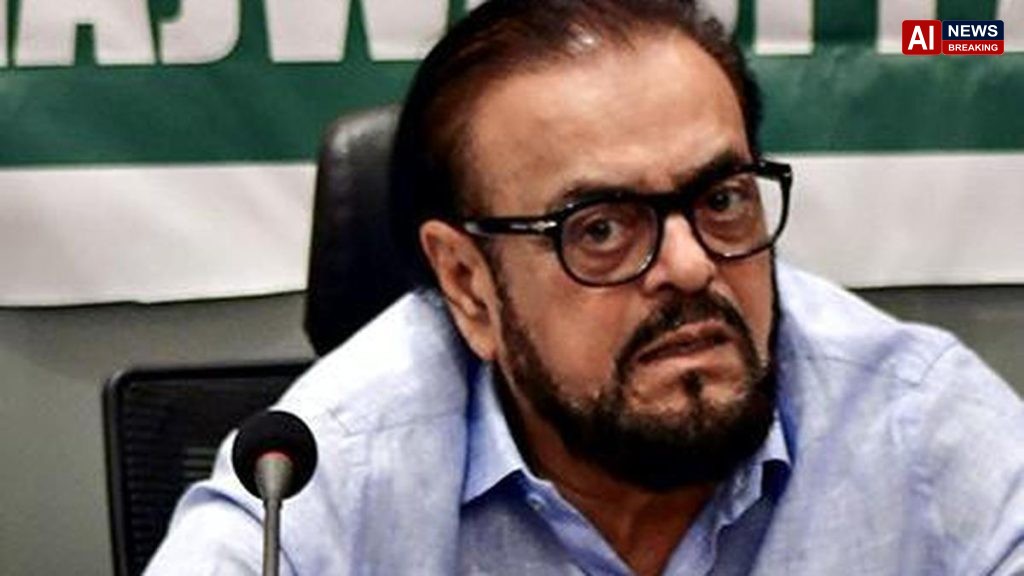
Six sent to juvenile home after Mumbai assault; Maharashtra SP leader seeks age change - AI News Breaking
mumbai police send assault:
Six sent to juvenile home after Mumbai assault; Maharashtra SP leader seeks age change The Mumbai police have taken a decisive step in a high‑profile assault case that shocked the city last month, sending six of the accused to a juvenile home while the remaining two adults face trial in a regular court. The incident, which occurred on a crowded street near Marine Drive, involved a group of young men who attacked a local vendor, leaving him with serious injuries. The police response, coordinated by the Deputy Commissioner of Police, has been swift, with all eight suspects presented before the Juvenile Justice Board and notices served to their parents..
According to officials, the case was registered under sections 189(2), 189(4), 118(1), 352 and 351(2) of the Bharatiya Nyaya Sanhita, 2023. These provisions cover offences ranging from obstruction of public duties to assault with the intent to cause bodily harm, reflecting the seriousness with which the authorities view the incident. The inclusion of section 118(1) underscores the alleged conspiracy among the accused, while sections 352 and 351(2) address the violent nature of the assault and the threat it posed to public safety..
The Deputy Commissioner of Police, who briefed the media after the board hearing, emphasised that the decision to place six of the suspects in a juvenile home was guided by their age at the time of the offence. “All eight were produced before the Board; we have taken care to ensure that the legal process respects the rights of minors while also safeguarding the victim’s right to justice,” he said. Notices were also dispatched to the parents of the juveniles, informing them of the proceedings and their legal obligations..
The victim, 42‑year‑old Ramesh Patel, a street food vendor, was left with a fractured arm and multiple bruises after the attack. He was rushed to a nearby hospital where he underwent surgery and is now recovering. Patel’s family has expressed gratitude for the police’s rapid action but has also called for harsher penalties for the adult perpetrators..
“We want the law to be clear that such violent behaviour will not be tolerated,” his brother said in an interview. The two adults, both in their early twenties, remain in police custody awaiting trial. Their identities have not been released, in line with standard procedure, but sources close to the investigation indicate that they are suspected of orchestrating the assault and encouraging the younger participants..
Prosecutors are expected to present strong evidence of premeditation, including text messages and eyewitness accounts, which could lead to convictions under the newly enacted sections of the Bharatiya Nyaya Sanhita. The case has drawn significant attention from political leaders across Maharashtra. The state’s senior police (SP) leader, Praveen Deshmukh, publicly urged the judiciary to consider changing the age classification for certain violent offences..
Deshmukh argued that the current definition of a juvenile, set at 18 years, may be too lenient for crimes that exhibit a high degree of planning and brutality. “We must examine whether the law should differentiate between petty misdemeanours and serious violent acts when the offender is close to adulthood,” he said in a press conference. Legal experts have weighed in on Deshmukh’s proposal, noting that any amendment to the age criteria would require careful balancing of rehabilitative ideals and public safety concerns..
Professor Anita Rao of the National Law University, Mumbai, cautioned that lowering the juvenile age could undermine the protective intent of the juvenile justice system. “The goal is to rehabilitate, not merely to punish,” she explained. “Any shift must be evidence‑based and consider the broader impact on young offenders.” Human rights organisations, however, have welcomed the move to place the six younger suspects in a juvenile facility, viewing it as a compliance with international standards on child rights..
The International Commission on Missing Persons (ICMP) released a statement applauding the police for respecting the procedural safeguards afforded to minors, including parental notification and the involvement of a specialized board. The statement also urged continued monitoring of the juveniles’ treatment to ensure it aligns with the United Nations Convention on the Rights of the Child. The Mumbai Police have indicated that the juvenile home where the six will be housed is equipped with educational and counselling services aimed at reintegration..
Officials claim that the juveniles will undergo a comprehensive assessment to determine the appropriate rehabilitation plan, which may include vocational training and psychological support. “Our approach is holistic,” the Deputy Commissioner reiterated. “We want these young people to emerge as responsible citizens rather than repeat offenders.” Public reaction on social media has been mixed, with many users expressing relief that the victims are receiving justice while also debating the merits of Deshmukh’s age‑change proposal..
Hashtags such as #JusticeForPatel and #JuvenileReform trended on Twitter throughout the day, reflecting a society grappling with the complexities of crime, punishment, and youth. Critics of the proposed age shift argue that it could lead to an increase in incarceration rates for young adults, while supporters claim it would act as a deterrent against violent crime. The Maharashtra state government is expected to convene a panel of legal scholars, child psychologists and law enforcement officials to review the SP leader’s recommendation..
The panel’s findings could influence upcoming legislative debates in the state assembly, where the Bharatiya Ny.
Updated: November 22, 2026
The move to house six perpetrators in a juvenile facility underscores a tacit acknowledgment that rehabilitation, not retribution, remains a cornerstone of India’s child‑justice ethos—yet the SP’s push to redraw the juvenile age line hints at an emerging tension between that ideal and a hardening public demand for deterrence. If the legal definition of “minor” is lowered, Mumbai’s precedent could ripple nationwide, reshaping how the justice system balances youth protection with societal pressure for harsher penalties in






