The Supreme Court will decide whether assault weapons bans violate the Second Amendment
 A Critic of Beijing Falls Short in Taiwan’s Key Mayoral Election
 EPA says no rise in contamination after Army detonates lead azide stockpile in Iowa
 Israeli Strike Kills 2 Workers at Gaza Clinic, Doctors Without Borders Says
 McQueen Pre-Fall 2027
A California billionaire tax proposal faced a major setback despite big wins for progressives
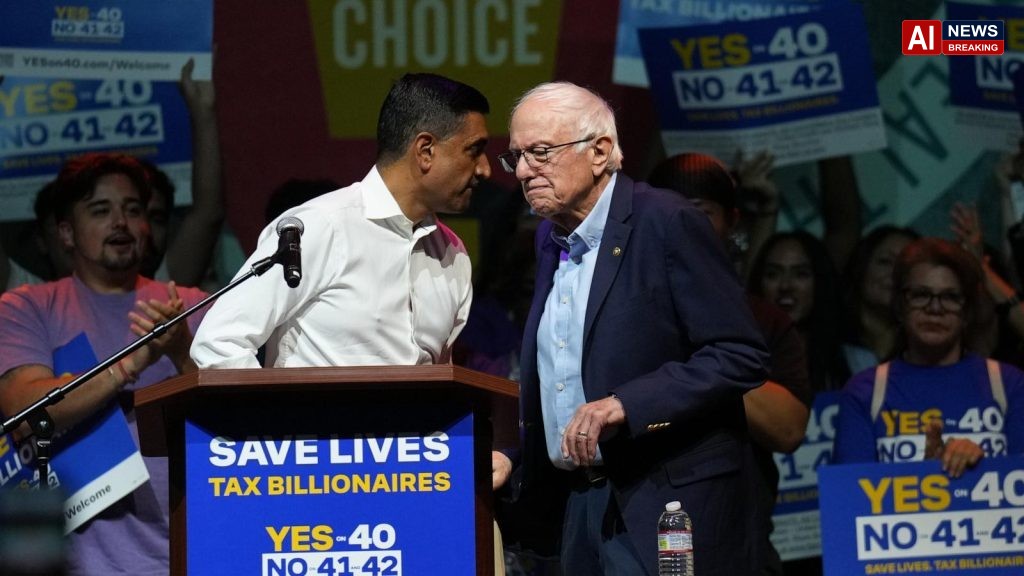
A California billionaire tax proposal faced a major setback despite big wins for progressives - AI News Breaking
california billionaire proposal faced:
California voters delivered a decisive blow to a high‑profile billionaire‑tax initiative on Election Day, rejecting a proposal that had been championed by a coalition of progressive groups and wealthy philanthropists. The measure, which would have imposed an additional 15 percent surcharge on individuals whose net worth exceeded $1 billion, failed to secure the 55 percent supermajority required to pass statewide. In addition, the electorate voted in favour of a new public‑policy framework that would make it considerably more difficult for future proposals to gain the necessary support, signalling a cautious approach to the state’s fiscal agenda.The billionaire tax was originally drafted by the state’s Senate Budget and Taxation Committee and drafted by a bipartisan group of lawmakers..
Its proponents argued that the surcharge would generate roughly $12 billion annually, funding critical needs such as public transportation, education and public safety. The proposal had earned early momentum, buoyed by high‑profile endorsements from the state’s Democratic leadership and philanthropic foundations. The campaign spent roughly $45 million on advertising, television spots and grassroots outreach, aiming to persuade voters that wealth inequality required new taxation.Opposition to the measure coalesced around a range of concerns..
Critics warned that the surcharge could deter investment, reduce capital inflows and ultimately hamper California’s economic competitiveness. They also cited potential legal challenges, arguing that the measure might conflict with federal constitutional protections for property rights. A coalition of business groups, the state’s Chamber of Commerce and several conservative advocacy organisations mounted a robust campaign against the tax, arguing that the state’s fiscal problems should be addressed through spending cuts rather than new taxes.The public policy framework that passed alongside the billionaire tax, known as Measure 26, introduced a “policy veto” mechanism..
Under the new rule, any future tax measure would have to obtain not only a 55 percent majority but also a minimum turnout of 60 percent of the electorate. In addition, the framework would require a two‑year period of public comment and a review by the state’s ethics commission before a proposal could be placed on the ballot. Proponents of Measure 26 said the new rule would encourage more deliberative policymaking, while opponents warned it could entrench the status quo and limit the ability of citizens to hold lawmakers accountable.The result of the election was a clear rejection of the billionaire tax, with 52 percent of voters casting ballots against it..
The margin of defeat was narrower than many analysts had expected, and the measure performed relatively well in urban districts, particularly in the Bay Area and Los Angeles. However, it failed to capture the turnout in rural and suburban counties, where opposition to new taxes remained strong. The defeat was seen as a setback for the progressive agenda, which had counted the billionaire tax as a flagship initiative for addressing income inequality.In the aftermath, state lawmakers are facing a recalibration of their fiscal strategy..
The Democratic caucus in the legislature has already announced an intention to revisit the billionaire‑tax concept, this time proposing a more incremental approach. The new strategy would involve a phased increase in the surcharge, coupled with targeted investment incentives for businesses that create high‑wage jobs in underserved communities. This approach is intended to address some of the concerns raised by opponents while preserving the original goal of raising substantial revenue for public services.Meanwhile, the policy veto mechanism introduced by Measure 26 is already influencing the legislative calendar..
Several bills that had previously advanced to the ballot have been stalled as lawmakers reassess their viability under the new turnout and review requirements. The ethics commission will play a more prominent role, as it will now scrutinise the public‑interest merits of any future tax proposals. The commission’s review process has already been cited as a potential bottleneck, with some lawmakers warning that it could delay the passage of urgent fiscal measures during times of crisis.The outcome of the election also has implications for California’s broader economic and political landscape..
Analysts suggest that the rejection of the billionaire tax may embolden business leaders to lobby more aggressively against progressive proposals, potentially leading to a shift in the state’s policy focus toward deregulation and lower corporate taxes. At the same time, the failure may galvanise progressive groups to refine their messaging, emphasizing the tangible benefits that additional revenue could bring to public education, climate initiatives and social welfare programs.The California electorate’s decision reflects a broader national conversation about wealth taxation and the role of the state in addressing inequality. Similar proposals have been debated in other states, with mixed results..
In states where billionaire taxes have passed, revenue gains have been modest and the measures have faced legal challenges. In California, the new policy veto mechanism may serve as a model for other jurisdictions seeking to balance ambitious fiscal reforms with public accountability.As the state enters the next legislative session, lawmakers will need to navigate a complex environment. They will have to reconcile the demands of progressive constituents, who continue to call for greater taxation of the wealthy, with the concerns of voters who prioritise economic growth and fiscal responsibility..
The new policy framework introduced by Measure 26 adds an extra layer of scrutiny to this balancing act, potentially reshaping the way California approaches taxation and public policy in the years ahead..
Updated: November 22, 2026
Insight: California’s defeat of the billionaire surcharge signals a chilling of high‑stakes wealth taxes, even as Measure 26 tightens ballot access; lawmakers now face a narrower window to craft progressive revenue tools that satisfy both fiscal prudence and a politically cautious electorate. The new turnout and review hurdles may stall bold reforms, pushing the state toward incremental adjustments and a more negotiated, less confrontational fiscal agenda.