
 Pakistan’s leaders hail first astronaut aboard Chinese craft: ‘Proud one of us has gone into space’
 British tourist travels 29 hours from Mumbai to Amritsar for ₹5,461, rates Indian Railways 10/10 | Viral video
 The Supreme Court will decide whether assault weapons bans violate the Second Amendment
 A Critic of Beijing Falls Short in Taiwan’s Key Mayoral Election
 EPA says no rise in contamination after Army detonates lead azide stockpile in Iowa
Central panel meets to assess Nagarjunsagar water release.
**
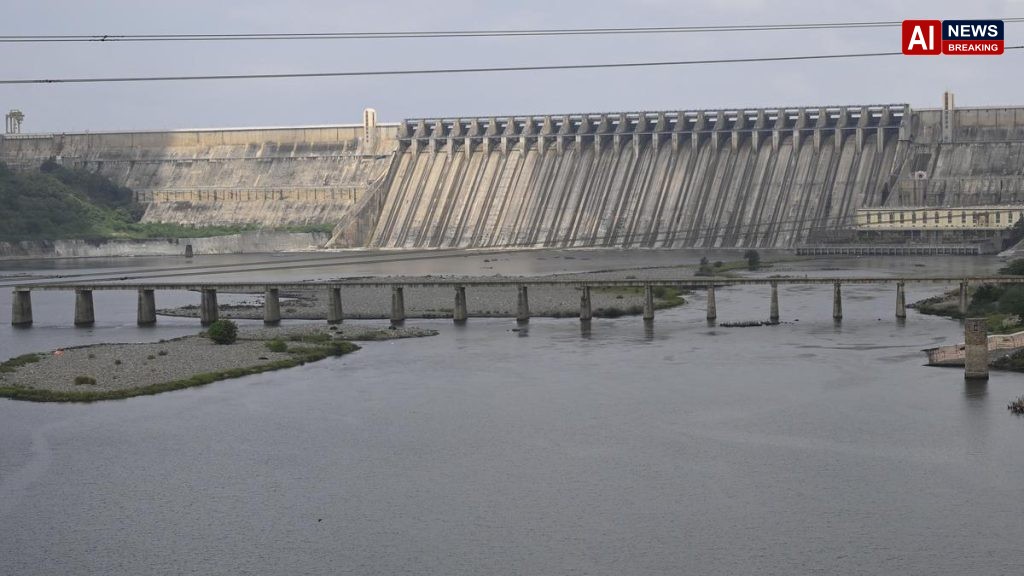
3-member panel meet of KRMB ends without taking any decision on water use - AI News Breaking
central panel meets assess:
The three‑member committee convened to examine the long‑standing dispute over the allocation of water from the Nagarjunsagar reservoir has concluded its first meeting without reaching a decision, underscoring the deep‑seated tensions between the states of Telangana and Andhra Pradesh. The panel, appointed by the central government, comprises a senior bureaucrat from the Ministry of Water Resources, a retired Indian Administrative Service officer from Andhra Pradesh, and a retired engineer from Telangana. Its mandate is to evaluate the feasibility of releasing additional water from the reservoir to the Krishna Delta system, a demand championed by Andhra Pradesh, while also considering the concerns of Telangana, which argues that any such release would jeopardise its own water security.The meeting, held in Hyderabad on Tuesday, was marked by a stark divergence of positions..
Andhra Pradesh’s representative presented a detailed dossier outlining the projected benefits of an increased flow to the delta, citing agricultural yields, drinking‑water supplies for coastal districts and the need to sustain a network of reservoirs that depend on the Krishna’s downstream discharge. The document, prepared by a team of hydrologists and economists, estimated that an additional 100 cusecs of water could raise rice production in the delta by up to 15 percent and alleviate salinity intrusion that has been worsening in recent years. The delegation also stressed the legal precedent set by earlier inter‑state water‑sharing agreements, which, it argued, obligate the upstream state to cooperate in maintaining a minimum flow.Telangana’s delegate countered with a comprehensive assessment of the state’s own water requirements, noting that the Nagarjunsagar reservoir has become a critical source for irrigation, drinking water and industrial use across its own districts..
The representative highlighted that the reservoir’s storage levels have been under pressure due to erratic monsoon patterns and the growing demand from the semi‑arid regions of Nizamabad and Karimnagar. Data presented to the panel indicated that a release of the magnitude proposed by Andhra Pradesh would reduce the reservoir’s buffer capacity by nearly 30 percent during the lean season, potentially leaving millions of residents vulnerable to water shortages. The Telangana side also warned that the proposed release could exacerbate the already fragile groundwater tables, prompting a cascade of ecological and socio‑economic consequences.The central bureaucrat, who chaired the meeting, sought to steer the discussion toward a data‑driven approach, urging both sides to agree on a joint technical study that would model the impact of various release scenarios under different climate projections..
He suggested that a phased release, contingent on real‑time monitoring of reservoir levels and downstream flow, might provide a middle ground. However, the proposal was met with scepticism. Andhra Pradesh’s representative argued that any delay in implementation would further deteriorate the delta’s water balance, while Telangana’s delegate cautioned that even a phased approach could still undermine the state’s water security if the monitoring mechanisms were not robustly enforced.The impasse was further compounded by political undercurrents..
Telangana’s chief minister, who has previously warned against any “adverse” decisions that could affect the state’s developmental agenda, has framed the issue as one of regional equity, insisting that the state’s rights to its own water resources must not be compromised for the benefit of a downstream neighbour. Conversely, Andhra Pradesh’s chief minister, a vocal advocate of the delta’s revitalisation, has framed the release as a “moral imperative” to protect the livelihoods of farmers and fishermen who have suffered recurring crop failures and reduced fish catches due to dwindling river flows. Both leaders have made public statements that echo the positions taken by their respective panel representatives, indicating that the political stakes are high and that any compromise will be scrutinised closely by their constituencies.Observers note that the dispute is emblematic of broader challenges facing inter‑state water governance in India..
The Krishna basin, shared by Karnataka, Maharashtra, Telangana and Andhra Pradesh, has been the subject of multiple tribunals and court orders over the past decades. While the Supreme Court’s 2018 verdict set a framework for equitable distribution, the dynamic nature of climate variability and the growing water demands of a burgeoning population have rendered static allocations increasingly untenable. Experts suggest that without a flexible, adaptive management system that incorporates real‑time data and allows for periodic renegotiation, such conflicts are likely to recur.In the absence of a consensus, the panel has agreed to reconvene after an independent technical assessment is completed..
The central government has commissioned a joint task force, comprising scientists from the Central Water Commission, the Indian Institute of Technology Hyderabad and the National Institute of Water Management, to develop a set of scenarios that balance the needs of both states while accounting for projected climate trends. The task force is expected to submit its findings within six weeks, after which the panel will meet again to deliberate on concrete recommendations.Stakeholders from the agricultural sector, water‑user associations and civil society groups have called for transparency in the upcoming study, urging that the data and modelling assumptions be made publicly accessible. They argue that an inclusive process would not only enhance the credibility of any eventual decision but also foster a sense of shared responsibility among the riparian states..
Meanwhile, environmental NGOs have warned that any increase in water extraction from Nagarjunsagar must be accompanied by stringent safeguards to protect the reservoir’s ecological balance, which supports a range of endemic fish species and migratory birds.The stalemate at the panel’s inaugural meeting reflects the intricate interplay of technical, political and social factors that shape water allocation disputes in India. While the promise of a scientifically grounded assessment offers a pathway forward, the ultimate resolution will hinge on the willingness of both Telangana and Andhra Pradesh to accept compromises that may involve short‑term sacrifices for longer‑term stability. As the monsoon season approaches, the urgency of the matter intensifies, with both states keen to secure their water supplies before the next cycle of rains..
The outcome of the panel’s next session will likely set a precedent for how inter‑state water conflicts are navigated in an era of mounting scarcity and climate uncertainty..
Updated: November 23, 2026
The deadlock over Nagarjunsagar foreshadows a future where India’s interstate water wars will be decided less by legal precedent and more by the ability of rival states to co‑ordinate real‑time data and climate‑smart compromises, turning water security into a political litmus test for regional cooperation.
If the panel’s technical exercise fails to produce a binding, transparent framework, the precedent will embolden other basin states to cling to rigid allocations, amplifying the risk of chronic shortages






