
 Pakistan’s leaders hail first astronaut aboard Chinese craft: ‘Proud one of us has gone into space’
 British tourist travels 29 hours from Mumbai to Amritsar for ₹5,461, rates Indian Railways 10/10 | Viral video
 The Supreme Court will decide whether assault weapons bans violate the Second Amendment
 A Critic of Beijing Falls Short in Taiwan’s Key Mayoral Election
 EPA says no rise in contamination after Army detonates lead azide stockpile in Iowa
Supreme Court warns municipalities over illegal building approvals
The Supreme Court issued a stark warning to municipal bodies nationwide, denouncing “active connivance” in the approval of illegal buildings and directing a high‑level committee to propose sweeping reforms, stricter penalties, and a public register of violations to curb rampant non‑compliance.
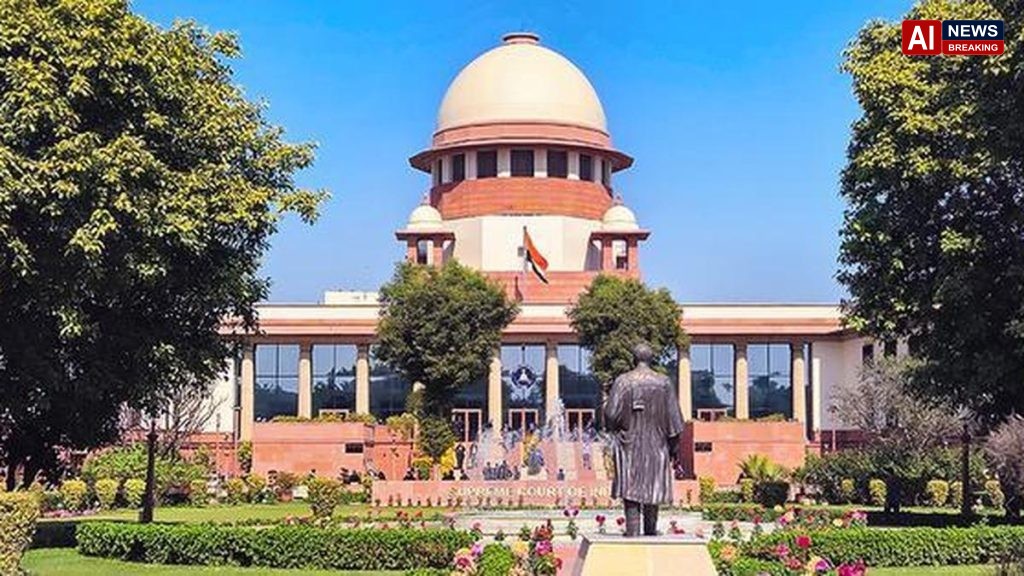
Supreme Court flags ‘active connivance’ of civic authorities in ‘flagrant’ - AI News Breaking
The Supreme Court on Monday issued a stark warning to municipal bodies across the country, describing a pattern of “active connivance” by civic authorities in the blatant violation of building bye‑laws. In a detailed order, the apex court criticised several state and union territory administrations for turning a blind eye to illegal constructions, noting that such complacency not only undermines urban planning but also endangers public safety. The bench, headed by Justice D. Y. Chandrachud, said the repeated breaches reflected a systemic failure rather than isolated lapses, and called for an urgent, coordinated response from all levels of government.The court’s observations were prompted by a series of petitions filed by resident welfare associations and environmental groups in Delhi, Mumbai, Bengaluru and other rapidly expanding metropolises..
Those petitions highlighted cases where municipal officials allegedly facilitated the approval of structures that flouted height restrictions, floor‑area ratios and fire‑safety norms. In one notable instance, a high‑rise apartment complex was permitted to exceed the stipulated floor‑area ratio by more than 30 per cent, prompting concerns about structural integrity and overloading of local infrastructure. The petitioners argued that the officials involved had not only ignored statutory provisions but had also accepted bribes to fast‑track approvals.In response, the Supreme Court directed the Ministry of Housing and Urban Affairs to convene a high‑level committee within two weeks, tasked with gathering inputs from all state governments and union territories..
The committee is to draft a comprehensive set of recommendations aimed at curbing the “flagrant violations” identified by the Court. These recommendations will be presented to the court by the end of the next quarter, after which a monitoring mechanism will be put in place to ensure compliance. The bench emphasised that the proposed framework must be both preventive and punitive, urging legislatures to strengthen penalties for officials found complicit in illegal construction activities.Legal experts have noted that the Court’s intervention arrives at a critical juncture, as India grapples with an unprecedented urban housing crunch..
According to the Ministry of Housing and Urban Affairs, the country needs to add roughly 30 million housing units annually to keep pace with migration and natural population growth. This pressure has, in many cities, created an environment where developers seek shortcuts and officials are tempted to overlook regulations. “The Supreme Court’s order underscores the need for a balance between rapid urbanisation and the rule of law,” said Anupam Kundu, a senior research fellow at the Indian Institute of Public Administration..
“If left unchecked, the erosion of building codes could lead to catastrophic failures, as witnessed in past building collapses.”State governments have begun to respond to the Court’s summons. The Maharashtra government issued a statement affirming its commitment to “zero tolerance” for illegal construction and pledged to review pending approvals within the next 30 days. Similarly, the Delhi Municipal Corporation announced the formation of an internal audit cell to scrutinise all recent building permits..
However, critics argue that such measures often amount to cosmetic changes unless backed by transparent processes and independent oversight. “We have seen promises before, but the real test will be in the implementation,” warned Meera Singh, director of the NGO Urban Watch.The union territories, particularly those with limited administrative capacity, face distinct challenges. The Court’s order specifically asked the Lieutenant Governor of Delhi and the Administrator of Chandigarh to submit detailed reports on the extent of non‑compliance in their jurisdictions..
In a brief reply, the Delhi administration highlighted ongoing reforms, including the digitisation of the building approval process and the introduction of a public grievance portal. Nevertheless, the Supreme Court noted that “digital tools alone cannot substitute for accountability” and urged a holistic approach that combines technology with stringent supervisory mechanisms.One of the key recommendations expected from the forthcoming committee is the establishment of a national register of building violations, accessible to the public and integrated with existing land‑records databases. Such a register would allow citizens, journalists and civil‑society organisations to monitor compliance in real time, thereby creating a deterrent effect..
The Court also suggested that the Central Bureau of Investigation and the Enforcement Directorate be empowered to investigate cases where there is evidence of corruption or collusion between developers and officials. This move, it argued, would send a clear message that the “active connivance” described in its order will not be tolerated.The broader implications of the Supreme Court’s directive extend beyond the immediate realm of construction law. Urban planners and environmentalists have long warned that unchecked building practices contribute to unsustainable sprawl, strain on water and energy resources, and increased vulnerability to climate‑related hazards..
By reinforcing the primacy of building bye‑laws, the Court is indirectly supporting the nation’s commitments under the Paris Agreement and the Sustainable Development Goals, particularly those related to sustainable cities and communities. “A robust regulatory framework is essential not just for safety, but for the long‑term resilience of our urban ecosystems,” observed Prof. R. S. Mehta, an urban studies scholar at Jawaharlal Nehru University.The order also re‑opens the debate on the role of local self‑government in India’s federal structure..
While the Constitution grants municipalities considerable autonomy, the Supreme Court’s remarks suggest that such autonomy must be exercised within the bounds of the law, without succumbing to political or commercial pressures. In a recent parliamentary discussion, several MPs echoed this sentiment, calling for a revision of the 74th Constitutional Amendment to embed stronger accountability clauses for municipal officers. The dialogue indicates a growing consensus that reforms are needed at both the legislative and administrative levels to safeguard the integrity of the building approval process.As the deadline for state and union territory submissions approaches, stakeholders across the spectrum are preparing their inputs..
Developers, for their part, have expressed a willingness to cooperate, provided that the new guidelines are clear, consistent and applied uniformly. “Predictability in the regulatory environment is essential for investment,” said Arvind Patel, chief executive of a major real‑estate firm headquartered in Hyderabad. Yet, he added that “any punitive measures must be proportionate and should not stifle legitimate development that addresses the housing shortage.” The Supreme Court’s call for balanced, enforceable solutions therefore arrives at a moment when the nation must reconcile the twin imperatives of rapid urban growth and the rule of law, ensuring that the safety and rights of citizens are not sacrificed on the altar of expediency..
Updated: November 23, 2026
The Supreme Court warned municipalities of “active connivance” in flouting building codes, ordering a high‑level committee to draft reforms and a monitoring system. It urged stricter penalties and greater accountability to curb illegal constructions that jeopardise safety and urban planning.
The Court’s rebuke exposes a deeper paradox: India’s housing surge is being fuelled by regulatory shortcuts that jeopardise safety, suggesting that unchecked growth is the real threat to sustainable urban futures. If the new oversight framework remains a “paper tiger,” the systemic collusion it condemns will simply migrate into more






