The Supreme Court will decide whether assault weapons bans violate the Second Amendment
 A Critic of Beijing Falls Short in Taiwan’s Key Mayoral Election
 EPA says no rise in contamination after Army detonates lead azide stockpile in Iowa
 Israeli Strike Kills 2 Workers at Gaza Clinic, Doctors Without Borders Says
 McQueen Pre-Fall 2027
Colombia’s Leader Blames ‘Terrorist Attack’ for Power Outages
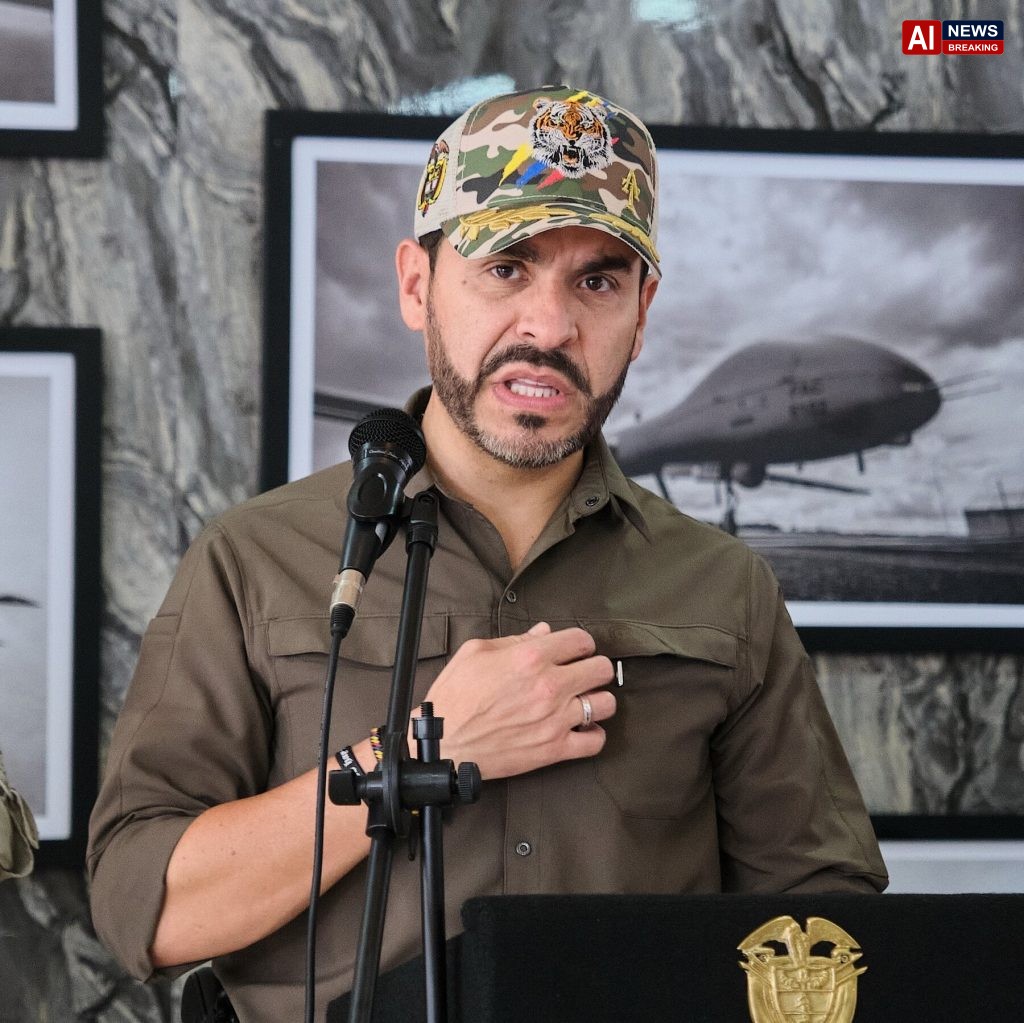
colombias leader blames terrorist:
Colombia’s Leader Blames ‘Terrorist Attack’ for Power Outages The administration of President Gustavo Petro has attributed the recent wave of electrical blackouts across several departments to a coordinated “terrorist attack” by organised criminal groups. In a televised address, Petro warned that the sabotage of power infrastructure was part of a broader campaign of violence aimed at destabilising the new government’s security agenda. He highlighted that the outages, which left millions without electricity for hours, coincided with a surge in attacks on police posts, drug‑processing labs and transport routes, all of which he linked to the same armed traffickers..
The blackouts began on Monday night in the northern region of La Guajira, spreading rapidly to neighbouring departments of Magdalena and Cesar. Residents reported flickering lights, sudden loss of power in hospitals, and halted public transport services. Utility companies confirmed that multiple transmission towers had been damaged, citing “unauthorized interference” as the cause..
Officials from the state-owned energy firm, Empresas Públicas de Medellín, said that forensic teams were tracing the incidents back to explosives placed on high‑voltage lines. According to the Ministry of Defense, the attacks are part of an escalating pattern of sabotage that has intensified since Petro took office in August. Security analysts note that the president’s pledge to dismantle powerful drug cartels and curb illegal mining has provoked a violent backlash from groups that profit from these illicit economies..
The ministry’s spokesperson, General María López, warned that “the same networks that traffic cocaine are now targeting critical infrastructure to undermine state authority.” The president’s office released a statement describing the events as “acts of terrorism” designed to intimidate citizens and erode confidence in the democratic transition. Petro called for a “national unity front” to confront the threat, urging citizens to report suspicious activity and support law‑enforcement operations. He also announced the deployment of an additional 5,000 troops to the affected regions, complementing ongoing joint operations between the army, police and specialized anti‑narcotics units..
Human rights organisations have expressed concern over the militarised response, cautioning that heavy security measures could exacerbate tensions in already volatile communities. The Colombian Commission of Jurists highlighted the need for transparent investigations into the blackouts, emphasizing that any civilian casualties must be thoroughly documented. Meanwhile, local NGOs reported that many families, already coping with poverty, faced heightened hardship as refrigeration of food and access to clean water were disrupted by the power loss..
International observers have taken note of Colombia’s predicament, with the United Nations Office on Drugs and Crime issuing a brief on the rising trend of infrastructure attacks in drug‑producing nations. In a recent briefing, UN officials warned that sabotage of energy grids can have cascading effects on public health, education and economic stability, urging governments to strengthen resilience and diversify energy sources. The United States Department of State also released a statement reaffirming its partnership with Colombia in combating organized crime, while urging respect for human rights in counter‑terrorism operations..
Economists warn that the blackouts could have a measurable impact on Colombia’s gross domestic product, particularly in sectors reliant on continuous power such as manufacturing and agribusiness. The National Federation of Merchants estimated that daily losses could reach several hundred million pesos, as factories halt production and supply chains experience delays. Moreover, the tourism industry, a growing pillar of the national economy, faces reputational damage as travelers express concern over safety and infrastructure reliability..
In response to the crisis, the Ministry of Mines and Energy announced an accelerated plan to reinforce vulnerable sections of the grid. The strategy includes deploying rapid‑response repair teams, installing remote monitoring sensors, and increasing surveillance along critical transmission corridors. Officials also indicated that they are exploring the integration of renewable energy installations, such as solar micro‑grids, to provide backup power in remote communities that have historically been targeted by armed groups..
Political opposition parties have seized the moment to critique the government’s handling of the situation. The Liberal Party’s congressional leader, Carlos Mendoza, accused Petro of “politicising tragedy” and demanded a parliamentary inquiry into the alleged sabotage. Conversely, the Conservative bloc defended the president’s decisive actions, arguing that a firm stance is necessary to dismantle entrenched criminal networks that have long plagued the nation..
The debate underscores the broader ideological divide over how best to balance security imperatives with civil liberties. As the country works to restore electricity, hospitals have reported that emergency generators are sustaining critical services, though staff remain on high alert for fuel shortages. In the city of Barranquilla, health officials noted that intensive care units continued to operate without interruption, thanks to pre‑emptive contingency plans..
Nevertheless, community leaders have called for additional support, citing the need for portable lighting, water purification kits and mental‑health resources to aid residents coping with the stress of sudden blackouts. Looking ahead, President Petro’s administration faces the dual challenge of confronting a sophisticated insurgent threat while maintaining public trust in essential services. The next weeks will likely see intensified security operations, coupled with diplomatic outreach to secure technical assistance from allies..
Whether the government can stem the tide of sabotage and restore stable power supply will be a litmus test for its broader anti‑crime agenda and its capacity to deliver on promises of a safer, more prosperous Colombia..
Updated: November 25, 2026
Colombia’s blackout drama reveals how the nation’s anti‑cartel crusade has turned power lines into pawns, exposing a vicious feedback loop where dismantling drug profits fuels infrastructure sabotage. If the government’s hard‑line response can’t simultaneously rebuild trust and protect civilians,