
 Pakistan’s leaders hail first astronaut aboard Chinese craft: ‘Proud one of us has gone into space’
 British tourist travels 29 hours from Mumbai to Amritsar for ₹5,461, rates Indian Railways 10/10 | Viral video
 The Supreme Court will decide whether assault weapons bans violate the Second Amendment
 A Critic of Beijing Falls Short in Taiwan’s Key Mayoral Election
 EPA says no rise in contamination after Army detonates lead azide stockpile in Iowa
Students who opted for three languages can continue with them, says Supreme Court
**
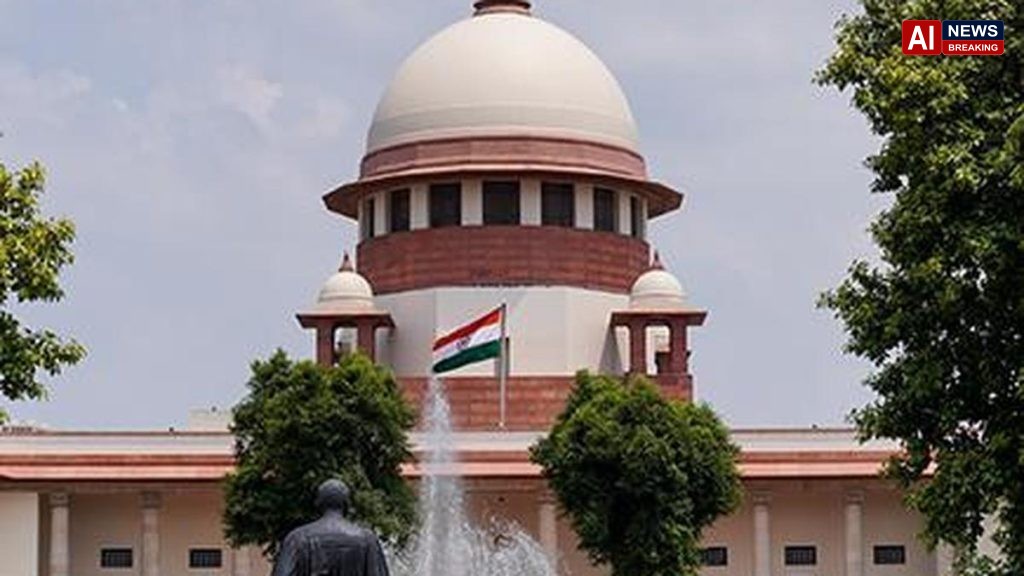
Students who opted for three languages can continue with them, says Supreme Court - AI News Breaking
students opted three languages:
The Supreme Court on Monday upheld a long‑standing practice that permits students who elect to study three languages to continue with all of them through Class 10, a ruling that has been welcomed by educators and parents alike. The bench, hearing a petition filed by a coalition of teachers’ unions and several state education boards, affirmed that the three‑language formula, introduced under the National Education Policy, remains a viable option for schools across the country, provided that the requisite infrastructure and qualified teachers are in place. In doing so, the Court also clarified the status of a temporary exemption that had been granted to Classes 7, 8 and 9 during the COVID‑19 pandemic, which allowed those cohorts to sit for the Central Board of Secondary Education (CBSE) examinations without a third‑language component.The petitioners argued that the pandemic‑era relaxation, which let students in the middle grades sit for board exams without the third language, had effectively become a de‑facto policy, creating confusion among schools about whether the requirement could be dropped altogether..
They contended that the abrupt removal of the third‑language mandate could disadvantage students in regions where multilingual proficiency is integral to cultural identity and future employment prospects, particularly in the Hindi‑speaking belt and the northeastern states where language preservation is a political priority. The respondents, representing the CBSE and the Ministry of Education, countered that the exemption was a temporary measure aimed at alleviating the logistical challenges of remote learning and that the Board’s current assessment framework is designed to evaluate students on three distinct linguistic competencies.In its judgment, the Supreme Court observed that the three‑language policy is rooted in the Constitution’s directive principles, which encourage the promotion of linguistic diversity and the development of a common national language while respecting regional tongues. The Court noted that the Constitution, under Article 350A, obliges the state to provide adequate facilities for education in the mother tongue at the primary stage, and that the three‑language formula seeks to balance this with the broader goal of national integration..
The bench stressed that any permanent alteration to the language structure of the national curriculum must be the result of a comprehensive policy review, not a piecemeal administrative decision.The decision also addressed the practical implications for schools that had already adjusted their timetables and staffing in response to the pandemic‑era waiver. The Court ordered the CBSE to issue clear guidelines within 30 days, detailing how schools should reintegrate the third language into the curriculum for Classes 7 to 10, and to provide a transitional schedule that minimizes disruption for students who have already completed significant portions of the syllabus without it. The guidelines are expected to cover the allocation of teaching hours, the assessment methodology for the third language, and provisions for schools that lack sufficient qualified teachers, especially in remote or under‑resourced areas.Education experts welcomed the ruling as a reaffirmation of the importance of multilingual competence in an increasingly globalised economy..
Dr Ramesh Kumar, a senior fellow at the Indian Institute of Education, said the Court’s decision underscores the need for a balanced approach that neither dilutes linguistic heritage nor imposes undue strain on the education system. “A three‑language framework equips students with cognitive flexibility and better prepares them for higher education and the job market, where proficiency in multiple languages is often a prerequisite,” he explained. He added that the transitional guidelines could serve as a model for other education boards grappling with similar post‑pandemic adjustments.However, the judgment also sparked concerns among some regional language activists who fear that the reinstatement of the third‑language requirement could marginalise minority languages that are already struggling for representation in schools..
In Assam, for instance, teachers’ unions have long advocated for the inclusion of Assamese and local tribal languages alongside Hindi and English, arguing that the current policy favours the latter two at the expense of indigenous tongues. In response, the Court invited the Ministry of Education to review the composition of the third language in future policy revisions, ensuring that it reflects the linguistic realities of each state and union territory.The ruling arrives at a critical juncture as the CBSE prepares for the upcoming academic year, with schools across the nation still navigating the aftershocks of pandemic‑related disruptions. Many institutions have already begun recruiting additional language teachers, while some have invested in digital platforms that facilitate interactive language learning..
The Board’s forthcoming guidelines are expected to address these initiatives, potentially endorsing blended learning models that combine classroom instruction with online resources to bridge gaps in teacher availability.Parents, too, have expressed relief at the clarity the Supreme Court’s verdict provides. Anjali Mehta, whose daughter is in Class 8 at a private school in Delhi, said the uncertainty over language requirements had caused considerable anxiety. “We were told that the third language might be optional, and then the school changed its stance..
This decision gives us a clear roadmap, so we can plan our child’s studies without the fear of sudden changes,” she said. Similar sentiments were echoed in rural Madhya Pradesh, where teachers reported that families were hesitant to enroll children in the third language due to concerns about exam readiness.In the broader policy context, the Supreme Court’s affirmation of the three‑language formula may influence ongoing debates about the future of language education in India. The National Education Policy 2020 had proposed a flexible approach, allowing schools to choose between Hindi, a modern Indian language, or a foreign language as the second language, and to add a third language in higher classes..
The Court’s decision reinforces the principle that such flexibility must be exercised within a structured framework that guarantees continuity for students who have already opted for the three‑language track.As the CBSE drafts its implementation roadmap, the education sector will be watching closely to see how the Board balances the imperatives of linguistic diversity, academic rigor, and logistical feasibility. The Supreme Court’s ruling not only settles a legal dispute but also sets a precedent for how educational policy adjustments, prompted by extraordinary circumstances, should be managed in the future. By mandating clear, time‑bound guidelines, the Court has sought to ensure that the rights of students to a comprehensive, multilingual education are upheld, while also recognising the practical challenges faced by schools across India..
Updated: November 25, 2026
The court’s endorsement of the three‑language formula signals a strategic bet that multilingual fluency will become a competitive edge for India’s future workforce, nudging schools toward tech‑enabled language hubs.
Yet, by insisting on a uniform framework, the ruling also risks sidelining local tongues, prompting a silent






