The Supreme Court will decide whether assault weapons bans violate the Second Amendment
 A Critic of Beijing Falls Short in Taiwan’s Key Mayoral Election
 EPA says no rise in contamination after Army detonates lead azide stockpile in Iowa
 Israeli Strike Kills 2 Workers at Gaza Clinic, Doctors Without Borders Says
 McQueen Pre-Fall 2027
US tariff uncertainty could squeeze India’s export edge, say trade bodies
Trade organisations in New Delhi caution that a proposed 17% US tariff on a wide range of Indian products could undermine the country’s recent export surge, threatening price competitiveness against Vietnam, Bangladesh and China. The move comes amid ongoing US‑India trade tensions and existing Section 301 duties of up to 25%.
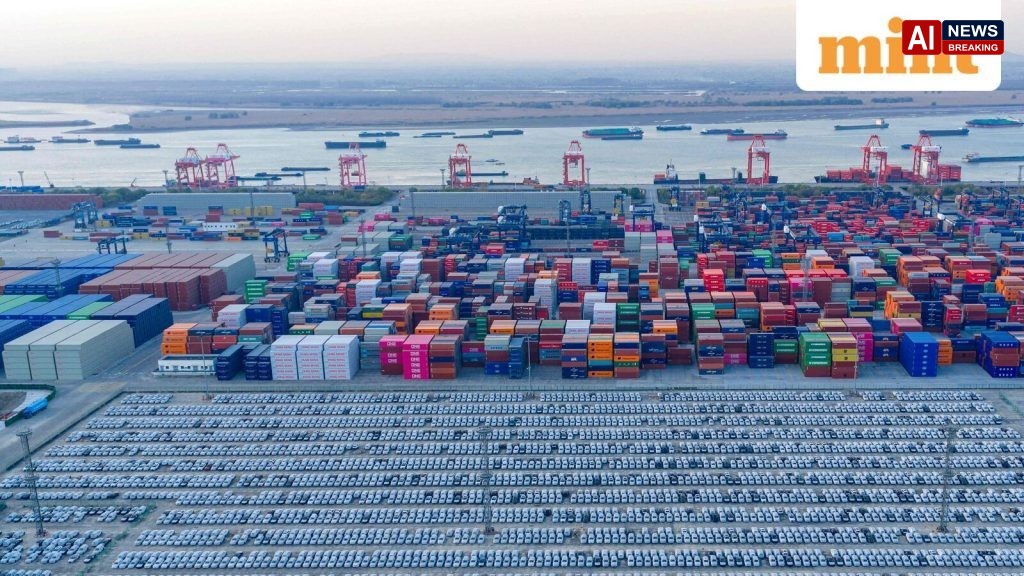
US tariff uncertainty could squeeze India's export edge, say trade bodies - AI News Breaking
The United States has announced a tentative tariff rate increase on certain Indian goods, a move that trade bodies in New Delhi are warning could erode the country’s export advantage. The proposal, which would see a 17% reciprocal deal rate applied to a broad range of products, is being evaluated in the context of the larger trade dispute that has already seen the United States impose duties of up to 25% under Section 301 of the Trade Act. While India’s exporters have celebrated a robust increase in merchandise exports last month, they are now grappling with the potential impact of higher costs on the competitiveness of Indian goods in the world market.India’s trade ministry said that merchandise exports in October rose 45.06 per cent year‑on‑year to $49.47 billion, the strongest figure in two decades..
The surge was driven largely by electronics, machinery and chemical products, which have enjoyed high demand from China and the United States. However, the new tariff proposal comes at a time when global supply chains remain fragile, and many Indian manufacturers are already operating on thin margins. The additional cost of duties could push their products beyond the price points that consumers in key markets can bear.The Indian Trade Association (ITA) issued a statement yesterday, urging the government to carefully assess the cost‑benefit of the proposed rate..
“While we recognise the need for a balanced approach to trade, a 17 per cent tariff could undercut the price competitiveness of Indian goods against competitors from Vietnam, Bangladesh and China,” said ITA chief economist Sanjay Deshmukh. “We need to ensure that the proposed rates reflect the reality of market conditions and do not erode the gains that have been made over the past decade.”The United States, for its part, has characterised the tariff proposals as a necessary step to address intellectual property concerns and unfair trade practices. In a briefing to the Department of Commerce, officials pointed to a long list of Indian companies that have been alleged to benefit from technology transfers that violate US patent laws..
While the US government has not yet disclosed the exact products that would be covered under the reciprocal deal, the draft list includes pharmaceuticals, automotive components and high‑tech equipment. The US Department of Commerce will now weigh the proposal against the broader set of duties that have been imposed under Section 301, which are aimed at addressing a range of trade grievances.The debate over the 17 per cent tariff is part of a broader conversation about how India should manage its trade relationship with the United States. In 2022, a US‑India trade commission was formed to address a range of issues from digital trade to intellectual property..
The commission’s work has highlighted the need for a more level playing field, but the measures it has recommended are not without controversy. Indian exporters are worried that the new tariffs could create a domino effect, prompting other countries to reconsider their own tariff policies. The risk is that Indian goods could become less attractive on the global market, especially in sectors where cost is a decisive factor.Trade bodies have pointed out that Indian manufacturers have historically relied on economies of scale and labour cost advantages to stay competitive..
A 17 per cent tariff would mean that exporters would have to raise prices, which could trigger a loss of market share, particularly in price‑sensitive segments such as apparel and footwear. The ITA’s analysis also highlighted that many Indian exporters are already negotiating with buyers who are under pressure to reduce costs, and the added duty could disrupt those negotiations.The situation is further complicated by the fact that the United States has already imposed higher duties on a range of goods under the Section 301 regime. These duties, which can reach up to 25 per cent on certain products, are likely to be applied to items that are considered to be at the heart of the dispute..
The combination of a 17 per cent reciprocal deal and the potential 25 per cent duties could lead to a cumulative tariff rate that is well above the current average of around 7 per cent that India pays on US imports. This scenario would put Indian exports in a difficult position, as buyers in the United States may seek cheaper alternatives from other countries that are not subject to the same level of duties.In response, some exporters have suggested a focus on high‑value, technology‑heavy products that can command premium prices. These categories, they argue, might absorb the cost of higher duties without losing their market share..
Others, however, have expressed scepticism, noting that the United States has a large consumer base and a willingness to pay a premium for certain goods. “We are not convinced that the value‑added margin will be sufficient to offset the duty cost,” said Meena Patel, CEO of a textile exporter based in Ahmedabad. “The cost structure of the industry is rigid, and any additional burden will be absorbed by us, not by consumers.”The Indian government, meanwhile, is conducting an internal review of the tariff proposals..
Trade Minister Piyush Goyal has said that the government is open to dialogue and will consider the impact on the manufacturing sector. “We are aware that a balanced approach is necessary. We will not let tariff increases erode the competitiveness of Indian goods,” he said in a televised interview..
Goyal also indicated that the government is exploring measures to enhance the export infrastructure, such as improving logistics and reducing bureaucratic delays, to offset the potential impact of higher tariffs.The issue is not just about India’s relationship with the United States. The proposed tariffs could affect India’s trade ties with other countries in the region. For instance, exporters who rely on trans‑pacific supply chains might face higher costs when shipping through the United States or when sourcing components from American suppliers..
This could make Indian goods less attractive to markets in Southeast Asia and the Middle East, where cost and speed of delivery are key considerations. The trade bodies have called for a comprehensive assessment of how the tariff proposals could ripple through the entire supply chain.The potential impact on India’s export sector is significant. If the tariff increases are adopted, the country could see a reduction in export volumes, especially in sectors that are highly price‑sensitive..
The Ministry of Commerce has estimated that a 17 per cent tariff on key sectors could reduce export revenues by as much as 2 per cent. While the ministry has not yet published a formal analysis, trade bodies are calling for a detailed cost–benefit study that incorporates both the tariff costs and the potential gains from increased intellectual property protection.The debate is ongoing, and the final tariff rates remain to be confirmed. Indian exporters are closely monitoring the situation, preparing contingency plans that include diversifying markets and adjusting product mixes..
Some have already started to look at opportunities in emerging markets such as Africa and Latin America, where tariff rates are comparatively lower. Others are exploring partnerships with.
Updated: November 26, 2026