
 The Supreme Court will decide whether assault weapons bans violate the Second Amendment
 A Critic of Beijing Falls Short in Taiwan’s Key Mayoral Election
 EPA says no rise in contamination after Army detonates lead azide stockpile in Iowa
 Israeli Strike Kills 2 Workers at Gaza Clinic, Doctors Without Borders Says
 McQueen Pre-Fall 2027
Doug Ford Says He’d Use a Gun to Protect His Family
**
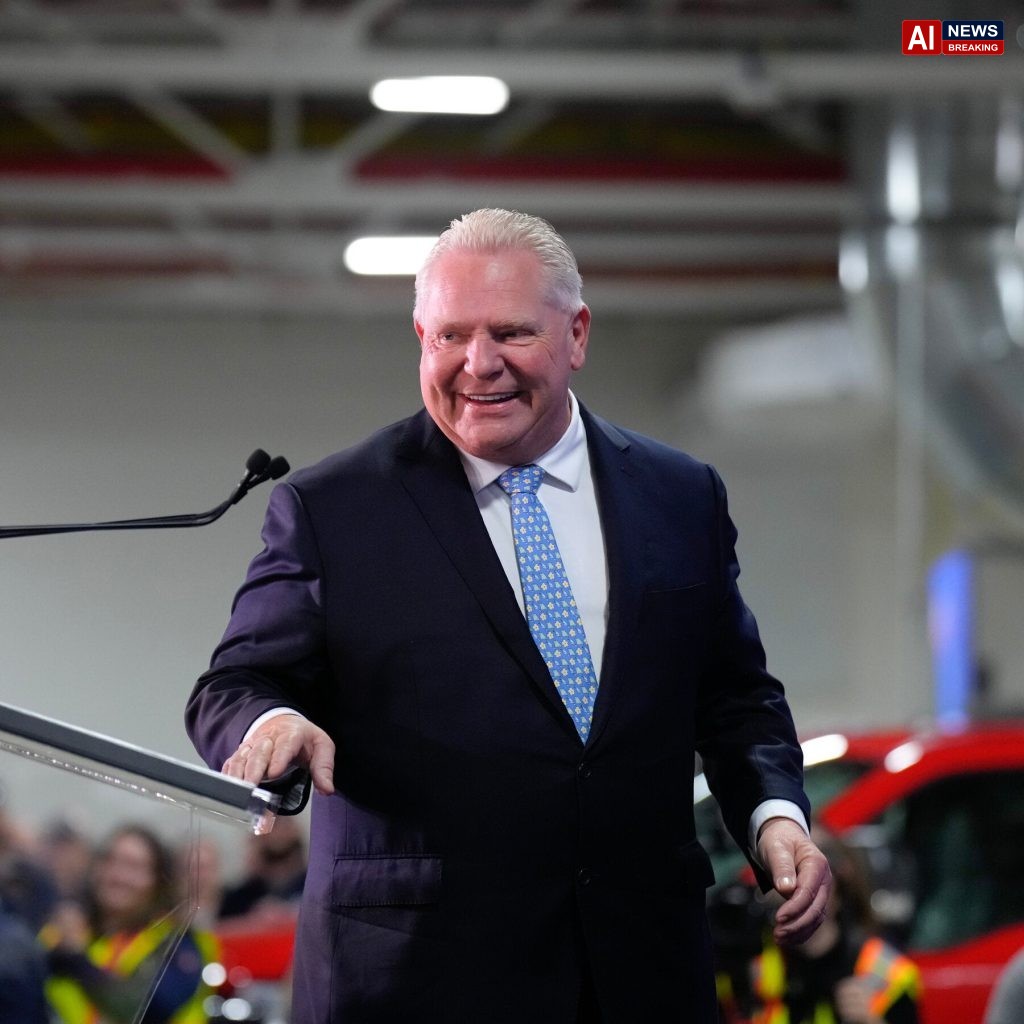
Doug Ford Says He’d Use a Gun to Protect His Family - AI News Breaking
doug ford says protect:
Doug Ford Says He’d Use a Gun to Protect His Family Recent home invasions have stirred unease in Toronto. On Thursday, the premier of Ontario said he would fire a gun in self‑defence “in a heartbeat.” The comment, made during a press conference on crime‑prevention measures, has ignited a fresh debate about the role of firearms in civilian self‑protection and the political rhetoric surrounding public safety. While some supporters applaud the premier’s willingness to defend his loved ones, critics argue that the statement risks normalising gun‑use and could inflame an already volatile discussion about Ontario’s tightening gun laws..
Ford’s remarks came just days after a string of break‑ins in the city’s east end, where residents reported armed intruders and, in one case, a family member sustaining a serious injury. Police have warned that the incidents may be linked to a surge in illegal firearms trafficking across the province, prompting calls for tougher border controls and more resources for the Ontario Provincial Police. The premier, who has long positioned himself as a “tough on crime” leader, seized the moment to underline his personal commitment to protecting his household, a sentiment he said reflects the concerns of ordinary Ontarians..
In his statement, Ford described a hypothetical scenario in which an armed intruder entered his home. “If someone points a weapon at my wife or my kids, I will not think twice before returning fire,” he said, adding that “the safety of my family is non‑negotiable.” The comment was captured on video and quickly spread across social media platforms, garnering thousands of retweets and sparking a torrent of commentary from both sides of the political spectrum. Some viewers praised the candidness of the premier, while others warned that such rhetoric could encourage vigilante behaviour..
The Ontario government’s response to the rising crime wave has already included a series of measures, such as increased police patrols in high‑risk neighbourhoods, a $2 million fund for community safety initiatives, and a proposed amendment to the Firearms Act that would tighten licensing requirements. However, the premier’s personal declaration has added an unexpected dimension to the policy debate, blurring the line between official government strategy and individual self‑defence. Legal experts note that Ontario law permits the use of reasonable force in defence of life, but the threshold for “reasonable” is often subject to intense judicial scrutiny..
Miriam Liao of the University of Toronto’s Faculty of Law cautioned that “while the premier’s instinct to protect his family is understandable, publicly stating an intent to fire a gun can be problematic.” She explained that any future legal proceedings involving a firearm discharge would examine the proportionality of the response, the presence of an imminent threat, and whether non‑lethal alternatives were available. In past Canadian cases, courts have been reluctant to accept “heat‑of‑the‑moment” justifications without clear evidence that the defender faced a credible danger of death or serious injury. Opposition parties seized on Ford’s comments as evidence of a broader cultural shift toward more permissive attitudes about guns..
Ontario’s NDP leader, Andrea Horwath, called the statement “reckless” and urged the premier to “focus on systemic solutions rather than personal threats.” The Liberal Party’s health critic, Dr. Bonnie Crombie, echoed these concerns, arguing that political leaders have a responsibility to model restraint and promote evidence‑based strategies, such as increased mental‑health services and community outreach, rather than endorsing lethal force. The federal government, meanwhile, has been wrestling with its own firearms agenda..
Prime Minister Justin Trudeau’s cabinet is slated to introduce a new national firearms strategy later this month, which includes stricter background checks and a ban on certain semi‑automatic weapons. In a brief comment to the press, the minister of public safety said that while provinces can set their own policies, “any statement that appears to encourage the use of firearms outside the strict limits of the law is concerning and will be monitored.” The minister’s remarks underscore the tension between provincial autonomy and national standards. Public opinion polls conducted by the Angus Reid Institute indicate a divided electorate..
Approximately 42 % of respondents said they support a premier’s right to use a gun in self‑defence, while 38 % expressed discomfort with the notion, fearing it could lead to a “gun‑culture” mentality. The remaining 20 % were undecided, citing a lack of information about the legal nuances. The same survey found that nearly two‑thirds of Toronto residents feel “less safe” after the recent home invasions, regardless of the political rhetoric surrounding them..
Community leaders in the affected neighbourhoods have called for practical measures rather than rhetorical fireworks. Reverend Samuel Osei of St. James’ United Church organised a town‑hall meeting last week, inviting police, social workers, and residents to discuss prevention strategies. “We need better lighting, neighbourhood watch programs, and quicker emergency response times,” he said, stressing that “arming ourselves is not a sustainable solution to a problem that is rooted in poverty and marginalisation.” Law enforcement officials remain cautious about the political fallout..
Ontario Provincial Police spokesperson Detective Sergeant Karen Mitchell stressed that “our officers are trained to assess threats and use force only when absolutely necessary.” She added that the police force does not endorse any individual’s decision to discharge a firearm outside the bounds of the Criminal Code. The OPP is also reviewing its own protocols for responding to residential break‑ins, with an eye toward improving officer safety and reducing the likelihood of armed confrontations. The incident has also drawn attention to Canada’s broader gun‑ownership landscape, which.
Updated: November 26, 2026
Summary: Ontario Premier Doug Ford said he would fire a gun without hesitation to protect his family amid recent Toronto home invasions, prompting a heated debate over civilian firearm use and its impact on the province’s tightening gun‑law agenda. Critics warn his remarks could normalize lethal self‑defence, while supporters view them as a frank reflection of growing public safety concerns.
Ford’s gun‑ready declaration weaponizes personal fear, shifting the crime debate from systemic reform to a rhetoric that normalizes lethal self‑defence.
If leaders model vigilantism, the public may demand broader armament even as legal thresholds tighten, undermining efforts to address the root causes of violence.





