The Supreme Court will decide whether assault weapons bans violate the Second Amendment
 A Critic of Beijing Falls Short in Taiwan’s Key Mayoral Election
 EPA says no rise in contamination after Army detonates lead azide stockpile in Iowa
 Israeli Strike Kills 2 Workers at Gaza Clinic, Doctors Without Borders Says
 McQueen Pre-Fall 2027
Delhi High Court restores NGO’s FCRA licence after government revocation.
** The Delhi High Court set aside the central government’s cancellation of an NGO’s FCRA licence, ruling that the “security” justification lacked concrete evidence and breached natural‑justice principles, and ordered the Ministry of Home Affairs to provide a detailed procedural report.
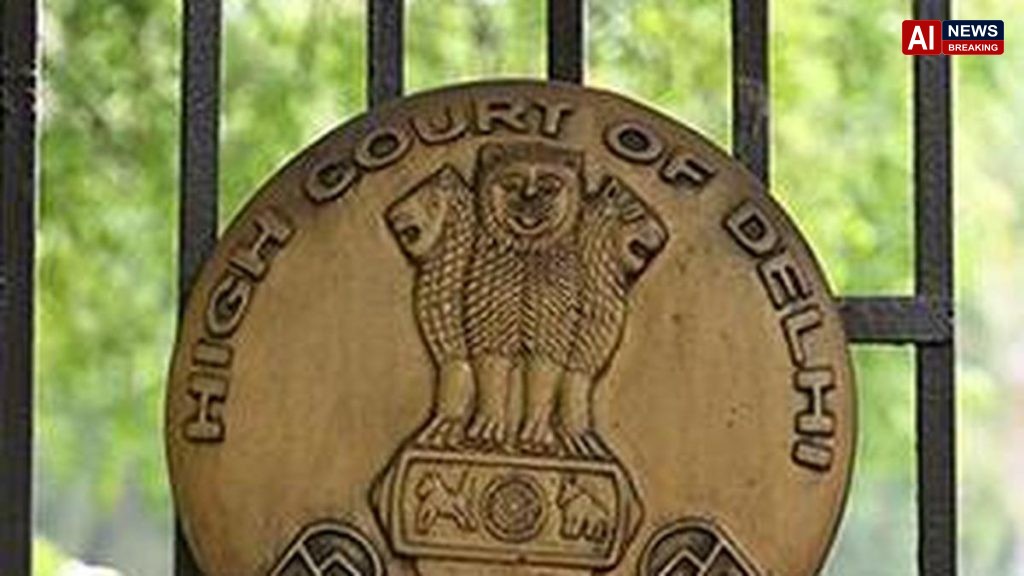
Delhi HC sets aside Centre’s order cancelling FCRA licence of NGO - AI News Breaking
The Delhi High Court on Wednesday set aside a decision of the central government that had revoked the Foreign Contribution Regulation Act (FCRA) licence of a non‑governmental organisation, prompting a rare judicial rebuke of an administrative order that had been issued on security grounds. In a detailed judgment, Justice A.J. Bhambhani observed that “based on the record, this court is unable to discern any material on which it could be said that the appellant’s activities would likely prejudicially affect the sovereignty, integrity, or security of India or public interest.” The ruling, which restores the NGO’s ability to receive foreign funds, underscores the judiciary’s insistence on substantive evidence before a licence can be withdrawn.The NGO in question, registered under the Societies Registration Act and operating for over two decades, focuses on health, education and women’s empowerment programmes in several states..
It had previously been granted an FCRA licence in 2018, allowing it to channel overseas donations to its projects. The Ministry of Home Affairs, invoking the “national security” clause of the FCRA, issued a notice in early 2023 ordering the cancellation of the licence, alleging that the organisation’s activities could be “prejudicial to the sovereignty, integrity and security of India.” The notice was accompanied by a brief statement that the decision was taken after a “thorough vetting” of the NGO’s foreign funding sources and partnerships.The NGO contested the cancellation in the Delhi High Court, filing a petition that sought relief on the grounds that the order was arbitrary, lacked procedural fairness and was not supported by any concrete evidence. The petitioners argued that the Ministry had not provided a specific charge sheet or any intelligence report to substantiate its claim, and that the abrupt revocation threatened the continuation of essential services to vulnerable communities..
They also highlighted that the licence had been renewed twice without incident, and that the organisation’s accounts had been audited by the Comptroller and Auditor General’s office with no adverse findings.In its judgment, the bench examined the statutory framework of the FCRA, which permits the government to deny or cancel a licence if it is satisfied that the organisation’s foreign contributions could be used against the public interest or national security. However, Justice Bhambhani stressed that such powers must be exercised “in accordance with the principles of natural justice and the rule of law.” He noted that the Ministry’s order failed to disclose the “material on which the adverse inference was drawn,” thereby breaching the procedural requirements of the act. The court further observed that the vague and generalized language of the notice – “prejudicial to sovereignty” – was insufficient to justify a measure as severe as a licence cancellation.The judgment also referenced prior Supreme Court pronouncements that any restriction on the freedom of association and the right to receive foreign aid must be “safeguarded by a clear and convincing evidentiary basis.” Citing cases such as Union of India v..
Naga People’s Movement and Sanjay Kumar v. Union of India, the bench reiterated that the onus lies on the state to prove that the alleged threat is real and imminent, not merely speculative. In the present case, the court found that the Ministry’s reliance on “security concerns” was unsubstantiated, as no classified or public intelligence was produced to demonstrate a direct link between the NGO’s activities and any threat to the nation.While the court restored the licence, it did not absolve the Ministry of its oversight responsibilities..
Justice Bhambhani directed the Ministry of Home Affairs to submit a comprehensive report within sixty days detailing the procedural steps taken before the cancellation, the specific intelligence inputs, and the criteria applied in deeming the NGO a security risk. The order also instructed the Ministry to ensure that any future action against an FCRA holder must be accompanied by a “detailed justification” that can be scrutinised by the court, thereby enhancing transparency in the application of the act.Legal experts have welcomed the ruling as a reaffirmation of judicial oversight over executive actions that affect civil society. Anuradha Sharma, a senior advocate who has handled several FCRA matters, said the judgment “reinstates the balance between national security imperatives and the constitutional guarantee of freedom of association.” She added that the decision could compel the government to revisit other pending licence cancellations that were based on similarly opaque grounds.Human rights organisations, meanwhile, view the case as indicative of a broader trend where NGOs face increasing scrutiny over foreign funding..
A statement from the Centre for Civil Society noted that “while the state has a legitimate interest in preventing the misuse of foreign contributions, it must also respect due process and avoid a chilling effect on legitimate charitable work.” The statement warned that the court’s admonition could set a precedent that deters arbitrary bans, but also called for a more robust legislative framework that clearly delineates the evidentiary standards required for security‑related actions.The Ministry of Home Affairs issued a brief response after the verdict, acknowledging the court’s observations and indicating that it would “review the procedural aspects of the order” while continuing to monitor foreign-funded entities for compliance with the FCRA. A senior official, speaking on condition of anonymity, said that the Ministry was “committed to safeguarding national interests without compromising the democratic space for NGOs to operate.” The official added that the department would engage with the judiciary to refine its guidelines and ensure that future actions are “both legally sound and proportionate.”Political commentators have suggested that the case may have broader implications for the relationship between the government and the third sector, especially ahead of upcoming elections. Some analysts argue that the ruling could embolden NGOs to challenge other regulatory measures, while others caution that the government may respond by tightening the FCRA’s provisions to prevent similar judicial setbacks..
The balance between security considerations and civil liberties is likely to remain a contentious issue in policy debates.In the immediate aftermath, the NGO announced that it would resume its programmes that had been put on hold, including a rural health outreach that serves over 50,000 beneficiaries annually. The organisation’s director expressed relief at the court’s decision, emphasizing that “the people who depend on our services should not be caught in the crossfire of bureaucratic missteps.” He also pledged to cooperate fully with any lawful inquiries, while urging the government to adopt a more transparent approach in matters affecting the non‑profit sector.The Delhi High Court’s judgment, while narrowly focused on procedural deficiencies, reinforces a key principle of Indian jurisprudence: that state power, even when invoked under the banner of national security, must be exercised with clarity, evidence and respect for constitutional safeguards. As the case proceeds to the next stage of compliance reporting, it will likely serve as a reference point for future disputes over.
Updated: November 26, 2026
Delhi’s High Court annulled the Home Ministry’s revocation of an NGO’s FCRA licence, ruling that the security‑based cancellation lacked concrete evidence and breached procedural fairness. The judgment restores the charity’s foreign‑funding ability and warns the government to provide detailed justification for any future bans on civil‑society groups.
Insight: The court’s rebuke signals that India’s security narrative cannot eclipse procedural fairness, forcing the government to codify concrete evidence before stifling civil‑society funding. Consequently, NGOs may now wield the judiciary as a strategic shield, while ministries risk tightening FCRA rules to pre‑empt further legal