A Critic of Beijing Falls Short in Taiwan’s Key Mayoral Election
 EPA says no rise in contamination after Army detonates lead azide stockpile in Iowa
 Israeli Strike Kills 2 Workers at Gaza Clinic, Doctors Without Borders Says
 McQueen Pre-Fall 2027
 Mushfiqur Rahim to retire from Test cricket in February 2027
Asha Bhosle and S. Janaki Remembered by Singer K.S. Chithra and Suhasini Maniratnam at IFFI’s Lata Mangeshkar Talk
**
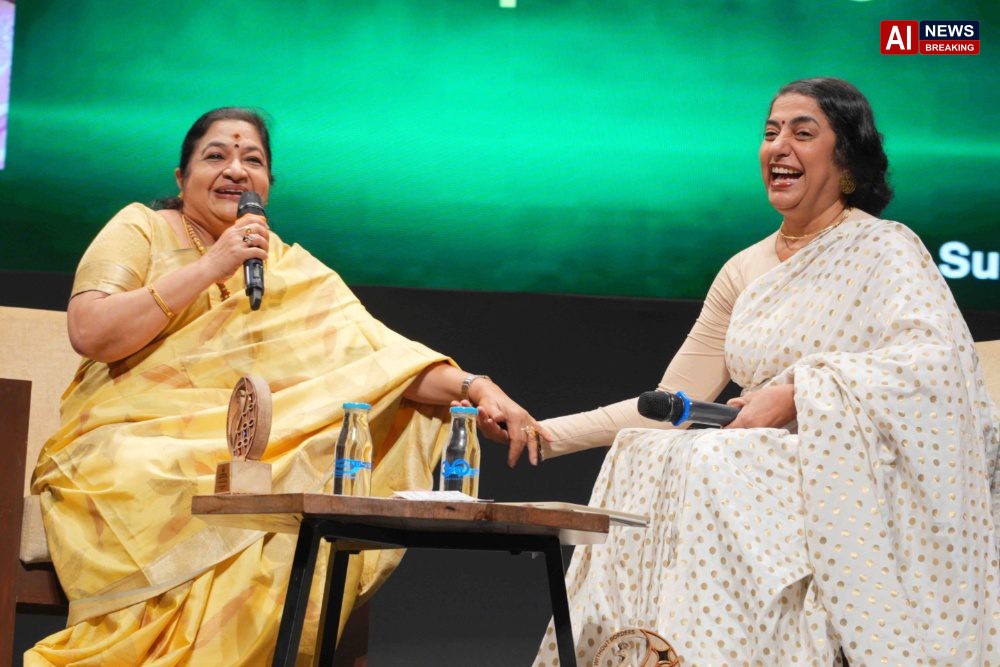
Asha Bhosle and S. Janaki Remembered by Singer K.S. Chithra and Suhasini Maniratnam at IFFI’s Lata Mangeshkar Talk - AI News Breaking
asha bhosle janaki remembered:
The 57th International Film Festival of India, held in Goa, concluded its opening day with a tribute that brought together two of the subcontinent’s most revered voices in cinema. The ceremony, titled the “Lata Mangeshkar Talk”, featured veteran playback singer K.S. Chithra and actress‑filmmaker Suhasini Maniratnam, who together recalled the lives and legacies of Asha Bhosle and S..
Janaki – two icons whose contributions have shaped Indian film music across five decades. The event, organised by the Directorate of Film Festivals, sought to honour the departed artists while underscoring the continuing relevance of their work for contemporary creators.Asha Bhosle, who passed away in April at the age of 92, was celebrated not only for her prodigious output – more than 12,000 songs in multiple languages – but also for her willingness to experiment. Chithra highlighted Bhosle’s evolution from the early 1950s, when she first sang under the tutelage of her elder sister Lata Mangeshkar, to her later collaborations with western producers, citing the 1997 Cornershop single “Brimful of Asha” as a testament to her global cultural imprint..
The British‑Indian band’s reference to Bhosle’s name introduced her to a new generation of listeners, a point Chithra used to illustrate how the singer’s appeal transcended linguistic and geographic boundaries.S. Janaki, still alive at 83, was remembered for her distinctive timbre and her uncanny ability to adapt to the varied demands of South Indian cinema. Suhasini recounted Janaki’s work across Malayalam, Tamil, Telugu and Kannada films, noting that the singer’s versatility made her a preferred choice for composers ranging from Ilaiyaraaja to A.R..
Janaki’s capacity to convey nuanced emotion without resorting to melodrama, Suhasini observed, helped redefine the role of the female playback voice in a male‑dominated industry. The actor‑filmmaker also pointed to Janaki’s understated public persona, which contrasted sharply with the larger‑than‑life image often cultivated by her contemporaries.The tribute also touched upon the shared challenges faced by both women in an era when female singers were expected to conform to rigid aesthetic standards. Chithra recounted anecdotes of Bhosle’s early career, when she was required to sing in a particular register to suit the “sweet” image of her sister, and how she later rebelled against these constraints by embracing cabaret numbers and western styles..
Likewise, Suhasina referenced Janaki’s negotiations with producers who preferred male voices for certain emotive scenes, underscoring how Janaki’s perseverance paved the way for later female artists to claim a broader repertoire.In addition to personal recollections, the panel discussed the technical innovations that both singers introduced. Bhosle’s foray into pop, rock and jazz during the 1970s and 80s, facilitated by collaborations with composers such as R.D. Burman, expanded the sonic palette of Bollywood soundtracks..
Janaki, on the other hand, was credited with pioneering the use of classical ragas in mainstream film songs, a practice that enriched the narrative texture of South Indian cinema. Both artists, the speakers agreed, demonstrated a willingness to blend traditional forms with contemporary trends, a hallmark of enduring artistic relevance.The conversation shifted to the impact of their work on subsequent generations. Chithra, herself a recipient of multiple national awards, explained how Bhosle’s daring choices inspired younger singers to explore genre‑bending projects without fear of commercial backlash..
Suhasini added that Janaki’s mastery of diction in multiple languages set a benchmark for linguistic authenticity, a standard that modern playback singers continue to uphold when dubbing for regional films. Their legacies, the panel argued, are evident in today’s crossover projects that blend Indian classical motifs with global pop sensibilities.Audience members, comprising film critics, musicologists and industry veterans, responded with a standing ovation after the tribute concluded. The response highlighted the continued reverence for Bhosle and Janaki within the artistic community, as well as the appetite for dialogues that bridge past and present..
In the aftermath, several attendees took to social media, praising the festival’s decision to foreground the contributions of women in Indian film music, a sector historically dominated by male composers and producers.The IFFI organisers announced that the Lata Mangeshkar Talk will become an annual fixture, aiming to celebrate the achievements of playback singers who have shaped Indian cinema’s auditory identity. Plans are already underway for future sessions to focus on other pioneering artists, with an emphasis on regional diversity and the evolving role of women in the industry. The move is seen as part of a broader effort by the festival to foreground cultural heritage while encouraging contemporary artistic innovation.As the festival progressed into its subsequent days, the tribute served as a reminder that the voices behind the screen’s most iconic moments continue to echo through new compositions and reinterpretations..
The presence of Chithra and Suhasini, both respected figures in their own right, underscored the intergenerational dialogue that sustains the vibrancy of Indian film music. Their reflections on Asha Bhosle and S. Janaki offered both homage and a roadmap for emerging talent seeking to navigate the complex interplay of tradition, modernity and global influence.In sum, the Lata Mangeshkar Talk at IFFI not only honoured two legendary singers but also sparked a wider conversation about gender, artistic agency and cultural exchange within the Indian cinematic soundscape..
By juxtaposing personal anecdotes with broader industry analysis, the panel highlighted how Bhosle’s and Janaki’s careers embody resilience, adaptability and a relentless pursuit of artistic excellence – qualities that continue to inspire the next wave of musicians and filmmakers across the subcontinent and beyond..
Updated: November 26, 2026
Veteran singers K.S. Chithra and actress‑filmmaker Suhasini Maniratnam paid homage to late Asha Bhosle and living legend S. Janaki at IFFI’s opening, highlighting their genre‑defying innovations and impact on Indian film music. The tribute, lauded by critics and audiences, will become an annual forum to celebrate pioneering playback voices and their role in shaping contemporary cinema.
Insight: By institutionalising tributes like the “Lata Mangeshkar Talk,” IFFI is recasting playback singers—especially women—as cultural architects, thereby challenging the historic composer‑centric hierarchy and opening funding and mentorship pipelines for gender‑balanced music innovation.
The ceremony’s cross‑regional focus signals a strategic pivot toward a pan‑Indian soundscape that leverages legacy talent to legitimize hybrid, globally‑oriented projects, positioning Indian cinema’s audio identity as a exportable