A Critic of Beijing Falls Short in Taiwan’s Key Mayoral Election
 EPA says no rise in contamination after Army detonates lead azide stockpile in Iowa
 Israeli Strike Kills 2 Workers at Gaza Clinic, Doctors Without Borders Says
 McQueen Pre-Fall 2027
 Mushfiqur Rahim to retire from Test cricket in February 2027
1 killed, several injured as Houthi projectile strikes Saudi oil refinery
**
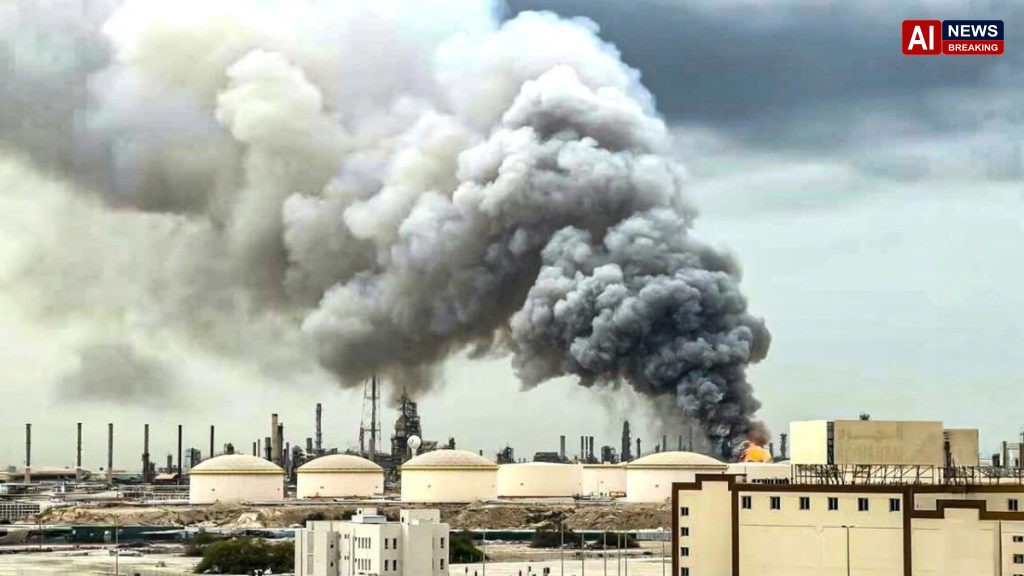
1 killed, several injured as Houthi projectile strikes Saudi oil refinery - AI News Breaking
killed several injured houthi:
A projectile fired by Yemen’s Houthi rebels struck the Saudi Arabian refinery at Ras Tanura on Saturday, killing one worker and injuring several others, officials said. The incident, which took place in the early hours of the day, marks the latest escalation in a conflict that has increasingly threatened the kingdom’s vital energy infrastructure. Saudi authorities confirmed the death of a 45‑year‑old maintenance technician and reported that three additional staff members were taken to hospital with non‑life‑threatening injuries..
The refinery, which processes roughly five million barrels of crude a day, is a cornerstone of the nation’s oil‑export capacity and a critical node in global supply chains.The attack was carried out with a missile‑type projectile, according to statements from the Saudi Ministry of Energy and the Ministry of Interior. While the precise origin of the weapon remains under investigation, the Saudi government has attributed the strike to the Houthi movement, which has been engaged in a protracted war with the United Arab Emirates‑backed coalition since 2015. The Houthis, who control large swathes of northern Yemen, have intensified their missile and drone campaign against Saudi targets since the conflict in Gaza began, seeking to pressure Riyadh and its allies over the broader regional dispute.Witnesses at the scene described a loud explosion followed by a plume of smoke rising from the southern side of the complex..
“We heard a bang, and then the alarm went off. The fire department was on the site within minutes,” said Ahmed Al‑Mansour, a shift supervisor who was on duty when the projectile hit. Al‑Mansour, who was not injured, said that emergency protocols were activated immediately and that the refinery’s safety systems contained the blaze, preventing a larger disaster..
The damaged area was isolated, and production was halted temporarily while engineers assessed structural damage and potential contamination risks.Saudi Arabia’s state news agency, SPA, released a statement condemning the attack as a violation of international law and an act of aggression against a civilian facility. The statement called on the United Nations and the International Atomic Energy Agency to investigate the incident and urged the Houthis to cease hostilities. Riyadh has repeatedly warned that any further attacks on its energy infrastructure will compel a proportional response, though it stopped short of outlining specific retaliatory measures in the wake of Saturday’s strike.International reaction has been swift..
The United States, a key ally of Saudi Arabia, issued a condemnation through the Department of State, describing the assault as “unacceptable” and reaffirming its commitment to regional stability. European Union officials echoed the sentiment, stressing the need for all parties to respect the sanctity of civilian industrial sites. Meanwhile, the United Nations Office for the Coordination of Humanitarian Affairs (OCHA) reminded that attacks on critical infrastructure exacerbate humanitarian crises, especially in a region already strained by conflict and food insecurity.Analysts note that the targeting of Ras Tanura, one of the world’s largest oil‑processing hubs, could have broader implications for global oil markets..
Although the refinery’s output was only briefly disrupted, any perceived vulnerability may prompt traders to reassess supply risk premiums. “Even a short‑term shutdown can ripple through pricing, especially if the perception grows that Saudi facilities are within striking range,” said Fatima Al‑Hussein, an energy market specialist at the Gulf Research Center. She added that while the current incident appears contained, a sustained campaign could pressure Saudi Arabia to divert resources from production to security.The Houthi movement has not immediately claimed responsibility for the strike, but its spokesperson, Saleh Al‑Mansoori, released a statement later on Saturday that the group “will continue to resist the aggression of the Saudi‑UAE coalition and its allies.” The statement did not reference the Ras Tanura incident directly, though it reiterated the Houthis’ broader strategy of targeting what they deem “imperialist” assets..
The group’s rhetoric has increasingly linked its military actions to geopolitical developments beyond Yemen, reflecting a shift in its operational calculus.In the wake of the attack, Saudi officials announced a review of security protocols at all major oil facilities across the kingdom. The Ministry of Energy said it would accelerate the deployment of advanced detection systems, including radar and acoustic sensors, to improve early warning capabilities against aerial threats. Additionally, the Ministry of Interior disclosed that a task force comprising the Royal Saudi Air Force, National Guard, and civilian security firms has been tasked with reinforcing perimeter defenses and coordinating rapid response measures.Humanitarian concerns have also surfaced, as the refinery’s vicinity includes a modest residential community that houses refinery workers and their families..
Local authorities have assured residents that water and electricity supplies remain uninterrupted and that no hazardous material leakage has been detected. However, the incident has revived anxieties among the workforce, many of whom have witnessed previous drone attacks on Saudi oil sites in recent months. Workers’ unions have called for enhanced protective equipment and psychological support for staff coping with the heightened threat environment.The Ras Tanura incident underscores the fragile equilibrium that underpins the Gulf’s energy sector, where geopolitical tensions intersect with the imperatives of global oil supply..
As Saudi Arabia grapples with the immediate aftermath—honouring a fallen colleague, treating the injured, and restoring full refinery operations—it also faces the strategic challenge of safeguarding its assets without further inflaming an already volatile regional landscape. The coming weeks will reveal whether diplomatic channels can temper the escalation or if the conflict’s spillover into the kingdom’s economic heartland will deepen, with repercussions that could reverberate far beyond the Arabian Peninsula..
A Houthi‑linked projectile struck Saudi Arabia’s Ras Tanura refinery, killing a worker and wounding three others, prompting an immediate shutdown and safety response. The attack heightens concerns over regional spillover into the kingdom’s critical oil infrastructure and could pressure global oil markets.
The Ras Tanura strike signals that the Houthis are now testing the limits of Saudi oil security, turning a single‑point disruption into a strategic lever that could force Riyadh to divert costly defensive resources away from production. If the perception of vulnerability persists, even brief outages may inflate global oil risk premiums,