A Critic of Beijing Falls Short in Taiwan’s Key Mayoral Election
 EPA says no rise in contamination after Army detonates lead azide stockpile in Iowa
 Israeli Strike Kills 2 Workers at Gaza Clinic, Doctors Without Borders Says
 McQueen Pre-Fall 2027
 Mushfiqur Rahim to retire from Test cricket in February 2027
Ukraine’s Deep Strikes Grow in Scale and Scope Across Russia and Beyond
**
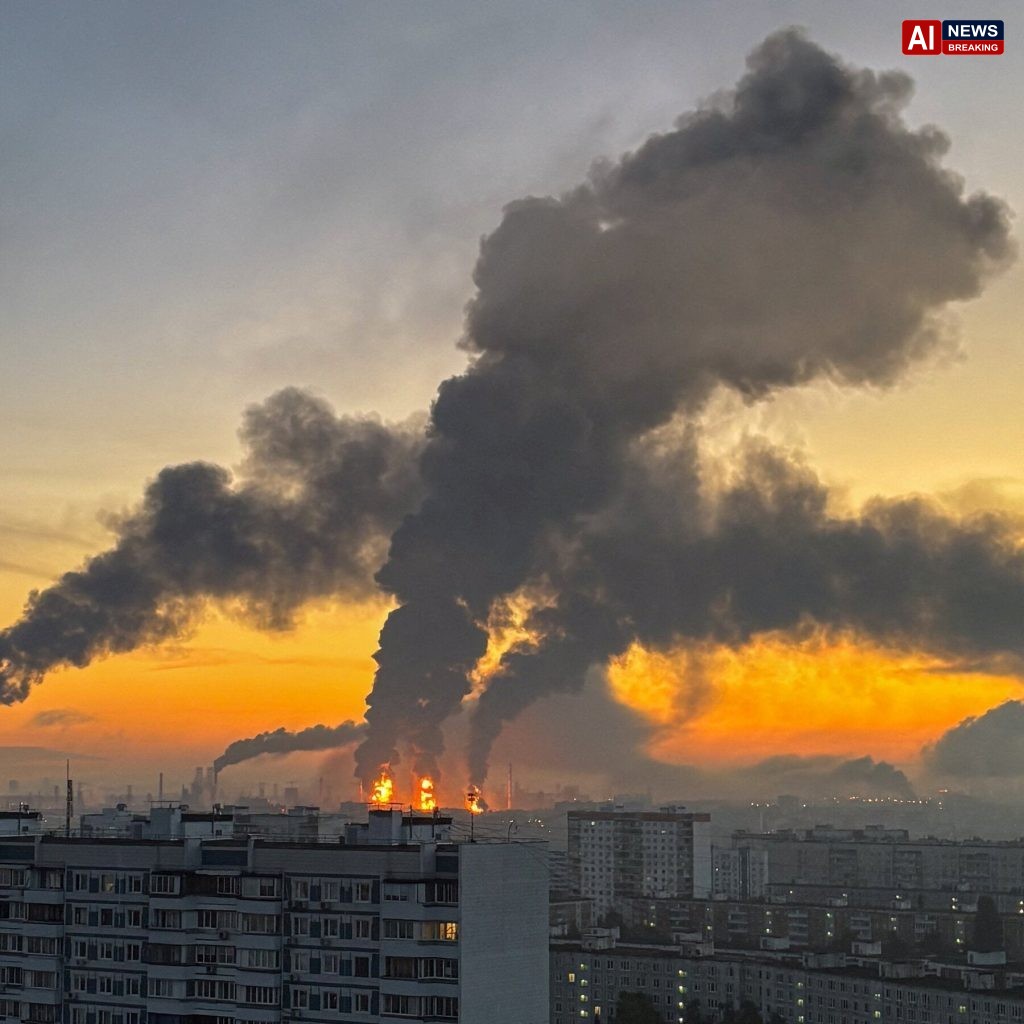
Ukraine’s Deep Strikes Grow in Scale and Scope Across Russia and Beyond - AI News Breaking
ukraines deep strikes grow:
Ukraine’s Deep Strikes Grow in Scale and Scope Across Russia and Beyond The Ukrainian Armed Forces have intensified a covert campaign that targets the logistical heart of Russia’s war effort. Over the past six months, special‑operation units and drone squadrons have struck fuel depots, ammunition warehouses and financial hubs deep inside Russian territory and, increasingly, in allied states that are perceived to be supporting Moscow. Kyiv says the operations are essential to choke the flow of resources that keep the Russian army fighting in the east, while Moscow blames the attacks on “terrorist” tactics that endanger civilians..
The escalation has drawn sharp criticism from the United States, where the Trump administration has called the strikes “reckless.” Analysts say the new phase of the campaign marks a departure from earlier, more limited strikes that focused on border towns. Modernised Iranian‑made Shahed loitering munitions, Turkish Bayraktar drones and home‑grown R‑18 systems are now being deployed from mobile launch platforms that can be hidden in forests or abandoned industrial sites. Satellite imagery released by independent observers shows cratered asphalt at the Kirovsk oil terminal in the Leningrad Oblast, while a separate raid on the Kislovodsk ammunition depot caused a massive explosion that was heard across the North Caucasus..
The attacks are being coordinated through a joint command that links Ukraine’s Main Intelligence Directorate with the Ministry of Defence’s Special Operations Forces. The strategic logic behind the deep‑strike doctrine is simple: without fuel, tanks and artillery cannot move; without money, the war machine cannot be sustained. In early March, Ukrainian officials announced a “Fuel Denial Initiative” that aims to reduce Russia’s domestic fuel reserves by 30 percent by year‑end..
To that end, drones have been used to ignite pipelines in the Ural region and to sabotage railcars loaded with diesel at the Sverdlovsk rail hub. Kyiv claims that each successful hit saves the Ukrainian front lines millions of euros in defensive expenditures, a figure that the Kremlin disputes. International reaction has been mixed..
NATO allies in the West have expressed “concern” over the potential for escalation, but have stopped short of condemning the strikes outright. In a statement released on Thursday, the European Union’s foreign policy chief said the attacks “must respect the laws of armed conflict and avoid civilian casualties.” Meanwhile, the United Nations Office for the Coordination of Humanitarian Affairs warned that the destruction of fuel infrastructure could exacerbate a looming humanitarian crisis in the Russian hinterland, where winter heating supplies are already scarce. In Washington, the Trump administration—now back in power after the recent election—has taken a particularly hard line..
A senior White House adviser told reporters that the Ukrainian operations “cross a line that jeopardises regional stability” and that the United States “cannot condone actions that could be interpreted as state‑sponsored terrorism.” The administration has hinted at the possibility of re‑imposing sanctions on Kyiv if the strikes continue, a move that would strain the long‑standing military aid relationship between the two countries. Critics argue that the rhetoric reflects a broader shift toward a more isolationist foreign policy. Ukrainian President Volodymyr Zelenskyy responded on his nightly address, insisting that the campaign is “a matter of survival.” He underscored that the strikes are carefully vetted to minimise civilian harm and that any loss of life is “the tragic but inevitable cost of defending our sovereignty.” Zelenskyy also announced a new intelligence sharing agreement with the United Kingdom, which will provide real‑time satellite data to improve target verification and reduce collateral damage..
The partnership, he said, “strengthens our ability to strike precisely while upholding humanitarian standards.” On the ground, the impact of the deep strikes is already being felt. Residents of the city of Tver reported a sudden shortage of gasoline at local stations after a fuel depot on the outskirts was hit by a swarm of drones on 12 May. In the city of Krasnodar, hospitals have reported intermittent power outages linked to the sabotage of a nearby transformer substation..
Local officials, however, have downplayed the incidents, attributing the disruptions to routine maintenance and weather‑related faults. Nevertheless, the pattern of simultaneous, geographically dispersed attacks suggests a coordinated effort rather than isolated mishaps. Russia’s military leadership has vowed retaliation..
In a televised briefing, Defence Minister Sergei Shoigu declared that “any aggression against our sovereign territory will be met with a decisive and overwhelming response.” The Kremlin has reportedly mobilised additional air defence units to the western and southern military districts and has authorized the use of electronic warfare systems to jam Ukrainian drone communications. Intelligence reports from Moscow indicate that a new generation of “anti‑drone” laser installations is being fast‑tracked for deployment along key supply routes. The cyber dimension of the conflict is also expanding..
Ukrainian cyber‑units have claimed responsibility for a recent wave of Distributed Denial‑of‑Service attacks on Russian banking servers, which temporarily disabled online transactions for millions of users. In retaliation, Russian hackers have launched a series of phishing campaigns targeting Ukrainian government ministries, seeking to harvest credentials that could be used to disrupt logistics networks. Both sides have accused the other of violating international norms governing cyber warfare, a gray area that remains largely unregulated..
Economic analysts warn that the sustained targeting of fuel infrastructure could have ripple effects beyond the immediate theatre of war. Russia is a major exporter of oil and gas to Europe, and any long‑term disruption of its production capacity could drive up energy prices worldwide..
Updated: November 28, 2026
Summary: Ukraine has stepped up a covert drone and special‑ops campaign striking fuel depots, ammo stores and financial targets deep inside Russia and its allies to choke Moscow’s war machine, while Kyiv insists the hits are carefully vetted and vital for its survival. The raids have provoked sharp U.S. criticism, Russian vows of retaliation and concerns in NATO and the EU over escalation and civilian harm.
Ukraine’s deep‑strike campaign forces Moscow to divert scarce defensive resources to homeland protection, eroding the very logistical edge that once underpinned its war machine and nudging the conflict from a front‑line stalemate toward a broader, destabilising scramble for internal security.
The backlash from Washington signals a looming fissure in the Western security architecture: continued Ukrainian offensives could compel the U.S. to recalibrate aid, while Europe faces the paradox of relying on a beleaguer