The Supreme Court will decide whether assault weapons bans violate the Second Amendment
 A Critic of Beijing Falls Short in Taiwan’s Key Mayoral Election
 EPA says no rise in contamination after Army detonates lead azide stockpile in Iowa
 Israeli Strike Kills 2 Workers at Gaza Clinic, Doctors Without Borders Says
 McQueen Pre-Fall 2027
Climate Talks Imploded, but the ‘Age of Electricity’ Rolls On, Energy Chief Says
**
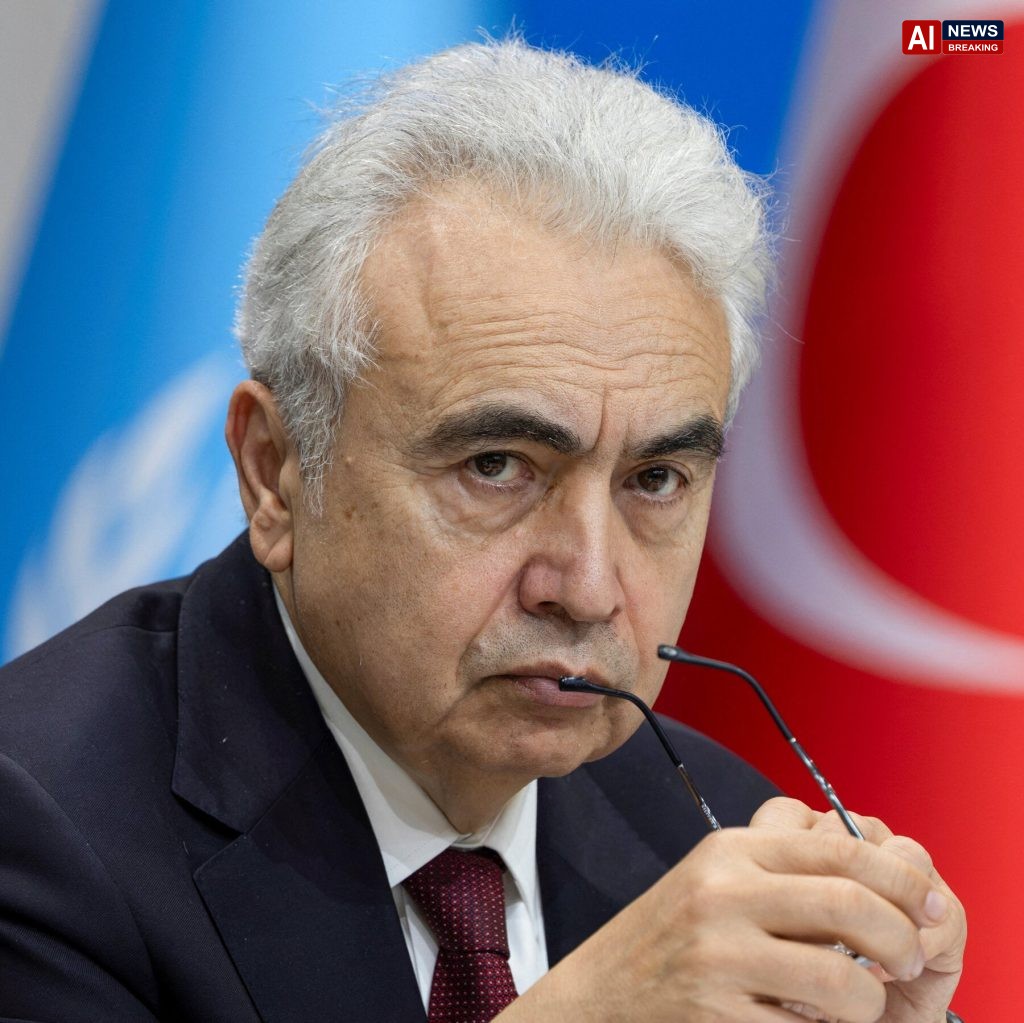
Climate Talks Imploded, but the ‘Age of Electricity’ Rolls On, Energy Chief Says - AI News Breaking
climate talks imploded electricity:
The latest round of United Nations climate negotiations concluded this week with a palpable sense of disappointment, as member states failed to secure a binding agreement on carbon‑reduction targets for the coming decade. Delegates from more than 190 nations walked away with a watered‑down text that many observers described as a “talk‑shop” rather than a decisive step forward. Yet, even as the diplomatic process faltered, the global energy landscape is moving inexorably toward a new paradigm, according to the chief of the International Energy Agency (IEA), Fatih Birol..
In a press briefing in Paris, Birol argued that market dynamics, the rapid expansion of data centres, and heightened concerns about energy security are propelling the clean‑energy transition forward, regardless of the outcome of the summit.Birol’s comments came against the backdrop of a series of high‑profile setbacks in climate policy. The United States and the European Union, traditionally the most ambitious emitters, were unable to bridge differences over the pace of phasing out coal and the financing of loss‑and‑damage mechanisms for vulnerable nations. Meanwhile, emerging economies such as India and Brazil warned that stringent mitigation obligations could jeopardise development goals and energy access for their growing populations..
The final document, while reaffirming the long‑standing goal of limiting global warming to 1.5°C, offered no concrete timeline for achieving net‑zero emissions beyond 2050, prompting criticism from environmental NGOs who called the outcome “a missed opportunity of historic proportions”.Despite the diplomatic impasse, Birol maintained that the underlying forces reshaping the energy sector are largely independent of political will. He highlighted the accelerating decline in the cost of solar photovoltaics and on‑shore wind, noting that in many regions these technologies are now cheaper than new coal plants, even without subsidies. “The economics are changing faster than any treaty can keep up with,” he said..
The IEA’s latest World Energy Outlook projects that renewable electricity will account for 45 per cent of global power generation by 2035, up from 28 per cent in 2022, driven by both utility‑scale projects and distributed generation on rooftops.A particularly potent driver, according to Birol, is the burgeoning demand for electricity from digital infrastructure. The explosion of cloud computing, artificial intelligence, and the Internet of Things has resulted in a surge of data centre construction worldwide. These facilities, which require reliable, high‑capacity power, are increasingly being built to run on renewable energy sources to meet corporate sustainability pledges and to reduce operational costs..
In 2023, data centres alone consumed an estimated 200 terawatt‑hours of electricity, roughly the annual consumption of a medium‑sized European country. The sector’s commitment to clean power is prompting utilities to invest in grid upgrades and to secure long‑term power purchase agreements with wind and solar farms.Energy security concerns, amplified by recent geopolitical tensions, also play a crucial role in shaping policy choices. The conflict in Eastern Europe has underscored the vulnerabilities associated with reliance on imported fossil fuels, prompting several European nations to accelerate the diversification of their energy mixes..
In response, countries such as Germany and France have expedited the de‑commissioning of aging coal plants and have increased procurement of liquefied natural gas as a bridge fuel, while simultaneously expanding battery storage capacity to smooth the intermittency of renewables. Birol argued that “energy independence and climate ambition are no longer seen as competing objectives but as complementary goals.”The IEA’s data suggests that these market‑driven trends are already delivering tangible emissions reductions. Global carbon dioxide emissions from the power sector fell by 1.8 per cent in 2023, the first decline recorded in a decade, largely attributed to the displacement of coal by renewables in China, India, and the United States..
However, Birol cautioned that the pace of reduction must quicken to keep the 1.5°C target within reach. He warned that without coordinated policy support—such as carbon pricing, phasing out fossil‑fuel subsidies, and investment in grid resilience—technology alone may not achieve the scale required to avert the most severe climate impacts.The reaction from the diplomatic community to Birol’s optimism was mixed. Some negotiators praised the acknowledgement that the private sector is taking the lead, while others warned that relying on market forces could exacerbate inequalities between rich and poor nations..
“If the transition is left to market winners, we risk leaving the most vulnerable behind,” said a senior representative from a coalition of Small Island Developing States. The coalition emphasized the need for robust international financing mechanisms to ensure that low‑income countries can access clean‑energy technologies and adapt to climate‑related hazards.In the United Kingdom, the government’s Department for Energy Security and Net Zero welcomed the IEA chief’s remarks, noting that they align with the country’s own strategy to phase out unabated gas generation by 2035 and to double offshore wind capacity by 2030. A spokesperson highlighted that recent investments in hydrogen production and carbon capture, utilisation, and storage (CCUS) are examples of how policy can complement market trends to deliver a resilient, low‑carbon energy system..
Nevertheless, the spokesperson acknowledged that “international cooperation remains essential to scale up these emerging technologies and to ensure a just transition worldwide.”Looking ahead, Birol underscored that the next few years will be decisive. He called for governments to create “clear, long‑term signals” that can de‑risk private investment and to address supply‑chain constraints, particularly for critical minerals such as lithium, cobalt, and nickel, which are vital for batteries and renewable turbines. He also stressed the importance of integrating energy efficiency measures across industry, transport, and buildings, arguing that demand‑side solutions can reduce the amount of new generation capacity required..
“The trajectory is set,” he concluded, “but the shape of the curve depends on how swiftly we act now.”The climate summit’s inability to forge a strong, unified accord has reignited debates over the relative weight of political negotiation versus market innovation in the fight against global warming. While the diplomatic outcome may be deemed a setback, the IEA’s assessment suggests that the underlying momentum toward an electricity‑dominant, low‑carbon economy continues unabated. Whether this momentum will be sufficient to meet the Paris Agreement’s lofty ambitions remains uncertain, but the convergence of economic incentives, technological advancement, and security considerations is undeniably reshaping the global energy landscape..
Updated: November 27, 2026
The summit’s stalemate underscores that climate ambition now hinges less on diplomatic consensus and more on whether policy can steer market‑driven clean‑energy expansion toward equity, lest the transition deepen global inequalities. If governments fail to codify long‑term signals and financing for vulnerable nations, the private sector’s momentum may deliver emissions cuts without guaranteeing the Paris 1.5 °C trajectory.