The Supreme Court will decide whether assault weapons bans violate the Second Amendment
 A Critic of Beijing Falls Short in Taiwan’s Key Mayoral Election
 EPA says no rise in contamination after Army detonates lead azide stockpile in Iowa
 Israeli Strike Kills 2 Workers at Gaza Clinic, Doctors Without Borders Says
 McQueen Pre-Fall 2027
FCC approves SpaceX launch of up to one million
**
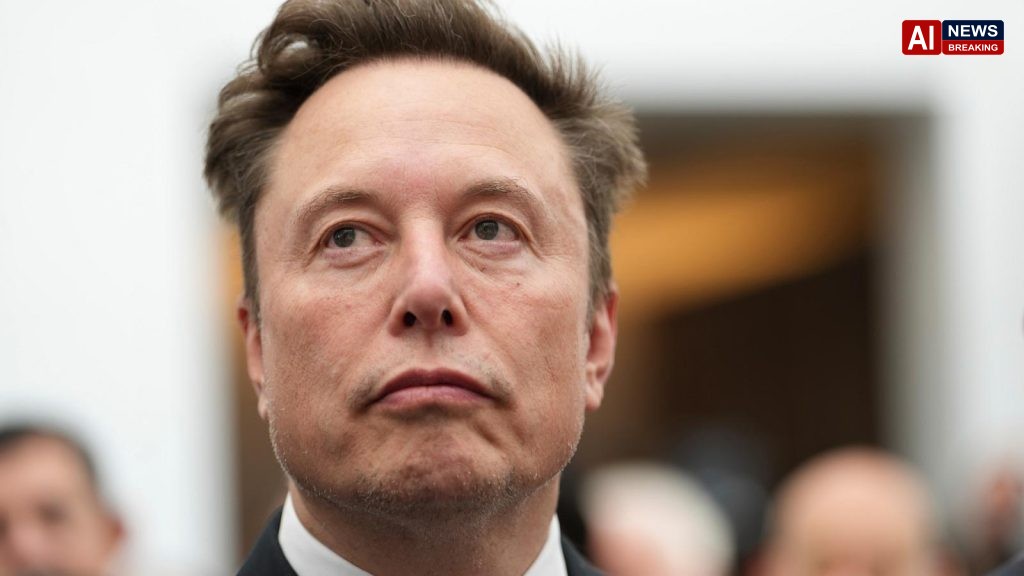
FCC says SpaceX can deploy 1 million satellites for data centers in space. Scientists are skeptical - AI News Breaking
approves spacex launch million:
The Federal Communications Commission has granted SpaceX permission to launch up to one million low‑Earth‑orbit satellites, a plan the company says will enable the creation of “data centres in space” that could dramatically expand global cloud‑computing capacity. The approval, issued under a set of rules introduced during the Trump administration to accelerate broadband services, marks the most ambitious satellite deployment ever proposed and positions SpaceX at the centre of a debate that pits commercial ambition against technical feasibility, orbital safety and environmental concerns.SpaceX’s proposal envisions a constellation of small, solar‑powered satellites equipped with high‑performance processors, inter‑satellite laser links and on‑board storage. By distributing computational workloads across thousands of platforms orbiting at roughly 500 kilometres, the company argues it can deliver ultra‑low‑latency services to remote users, reduce the need for ground‑based data‑centre construction, and mitigate the energy demands associated with cooling massive server farms..
In a briefing, SpaceX CEO Elon Musk described the network as “the next step in making the internet truly global, while also opening a new frontier for data processing beyond the limits of Earth‑bound infrastructure.”The FCC’s decision, however, was not without controversy. In its filing, the commission cited the “public interest” benefits of expanded broadband access and the potential for innovative services such as real‑time Earth observation, autonomous‑vehicle communication and disaster‑response coordination. Yet the agency also noted that the sheer scale of the deployment raises unprecedented regulatory challenges, from spectrum allocation to the management of orbital debris..
To address these issues, the FCC imposed a series of conditions, including mandatory collision‑avoidance protocols, a debris‑removal plan, and a requirement that SpaceX submit annual reports on the environmental impact of the constellation.Scientific bodies have been quick to voice skepticism. A coalition of astronomers and space‑environment researchers, led by the International Astronomical Union, warned that a million additional objects could severely compromise the night sky, interfering with optical and radio observations critical to fundamental research. “We are looking at a scenario where the cumulative brightness of these satellites could render large swathes of the sky unusable for astronomy,” said Dr María Sánchez, an astrophysicist at the European Southern Observatory..
The group also highlighted the risk of cascading collisions, known as the Kessler syndrome, which could render parts of low‑Earth orbit unusable for decades.From a technical standpoint, experts question whether the proposed “space data centre” model can deliver the promised performance gains. While inter‑satellite laser links can achieve terabit‑per‑second speeds, the latency introduced by routing data through a moving platform remains non‑trivial, especially for latency‑sensitive applications like high‑frequency trading or cloud gaming. “The physics of orbital dynamics mean that any given satellite is only visible to a particular ground station for a few minutes per orbit,” explained Dr Anil Patel, a telecommunications engineer at the Massachusetts Institute of Technology..
“You would need a massive, constantly shifting network of ground stations to keep the data flowing, which adds complexity and cost.”Economic analyses also raise doubts about the cost‑effectiveness of the venture. A recent study by the Brookings Institution estimated that the capital expenditure required to build, launch and maintain a million‑satellite fleet could exceed $200 billion, far surpassing the projected revenue from data‑centre services. The report noted that the price advantage of avoiding terrestrial construction may be offset by the ongoing expenses of satellite replacement, orbital debris mitigation and regulatory compliance..
Moreover, the study warned that market demand for space‑based computing might be limited, given the rapid advances in terrestrial renewable energy and edge‑computing architectures that are already reducing the need for distant data centres.Regulators in other jurisdictions are watching the development closely. The European Union’s Space Agency has launched its own “Space‑Based Computing” initiative, but it emphasizes a more incremental approach, limiting deployments to a few thousand satellites and prioritising joint research on debris mitigation. Meanwhile, the United Nations Committee on the Peaceful Uses of Outer Space has called for an international framework to govern mega‑constellations, arguing that “the current regulatory regime is fragmented and ill‑suited to handle the scale of activity envisioned by private actors.”In response to the criticism, SpaceX has highlighted several mitigation strategies..
The company plans to use ion‑thrusters powered by solar arrays to perform regular de‑orbiting maneuvers, aiming to retire each satellite within five years after the end of its operational life. It also proposes a “dynamic constellation management” system that can automatically re‑route traffic and adjust orbital parameters to minimise collision risk. To address the issue of reflectivity, SpaceX says future satellites will be coated with a non‑reflective material designed to reduce brightness by up to 70 percent, a measure that aligns with the International Astronomical Union’s recommendations.Despite these assurances, the path forward remains uncertain..
The FCC’s approval is just one component of a broader regulatory landscape that includes the Federal Aviation Administration, the National Oceanic and Atmospheric Administration and multiple international bodies. Each agency will need to coordinate its oversight to ensure that the constellation does not compromise airspace safety, environmental health or the scientific use of the orbital environment. As the first batch of the “data‑centre” satellites is slated for launch next year, observers expect a period of intense scrutiny, with real‑time monitoring of orbital debris and transparent reporting becoming pivotal to the project’s legitimacy.The debate over SpaceX’s million‑satellite vision underscores a larger question about the future of computing and the role of space in the global digital infrastructure..
Proponents argue that pushing computation beyond Earth could unlock new capabilities and reduce terrestrial energy consumption, while detractors caution that the costs, risks and uncertainties may outweigh the benefits. As policymakers, scientists and industry leaders grapple with these issues, the outcome of SpaceX’s ambitious plan could set a precedent for how humanity balances commercial innovation with the stewardship of the shared orbital commons.Only time will tell whether the concept of “data centres in space” will evolve from a bold marketing claim into a practical, sustainable component of the world’s information ecosystem, or whether it will become a cautionary tale of over‑ambition in the final frontier..
Updated: November 26, 2026
Space‑based “data centres” could rewrite the economics of cloud computing, but the $200 billion price tag and orbital‑debris nightmare mean the venture may end up costing more in sky‑clean‑up than it saves on cooling.
If the technology works, it will push latency‑critical