
 The Supreme Court will decide whether assault weapons bans violate the Second Amendment
 A Critic of Beijing Falls Short in Taiwan’s Key Mayoral Election
 EPA says no rise in contamination after Army detonates lead azide stockpile in Iowa
 Israeli Strike Kills 2 Workers at Gaza Clinic, Doctors Without Borders Says
 McQueen Pre-Fall 2027
Johannesburg Lawmakers Snub Helen Zille in Mayoral Election
**
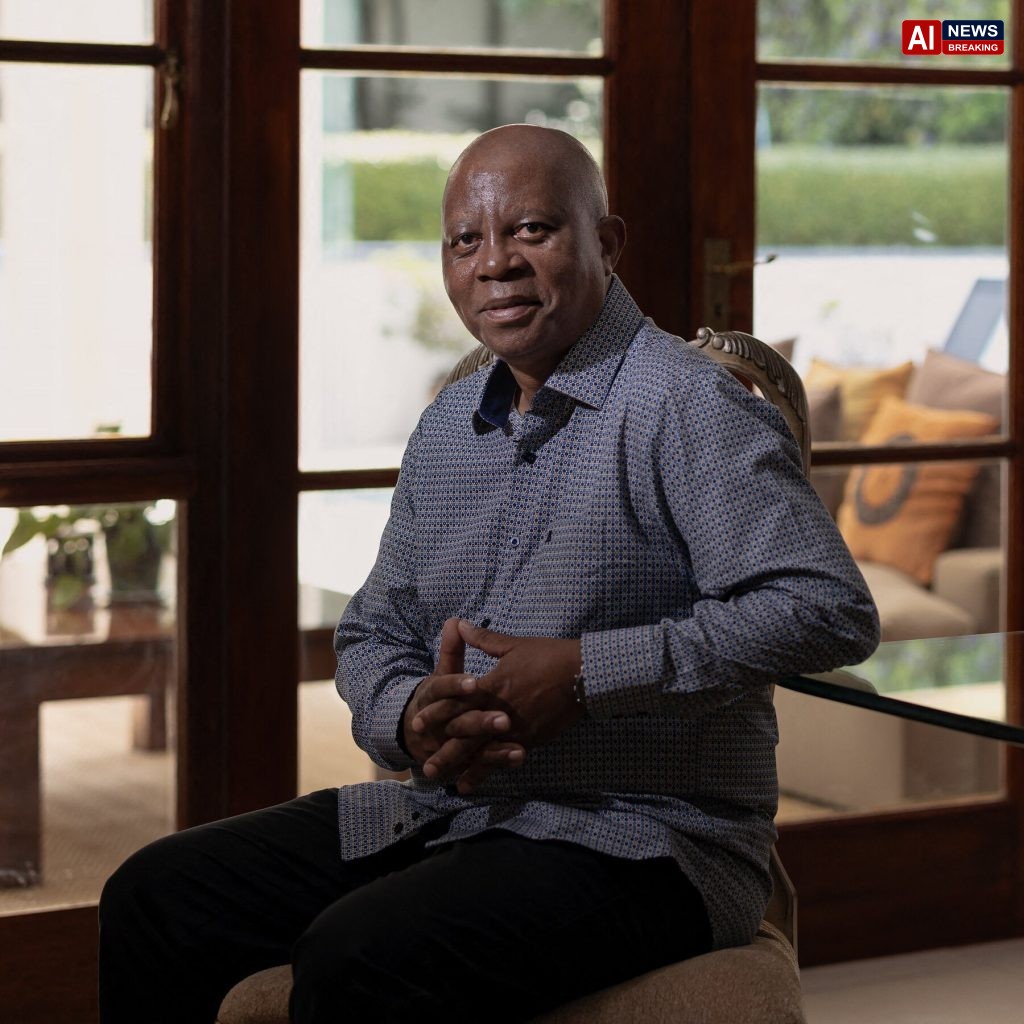
Johannesburg Lawmakers Snub Helen Zille in Mayoral Election - AI News Breaking
Johannesburg Lawmakers Snub Helen Zille in Mayoral Election The Johannesburg City Council’s decision on Tuesday to appoint Herman Mashaba as mayor has sent a clear signal that the city’s political establishment is turning its back on Helen Zille, the Democratic Alliance’s (DA) star candidate who led the party to its strongest municipal performance in a decade. While the DA secured the highest share of the popular vote, the council’s internal mechanisms, dominated by coalition partners and smaller parties, allowed Mashaba, a former businessman turned activist, to claim the mayoral seat. Observers say the outcome underscores the fragility of South Africa’s coalition politics and highlights the growing chasm between party‑list victories and real‑world governance..
Zille, a former premier of the Western Cape and long‑time stalwart of the opposition, had campaigned on a platform of fiscal prudence, anti‑corruption measures and a promise to restore service delivery in a city plagued by water shortages and power cuts. Her campaign attracted a surge of middle‑class voters, especially in the city’s affluent northern suburbs, and resulted in the DA winning 96 of the 270 council seats – a gain of 12 compared with the previous election. Yet the DA fell short of an outright majority, leaving it dependent on alliances with the Economic Freedom Fighters (EFF), the African National Congress (ANC) and several independent ward councillors..
The coalition dynamics proved decisive. The EFF, which secured 38 seats, and the ANC, with 136, together commanded enough votes to block Zille’s nomination. In a closed‑door session, the coalition parties coalesced around Mashaba, a former chief executive of the South African retail chain, Shoprite, who had recently entered politics as a vocal critic of both the ruling party and the DA’s perceived elitism..
His appeal to “real Johannesburg” resonated with councillors who argued that the city needed a leader with business acumen rather than a career politician. Mashaba’s ascension was not without controversy. Critics point to his past affiliation with the Freedom Front Plus, a right‑wing party, and his occasional incendiary remarks on land reform as evidence that he may not be the unifying figure the council claims..
Nonetheless, his supporters argue that his outsider status and track record of turning a struggling business into a market leader make him uniquely qualified to tackle the city’s mounting debt, which the municipal treasury estimates at R45 billion. The DA’s leadership responded swiftly, issuing a statement that described the council’s decision as “undemocratic” and “a betrayal of the voters’ will.” Zille herself addressed a packed press conference, lamenting that “the people of Johannesburg have spoken, but the political elite have chosen to ignore that voice.” She vowed that the party would “hold the new mayor accountable” and promised a vigorous oversight agenda, citing the DA’s experience in municipal governance as a counter‑balance to Mashaba’s inexperience. Political analysts say the episode could have far‑reaching implications for the DA’s national strategy ahead of the 2029 general election..
Dr Thabo Mokoena of the University of the Witwatersrand notes that “the Johannesburg result is a cautionary tale about over‑reliance on vote share without securing coalition partners.” He adds that the party’s failure to negotiate pre‑emptive agreements with smaller groups may force it to reconsider its approach to coalition building, especially in provinces where the ANC’s dominance is waning. Meanwhile, the ANC’s provincial chairperson, Oscar Mabuyane, hailed the outcome as “a triumph for inclusive governance.” He argued that Mashaba’s appointment reflects a broader desire to move away from the “old guard” politics that have characterised Johannesburg’s administration for decades. The ANC, while still the largest single party in the council, has faced criticism for internal factionalism; aligning with Mashaba may be a strategic move to regain credibility among urban voters..
The EFF’s leader, Julius Malema, seized the moment to champion his party’s role as the “kingmaker.” In a televised interview, Malema declared that “the people wanted change, and we delivered it by supporting a candidate who will fight for the poor and the working class.” He warned, however, that if Mashaba fails to meet expectations, “the EFF will not hesitate to pull the rug from under him.” This rhetoric underscores the precarious nature of coalition arrangements, where loyalty can shift rapidly in response to public sentiment. Civil society groups have called for transparency in Mashaba’s upcoming policy agenda. The Johannesburg Chamber of Commerce issued a joint statement urging the mayor‑elect to prioritize the city’s infrastructure backlog, especially the failing water treatment plants and the over‑burdened transport network..
Meanwhile, the South African Cities Network warned that political infighting could further delay much‑needed service delivery, exacerbating tensions in informal settlements that already suffer from inadequate sanitation and electricity. International observers note that Johannesburg’s political turbulence mirrors challenges in other African megacities where rapid urbanisation strains governance capacity. A recent report by the World Bank highlighted that “municipal elections that produce fragmented councils often lead to policy paralysis unless robust coalition frameworks are in place.” The report recommends that South Africa consider legislative reforms to clarify mayoral election procedures and to strengthen the accountability mechanisms for coalition partners..
In the days ahead, Mashaba is expected to present a detailed 100‑day plan outlining his priorities, which he has described as “clean water, reliable power and job creation.” Sources close to his office indicate that he intends to convene a series of stakeholder workshops, bringing together business leaders, community activists and academic experts to shape his administration’s roadmap..
Updated: November 27, 2026
Johannesburg’s council elected businessman‑turned‑activist Herman Mashaba as mayor, sidelining DA heavyweight Helen Zille despite her party’s strong vote share, as coalition partners EFF and ANC rallied behind the outsider. The result highlights South Africa’s fragile coalition politics and raises questions about governance, service delivery and the DA’s future strategy.





