The Supreme Court will decide whether assault weapons bans violate the Second Amendment
 A Critic of Beijing Falls Short in Taiwan’s Key Mayoral Election
 EPA says no rise in contamination after Army detonates lead azide stockpile in Iowa
 Israeli Strike Kills 2 Workers at Gaza Clinic, Doctors Without Borders Says
 McQueen Pre-Fall 2027
Italy Bans Burqas and Niqabs in Schools, Approves 30 Cap on Foreign Students in Classrooms
Italy’s parliament has approved a controversial education reform introducing restrictions on burqas and niqabs in schools and a 30% cap on certain foreign students in first-year classrooms. The Giorgia Meloni government says the measures will strengthen integration and Italian-language learning, while opposition parties raise concerns about discrimination and religious freedom.
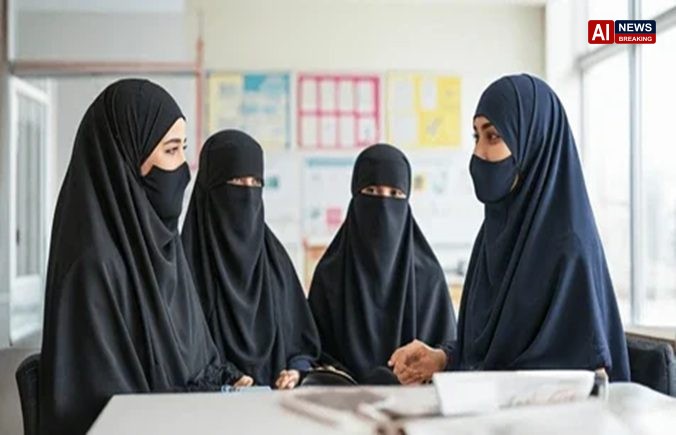
Italy Bans Burqas and Niqabs in Schools, Approves 30 Cap on Foreign Students in Classrooms - AI News Breaking
italy bans burqas niqabs:
AI News Breaking | Latest World News | November 28, 2026
Europe | Education | Immigration
Italy has approved a controversial education reform banning face-covering garments, including burqas and niqabs, in schools while introducing a 30% limit on certain foreign students in first-year classrooms. Prime Minister Giorgia Meloni’s government says the measures will strengthen integration, encourage Italian-language learning and protect equal educational opportunities. Opposition parties, however, have raised concerns about discrimination, religious freedom and the treatment of children from immigrant families.
Italy Approves New School Rules on Burqas, Niqabs and Foreign Students
Italy has given final parliamentary approval to a controversial education reform that introduces restrictions on face coverings in schools and limits the number of certain foreign students in individual classrooms. The legislation, backed by Prime Minister Giorgia Meloni’s conservative government, has reignited debate across Europe over immigration, religious freedom, national identity and the integration of migrant communities.
The reform received approval from Italy’s Chamber of Deputies on November 26, 2026, with 142 votes in favour, 112 against and four abstentions. The Senate had approved the legislation earlier, on November 20, completing the parliamentary process. The measures form part of Italy’s broader Decreto Scuola, or School Decree. ANSA.it+1
The legislation contains three particularly significant provisions:
- A prohibition on face coverings, including burqas and niqabs, during school activities.
- A 30% limit on qualifying foreign students in certain first-year classrooms.
- Italian-language learning requirements for some parents whose children experience serious integration difficulties.
The government describes the reform as an effort to improve educational integration and ensure that students can participate effectively in the Italian education system.
However, critics argue that restricting classroom enrolment according to nationality-related criteria and prohibiting religious face coverings could create additional difficulties for immigrant families.
The debate is particularly significant because Italy is one of Europe’s major destinations for migration, and immigration policy has become an important issue in the country’s political landscape.
1. What Does Italy’s New Education Law Actually Say?
The new legislation introduces changes to the way schools manage religious face coverings, classroom enrolment and the integration of foreign students.
Although the headlines describe the measure as a ban on burqas and a 30% cap on foreign students, the actual provisions are more specific.
Ban on burqas and niqabs in schools
One of the most debated provisions concerns face-covering garments worn by some Muslim women.
Under the new rules, students will not be permitted to participate in curricular or extracurricular school activities with their faces covered in a manner that prevents identification.
The measure specifically targets garments such as:
- Burqa: A full-body covering that also conceals the face, generally leaving a mesh screen over the eyes.
- Niqab: A face covering that leaves the eyes visible while concealing the rest of the face.
- Other face coverings: Clothing or accessories that prevent a person’s face from being recognised, subject to specified health and security exceptions.
The legislation does not amount to a general prohibition on all Islamic clothing.
The hijab, which covers the hair and neck while leaving the face visible, is not covered by the face-concealment prohibition described in the legislation.
The government’s argument is that schools must be able to identify students and maintain an environment in which communication and interaction are possible.
Prime Minister Giorgia Meloni has also framed the measure as a question of women’s rights, arguing that girls should not be forced to conceal their faces.
The proposal has nevertheless generated criticism because opponents believe that a restriction directed at religious clothing could interfere with individual religious expression.
2. Italy Introduces a 30% Cap on Certain Foreign Students
Another important element of the reform is the introduction of a 30% ceiling for certain foreign students in individual first-year classrooms.
However, an important distinction must be understood: the legislation does not simply prohibit every classroom from having more than 30% foreign-born or foreign-origin children.
The rules use nationality and previous participation in the Italian education system as criteria.
The provisions distinguish between primary and secondary education.
For primary schools:
The restriction applies to pupils who do not have Italian citizenship and who were neither born in Italy nor attended at least two years of preschool in the Italian education system.
For lower and upper secondary schools:
The criteria concern students without Italian citizenship who have not successfully completed at least three years of schooling within the Italian national education system.
Students who already possess adequate Italian-language skills are also treated differently under the integration provisions.
This distinction is important because many children from immigrant families have grown up in Italy, speak Italian and have already completed several years of education in the country.
The government’s objective is to prevent excessive concentrations of newly arrived students who have limited Italian-language proficiency in individual classrooms.
The government believes that concentrating large numbers of students who cannot adequately communicate in Italian can create difficulties for teachers and slow down classroom learning.
However, critics argue that classroom diversity should be addressed through better teaching resources, additional language instruction and investment in public education rather than nationality-based restrictions.
3. Why Has Giorgia Meloni’s Government Introduced These Restrictions?
The education reform is closely connected to the wider political debate surrounding immigration, national identity and integration in Italy.
Prime Minister Giorgia Meloni and her Brothers of Italy party have consistently emphasised the importance of national traditions, cultural identity and stronger integration requirements for people moving to Italy.
The government argues that immigration should be accompanied by an understanding of the country’s language, laws, institutions and social expectations.
During an event organised by the youth wing of her political party in September 2026, Meloni defended the proposed restrictions and said that foreign families settling in Italy should learn the language and understand the country’s culture and rules.
She also raised concerns about Italian children becoming minorities in their own classrooms.
The government’s position is that integration requires more than simply enrolling foreign children in schools. It also requires students to communicate effectively, participate in classroom activities and develop relationships with other pupils.
The administration believes that language barriers can create educational inequalities when schools have insufficient resources to support newly arrived children.
The new reform therefore combines restrictions with additional language-learning measures.
However, immigration remains a politically sensitive issue in Italy, and the government’s policies have attracted criticism from opposition parties and organisations representing migrant communities.
4. Italian Language Classes May Also Become Mandatory for Parents
One of the more unusual aspects of the new education reform is its focus on parents.
The Italian government believes that the successful integration of children into schools also depends on their families’ ability to communicate with teachers and understand the education system.
Under the new provisions, certain parents of foreign students experiencing serious integration difficulties may be required to participate in Italian-language learning programmes.
These programmes are intended to help parents understand school communications, participate in educational activities and support their children’s academic development.
The legislation provides for language-support programmes through adult education institutions.
The measures also include financial penalties for parents who fail to comply with applicable requirements. Earlier published details of the decree specified fines ranging from €200 to €1,000, with exemptions for certain medical, disability-related and age-related circumstances.
The government’s argument is that parents who understand Italian can participate more effectively in their children’s education.
For example, communication between parents and teachers is important when students experience academic difficulties, behavioural problems or social integration challenges.
Parents who cannot understand school communications may struggle to participate in meetings, follow educational instructions or provide appropriate support at home.
However, the compulsory nature of the programmes has generated criticism.
Opponents argue that language-learning initiatives should be supported through accessible public services rather than enforced through financial penalties.
5. What Happens to Schools With More Than 30% Foreign Students?
The implementation of the new classroom restrictions could become one of the most challenging aspects of the reform.
Some Italian schools have substantial numbers of students from immigrant families, particularly in urban areas and communities with significant migrant populations.
The government wants local education authorities to manage classroom placements to avoid excessive concentrations of students who have not acquired adequate Italian-language skills.
Schools may need to reconsider enrolment arrangements, redistribute students or organise additional language-support programmes.
However, the rules do not automatically mean that every school with more than 30% foreign students must transfer pupils.
Eligibility depends on the specific criteria in the legislation, including the students’ educational backgrounds.
The reform also provides additional resources for schools facing integration challenges.
According to reporting on the original government proposal, Education Minister Giuseppe Valditara indicated that the measure would affect approximately 1,000 classrooms, representing around 0.3% of classrooms nationwide.
This suggests that the government’s immediate objective is to address particular concentrations rather than impose an unrestricted nationwide redistribution of foreign pupils.
Nevertheless, implementation could be difficult in areas where schools serve large immigrant communities and alternative educational institutions are not easily accessible.
6. Opposition Parties Criticise the New Education Reform
The approval of the legislation has exposed significant political divisions within Italy.
Opposition parties have argued that the government is focusing on immigration restrictions instead of addressing deeper structural problems affecting the country’s education system.
During the parliamentary proceedings, opposition lawmakers displayed signs carrying the message:
“At school nobody is a foreigner.”
The protest reflected their opposition to measures that they believe could divide children according to their backgrounds.
Elly Schlein, leader of the centre-left Democratic Party, has criticised the government’s approach.
She argues that schools need better infrastructure, more teachers, improved educational facilities and additional resources to support all students.
Other opposition politicians have questioned whether moving students between schools will actually improve educational outcomes.
Their argument is that a child’s nationality should not determine access to educational opportunities.
The Five Star Movement has also criticised the legislation, arguing that the government should prioritise educational resources and equal opportunities rather than introduce restrictions based on immigration-related criteria.
Some educators have raised practical concerns about how school administrators will implement the classroom cap without disrupting students’ existing social and educational relationships.
7. What Does the Italian Government Say in Its Defence?
Education Minister Giuseppe Valditara has defended the legislation as an effort to strengthen integration and improve educational opportunities.
The government argues that schools cannot provide equal educational opportunities if students are unable to understand the language used in classrooms.
From the administration’s perspective, the problem is not simply the presence of foreign students but the concentration of students who lack sufficient Italian-language skills.
The government believes that additional language support, combined with classroom distribution measures, could help students learn more effectively.
It has also argued that parents have an important responsibility to participate in their children’s educational development.
The reform includes measures beyond immigration and religious clothing, covering issues such as:
- Support for students with disabilities.
- Measures against cyberbullying.
- Initiatives to prevent school dropouts.
- Changes to teacher recruitment and support-teacher specialisation.
- Additional funding for certain school personnel.
- Changes to the cost of digital textbooks.
The digital textbook provision has also generated controversy within the governing coalition.
Under the new arrangement, publishers will be required to offer digital editions of school and university textbooks at 50% of the price of corresponding printed editions.
The Italian Publishers Association has criticised the measure, arguing that it could negatively affect publishers and the sustainability of educational publishing.
8. When Will the New Rules Take Effect?
The reform has completed its parliamentary approval process following the November 26 vote in the Chamber of Deputies.
The legislation is part of Decree-law 170 of September 30, 2026.
According to the parliamentary documentation, the 30% restrictions for first-year classes in primary and secondary education are scheduled to apply from the 2027–2028 academic year.
The provisions also include transitional arrangements for enrolments during the 2026–2027 academic year and students entering higher classes.
This distinction matters because the final legislation is not simply a new rule that automatically transfers every foreign student currently attending an Italian school.
Its application depends on the relevant enrolment category and the student’s educational history.
The face-covering prohibition is a separate provision within the same education reform.
9. Italy’s Decision Comes Amid Wider European Debates Over Religious Clothing
Italy’s decision is part of a broader European debate about religious clothing, public institutions, secularism and individual freedoms.
Several European countries have already introduced restrictions on face coverings in particular public settings.
France introduced a nationwide prohibition on concealing the face in public places in 2011.
Belgium adopted similar restrictions in the same year.
Denmark introduced a nationwide face-covering prohibition in 2018, while the Netherlands adopted a partial ban covering specific locations, including educational institutions, hospitals, public transport and government buildings.
Switzerland introduced a federal prohibition on face coverings in public spaces in 2023.
However, the legal frameworks differ considerably between countries.
Some restrictions apply to all public spaces, while others are limited to schools, government institutions or specific situations involving identity verification.
Italy’s new legislation specifically addresses participation in school activities.
It should therefore not be interpreted as an automatic nationwide prohibition on every person wearing a burqa or niqab in all public places.
The distinction between restrictions on face coverings and restrictions on religious symbols is also important.
A face-covering ban does not necessarily mean that headscarves, turbans, crosses or other visible religious symbols are prohibited.
10. What Could Be the Impact on Muslim Students and Immigrant Families?
The new legislation could have practical consequences for Muslim families and immigrant communities living in Italy.
The prohibition on face coverings will directly affect students who wear garments that conceal their faces during school activities.
For families whose religious or cultural practices include face coverings, the new requirements may create difficult decisions about school attendance and religious expression.
At the same time, the legislation does not prohibit the hijab under the face-identification rule described in the decree.
The classroom restrictions could also affect some recently arrived foreign students whose Italian-language proficiency and previous educational experience meet the relevant criteria.
Families may need to consider different school placements if their preferred institution cannot accommodate enrolment under the new rules.
This could be particularly challenging in communities where schools are already under pressure because of limited facilities, teacher shortages or high student enrolment.
The requirement for some parents to attend Italian-language courses could create additional responsibilities for families balancing employment, childcare and other commitments.
However, the government believes these measures could help children become more confident in Italian and participate more fully in school life.
The actual impact will depend heavily on how schools implement the provisions, how much language-support funding becomes available and whether families receive sufficient assistance.
11. Could the New Law Face Legal and Human Rights Challenges?
The legislation is also likely to attract continued scrutiny from legal experts and organisations concerned with religious freedom, equality and children’s rights.
Italy’s constitutional framework protects fundamental rights, including religious freedom and equality before the law.
At the European level, the European Convention on Human Rights protects freedom of religion under Article 9 and prohibits discrimination under Article 14 in the enjoyment of protected rights.
However, these protections do not mean that every restriction involving religious clothing is automatically unlawful.
European human-rights law allows certain restrictions when they have a legitimate objective, are prescribed by law and satisfy the applicable necessity and proportionality requirements.
The government may rely on identification, security and the functioning of educational institutions to defend its position.
Opponents may question whether a prohibition is necessary in circumstances where less restrictive arrangements could achieve the same objectives.
For example, schools could consider requiring students to reveal their faces privately for identification purposes without imposing a broader restriction during all educational activities.
The 30% classroom provision may also attract scrutiny over equality and access to education, particularly if its implementation results in students being moved away from their communities.
The legal debate will ultimately depend on the precise wording of the legislation, its implementation and any challenges brought before the relevant courts.
It would therefore be premature to conclude that the new measures either violate or fully comply with every applicable human-rights standard.
12. Why This Decision Matters Beyond Italy
Italy’s new education legislation could become an important reference point in Europe’s ongoing discussions about immigration and integration.
Across the continent, governments face the challenge of balancing several competing objectives:
- Protecting religious freedom and individual rights.
- Ensuring that students can communicate effectively in schools.
- Maintaining equal educational opportunities.
- Supporting the integration of immigrant families.
- Preserving the ability of public institutions to operate under common rules.
The Italian approach places considerable emphasis on language proficiency and classroom distribution.
Other European countries may observe how the measures affect educational outcomes, school administration and relations between immigrant communities and public institutions.
However, Italy’s policy cannot automatically be applied to other countries because European education systems, migration patterns and constitutional frameworks differ.
The central question is whether integration policies can achieve their objectives without creating unnecessary barriers for children from minority communities.
Key Highlights: Italy’s New School Law
- Burqa and niqab restrictions: Face-covering garments that prevent identification will be prohibited during school activities, subject to specified exceptions.
- 30% classroom cap: Certain foreign students will be subject to a 30% ceiling in relevant first-year classrooms.
- Italian-language courses: Some parents of foreign students experiencing serious integration difficulties may be required to attend language programmes.
- Parliamentary approval: The Chamber of Deputies approved the reform on November 26, 2026, by 142 votes to 112, with four abstentions.
- Political controversy: Opposition parties argue that the measures risk discrimination and that schools need more investment, teachers and educational resources.
Detailed Analysis: Integration, Religious Freedom and the Future of European Education
Italy’s education reform highlights a difficult question facing modern European societies: how should governments integrate immigrant communities while protecting individual freedoms and maintaining equal access to public institutions?
The government’s position is based on the argument that language is central to successful integration. Children who cannot understand classroom instruction may struggle academically, regardless of their intellectual abilities or willingness to participate.
From this perspective, additional Italian-language instruction and a more balanced distribution of students could help teachers provide appropriate support.
There is also a practical argument for ensuring that schools can identify students and maintain effective communication during lessons.
However, the effectiveness of these policies will depend on how they are implemented.
A classroom cap alone cannot solve problems involving teacher shortages, insufficient language programmes, overcrowded schools or unequal educational resources.
Similarly, restricting face coverings does not automatically resolve wider questions about gender equality, family pressure or the participation of Muslim students in public education.
The government will therefore face an important implementation challenge: ensuring that its integration objectives translate into measurable educational improvements.
Another important consideration is the distinction between nationality and language proficiency. A foreign student may speak fluent Italian, have completed several years of schooling in Italy and be fully integrated into the education system. Conversely, a newly arrived student may need intensive language support.
Policies that recognise these differences are likely to be more directly connected to educational needs than approaches based exclusively on nationality.
The new legislation attempts to account for some of these differences through its eligibility criteria and exemptions. Nevertheless, the practical consequences will become clearer only when schools begin applying the rules.
The reform also raises questions about the responsibilities of parents. Encouraging parents to learn the national language can improve communication and support children’s academic progress. However, compulsory programmes and financial penalties must be implemented with consideration for families facing economic, medical or social difficulties.
Ultimately, Italy’s experience could provide important evidence for other European countries considering similar approaches to integration.
Impact on India: Why Should Indian Readers Follow Italy’s New Education Policy?
Although the legislation is an internal Italian policy, it has relevance for India because the country also has a diverse population, multiple languages, different religious communities and a large education system.
India’s constitutional framework protects religious freedom and equality, while educational institutions operate under their own national and state-level laws.
Italy’s decision highlights the challenges governments face when balancing religious expression, national language requirements and the integration of students from different backgrounds.
For Indian policymakers, educators and education researchers, the debate offers an opportunity to examine how language-support programmes can help students from migrant and linguistically diverse families.
It also demonstrates why classroom integration policies should consider educational performance, language proficiency, social inclusion and access to resources.
The issue is particularly relevant as international migration, global employment and cross-border education continue to connect societies.
For Indian families living in Italy, the new rules could have direct implications for school choices, religious clothing and parental participation in education.
Indian students and professionals planning to relocate to Italy should also understand that the restrictions are connected to the country’s school system rather than representing a general ban on all religious clothing in public life.
Conclusion: Italy’s Education Reform Opens a New Chapter in Europe’s Immigration Debate
Italy’s approval of restrictions on burqas and niqabs in schools, alongside a 30% cap on certain foreign students in first-year classrooms, represents a significant development in the country’s education and integration policies.
Prime Minister Giorgia Meloni’s government argues that the legislation will strengthen Italian-language learning, promote integration and ensure that students can participate effectively in classrooms.
Opposition parties, meanwhile, warn that the restrictions could create discrimination, disrupt children’s education and divert attention from the need for greater investment in schools.
The real test will not be the parliamentary vote but the implementation of the new rules.
Whether the reform improves educational outcomes, supports immigrant families or creates additional barriers will depend on the resources provided to schools, the fairness of enrolment decisions and the protection of students’ fundamental rights.
For Europe, the debate extends beyond Italy. It raises a broader question about how democratic societies can maintain common institutional rules while respecting cultural, religious and linguistic diversity.
The coming academic years will provide a clearer picture of whether Italy’s approach can achieve its stated integration objectives.