A Critic of Beijing Falls Short in Taiwan’s Key Mayoral Election
 EPA says no rise in contamination after Army detonates lead azide stockpile in Iowa
 Israeli Strike Kills 2 Workers at Gaza Clinic, Doctors Without Borders Says
 McQueen Pre-Fall 2027
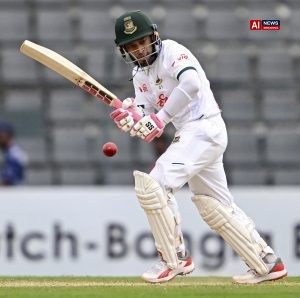
 Mushfiqur Rahim to retire from Test cricket in February 2027
Daily News Brief November 28, 2026: Top India and World Headlines, Business, Markets and Technology
daily brief november 2026:
AI News Breaking | Breaking News with AI Insight
Date: Saturday, November 28, 2026
The global news agenda on Saturday, November 28, 2026, is dominated by escalating tensions between the United States and Iran, a major Supreme Court intervention in Tamil Nadu, fresh Reserve Bank of India (RBI) measures affecting banks, and important developments in India’s corporate and economic landscape.
From the Strait of Hormuz to India’s financial sector, today’s developments could have significant implications for global security, energy prices, financial markets and India’s economic outlook.
Here is your comprehensive daily news briefing covering the most important national and international developments, business updates, market trends, technology news and issues to watch over the coming days.
Today’s Top 10 Headlines
- US-Iran tensions escalate after American forces reportedly disable a commercial vessel in the Gulf of Oman.
- Supreme Court orders Karthigai Deepam lighting at Deepathoon in Tamil Nadu.
- RBI reduces the daily minimum CRR maintenance requirement for banks from 99% to 90%, effective December 1.
- Bombay High Court allows Tata Sons to proceed with its November 30 board meeting.
- Kuwait summons Iran’s ambassador following a deadly drone attack that killed two Italian citizens.
- Global fashion brands reportedly shift some apparel orders from Bangladesh to India amid supply-chain uncertainty.
- India and the European Union discuss terrorism, Ukraine and Indo-Pacific security.
- GRSE hands over the final Project 17A stealth frigate, Vindhyagiri, to the Indian Navy.
- Ukraine reports fresh Russian attacks targeting energy and railway infrastructure.
- Nvidia reportedly restricts AI server shipments to four Southeast Asian countries amid US export-control requirements.
1. International News: US-Iran Tensions Escalate Amid Gulf Security Concerns
Tensions between Washington and Tehran have intensified following reports that US forces struck and disabled the Palau-flagged commercial vessel M/V Pacific Archer in the Gulf of Oman.
According to US Central Command, the vessel had departed Iran’s Bandar Abbas port and attempted to breach the American blockade of Iranian ports. The strike reportedly disabled the ship’s propulsion system, while its civilian crew remained unharmed.
The incident highlights the growing risks surrounding commercial shipping in one of the world’s most strategically important maritime regions.
The Strait of Hormuz remains particularly important because a substantial proportion of internationally traded oil and liquefied natural gas passes through this narrow waterway. Any prolonged disruption could affect global energy supplies, shipping insurance and transportation costs.
For India, the situation is especially significant because the country depends heavily on imported crude oil to meet its domestic energy requirements.
An increase in international oil prices could put pressure on India’s import bill, inflation, currency stability and government finances.
Kuwait-Iran Diplomatic Tensions Increase After Deadly Drone Attack
Diplomatic tensions in the Gulf region have increased following a drone attack in Kuwait that killed two Italian citizens.
Italy’s Foreign Minister Antonio Tajani said Kuwaiti investigations indicated that the drone was manufactured in Iran. Tehran has denied launching the drone from Iranian territory and offered to participate in a joint investigation.
The incident could further complicate regional security arrangements and diplomatic relations between Gulf countries and Iran.
Russia Launches Fresh Attacks on Ukrainian Infrastructure
Ukraine has reported fresh Russian drone attacks targeting energy facilities, railway infrastructure and residential areas across several regions.
The attacks have increased pressure on Ukraine’s electricity infrastructure as colder weather raises energy demand.
Ukraine has also suspended electricity exports following the attacks and worsening power conditions.
The continued conflict remains a major concern for European security, energy markets and international diplomatic efforts.
2. India News: Supreme Court Orders Karthigai Deepam Lighting at Deepathoon
The Supreme Court’s intervention in the Karthigai Deepam dispute in Tamil Nadu has emerged as one of India’s major legal and political developments.
The court directed that the ceremonial lamp be lit at Deepathoon on Thiruparankundram Hill on November 28.
It also issued contempt notices to the Tamil Nadu Chief Secretary, Director General of Police and other officials over alleged non-compliance with its earlier directions.
The court further ordered security arrangements involving the Central Reserve Police Force (CRPF).
The development has brought religious practices, judicial authority, state administration and public order into the national spotlight.
The matter is being closely watched because it raises broader questions about the implementation of judicial orders and the responsibilities of state authorities.
India and European Union Discuss Terrorism and Global Security
India and the European Union have reiterated their positions on counterterrorism, the Ukraine conflict and Indo-Pacific security during their 12th round of Foreign Policy and Security Consultations in New Delhi.
The discussions underline the importance of India-EU cooperation at a time when international security, trade relationships and geopolitical alliances are undergoing significant changes.
Both sides have strategic interests in maintaining a stable international environment, strengthening economic relationships and addressing emerging security challenges.
The engagement also reflects India’s growing diplomatic importance in international discussions.
Indian Navy Strengthens Defence Capabilities With Vindhyagiri Delivery
Garden Reach Shipbuilders and Engineers (GRSE) has handed over Vindhyagiri, completing its contribution to the Indian Navy’s Project 17A stealth frigate programme.
The development represents another milestone in India’s domestic defence manufacturing capabilities.
Project 17A is an important part of the Navy’s modernisation programme, designed to strengthen India’s maritime capabilities through advanced warships featuring improved stealth characteristics and modern combat systems.
The programme also demonstrates the government’s emphasis on domestic defence production and reducing dependence on foreign suppliers.
Assam Fake ICSE Certificate Scam: Three Arrested
Authorities in Assam have reportedly arrested three people in connection with an alleged fake ICSE Class 10 certificate racket involving approximately 4,900 students.
The case has raised concerns about examination document fraud, educational credentials and verification systems.
If established, the alleged racket could have wider implications for educational institutions, recruitment agencies and organisations that depend on academic qualifications.
The investigation is expected to focus on the network involved in issuing and circulating fraudulent certificates.
3. Business and Economy: RBI Reduces Daily Minimum CRR Maintenance Requirement
The Reserve Bank of India has reduced the minimum daily Cash Reserve Ratio (CRR) maintenance requirement for scheduled banks from 99% to 90%, effective from the fortnight beginning December 1, 2026.
The decision provides banks with greater flexibility in managing their daily liquidity.
CRR is the percentage of a bank’s net demand and time liabilities that must be maintained as cash balances with the RBI.
Importantly, the overall prescribed CRR requirement has not changed. Banks must continue to maintain the required average CRR throughout the reporting fortnight.
The adjustment is therefore related to daily maintenance flexibility rather than a reduction in the statutory CRR rate.
What Does the RBI Decision Mean for Banks?
The revised requirement could provide several operational benefits:
- Greater flexibility in daily cash management.
- Reduced pressure to maintain high reserves every day.
- Improved short-term liquidity management.
- Potentially smoother money-market operations.
- Greater flexibility in responding to changing liquidity conditions.
However, the decision does not automatically mean lower loan interest rates for customers.
Banks will continue to assess their funding costs, deposit growth, credit demand and overall liquidity conditions before making lending-rate decisions.
The banking sector will closely monitor how the revised arrangement affects liquidity management after December 1.
Tata Sons Board Meeting Cleared by Bombay High Court
The Bombay High Court has allowed Tata Sons to proceed with its scheduled board meeting on November 30, rejecting interim relief sought by two Tata trusts.
The court clarified that decisions taken at the meeting will remain subject to the final outcome of the ongoing legal proceedings.
The dispute concerns governance and voting arrangements within Tata Sons, with potential implications for the group’s corporate structure and future plans.
The development is important because Tata Sons sits at the centre of the Tata Group, one of India’s most influential business conglomerates.
Investors, business leaders and corporate governance experts will be watching the next developments in the dispute.
The next hearing is scheduled for January 21, 2027.
Bangladesh Unrest Creates Opportunities for India’s Textile Industry
Global fashion brands are reportedly shifting some apparel orders from Bangladesh to India amid continuing unrest and supply-chain uncertainty.
The development could create new opportunities for Indian textile manufacturers, garment exporters and businesses operating in the apparel supply chain.
India has an established textile manufacturing ecosystem, access to raw materials and a large workforce.
However, attracting international buyers permanently will require improvements in production efficiency, infrastructure, labour productivity, delivery timelines and manufacturing costs.
The opportunity could become particularly important as international brands seek to diversify their sourcing networks and reduce dependence on individual manufacturing markets.
For India, the potential benefits include higher exports, additional employment and increased investment in textile manufacturing.
4. Global Markets: Investors Watch Oil Prices and Geopolitical Developments
Global financial markets are entering the weekend with several important developments to monitor.
Geopolitical uncertainty, energy prices, central-bank policy and regional equity-market movements remain major factors influencing investor sentiment.
Asian markets recorded significant gains during the November 27 trading session.
China’s Shanghai Composite reportedly gained 3.73%, while South Korea’s KOSPI rose 4.34% and KOSDAQ advanced 8.13%.
These movements came amid expectations of market-stabilisation support.
Five Factors Indian Investors Should Watch
1. Crude Oil Prices
Any escalation between the United States and Iran could affect international oil prices. Higher crude prices would be particularly important for India because of its dependence on energy imports.
2. GIFT Nifty
Investors will monitor GIFT Nifty movements ahead of Monday’s Indian market opening for indications of early trading sentiment.
3. Foreign Institutional Investors
FII buying and selling activity will remain an important indicator of institutional confidence in Indian equities.
4. RBI Liquidity Measures
The revised CRR maintenance arrangement could influence banking liquidity and money-market conditions.
5. Global Market Sentiment
Developments in the United States, China, South Korea and other major economies could influence international investment flows.
Indian stock exchanges are closed for the regular weekend session on Saturday and Sunday. The next regular trading session is expected on Monday, November 30, 2026.
Market developments over the weekend could influence the opening direction.
5. Technology News: Nvidia Reportedly Restricts AI Server Shipments
The global artificial intelligence industry is facing another potential supply-chain challenge amid growing restrictions on advanced computing technology.
A Financial Times report indicates that Nvidia has instructed partners, including Dell and Supermicro, to stop shipping AI servers to Malaysia, Singapore, Thailand and Indonesia.
The reported move is linked to US export licensing requirements.
The development highlights how semiconductor controls and geopolitical competition are increasingly influencing the global AI infrastructure industry.
Advanced graphics processing units and AI servers are essential for training large language models, operating AI applications and developing next-generation computing infrastructure.
For India, the wider issue is important because the country is seeking to strengthen its domestic AI ecosystem.
Access to advanced chips, data-centre investment, electricity infrastructure and international technology partnerships will be important factors in India’s ability to compete in the global AI economy.
The reported restrictions should be viewed in the context of evolving export-control requirements and should be checked against subsequent company and regulatory statements.
6. Important Developments to Watch in the Coming Days
Several important developments could influence the political, economic and business environment over the coming days.
November 28: Karthigai Deepam ceremony and developments following the Supreme Court’s directions in Tamil Nadu.
November 30: Tata Sons board meeting, with implications for corporate governance and the ongoing legal dispute.
November 30: Developments in South Korea’s market-stability discussions and their potential impact on Asian investor sentiment.
December 1: RBI’s revised daily CRR maintenance requirement takes effect.
December 10: Further developments in Venezuela-related diplomatic talks.
December 16: IPL 2027 mini-auction, an important event for cricket franchises, broadcasters and the sports business industry.
7. AI News Breaking Editorial Analysis: Three Developments That Could Shape the Coming Week
Saturday’s news developments reveal three important trends that deserve attention.
First: Geopolitical Conflicts Are Becoming Economic Risks
The escalating confrontation between Washington and Tehran demonstrates how military and diplomatic tensions can quickly affect international trade and energy markets.
For India, energy security remains a major concern.
A prolonged disruption around the Strait of Hormuz could increase crude oil prices, raise transportation costs and put additional pressure on inflation.
The Indian government and energy companies will need to closely monitor the situation.
Second: Banking Liquidity Remains an Important Economic Indicator
The RBI’s decision to reduce the daily minimum CRR maintenance requirement highlights the importance of liquidity management in the banking system.
Although the overall CRR requirement remains unchanged, greater flexibility in daily maintenance could help banks manage short-term liquidity more efficiently.
The actual impact will depend on liquidity conditions, credit demand and banking-sector funding requirements.
Third: Global Supply-Chain Changes Could Benefit Indian Manufacturing
The reported movement of apparel orders from Bangladesh to India offers a potential opportunity for Indian textile exporters.
However, India must compete on quality, price, delivery speed and manufacturing efficiency.
The same principle applies to other strategic sectors, including electronics, semiconductors, defence manufacturing and artificial intelligence.
Global companies increasingly want diversified supply chains. India has an opportunity to attract investment, but long-term success will depend on execution and competitiveness.
8. What Should Readers Watch Today?
Here are the most important developments to follow throughout Saturday:
- International: Any further escalation in US-Iran tensions and maritime security around the Strait of Hormuz.
- National: Developments following the Supreme Court’s directions on Karthigai Deepam in Tamil Nadu.
- Economy: RBI liquidity measures and their implications for the banking sector.
- Business: The Tata Sons board meeting scheduled for November 30.
- Markets: International crude oil prices and global equity-market sentiment.
- Technology: US semiconductor export restrictions and their impact on the AI industry.
- Defence: India’s domestic naval manufacturing and modernisation programme.
Conclusion: Geopolitics, Banking and Manufacturing Dominate Today’s News
November 28, 2026, brings together three major themes: geopolitical instability, financial adjustments and changing global business relationships.
The escalating US-Iran confrontation is a reminder that geopolitical conflicts can quickly become economic challenges. Any prolonged disruption in the Gulf region could affect international energy markets and India’s import costs.
Meanwhile, the RBI’s latest decision reflects the changing liquidity environment in India, while developments involving Tata Sons and textile exports highlight the continuing transformation of the Indian business landscape.
For India, the coming week will be particularly important in assessing energy security, financial stability, manufacturing opportunities and diplomatic relationships.
The developments of the next few days could offer important signals about the direction of global markets and India’s economic outlook.
Stay informed. Stay ahead.
AI News Breaking – Breaking News with AI Insight.
Editorial Note: This daily news briefing is compiled from available news reports and official information. International developments, financial information and ongoing legal matters may change as new information becomes available. Readers should consult official announcements and primary sources for the latest confirmed updates.