The Supreme Court will decide whether assault weapons bans violate the Second Amendment
 A Critic of Beijing Falls Short in Taiwan’s Key Mayoral Election
 EPA says no rise in contamination after Army detonates lead azide stockpile in Iowa
 Israeli Strike Kills 2 Workers at Gaza Clinic, Doctors Without Borders Says
 McQueen Pre-Fall 2027
Cincinnati Zoo says Fiona the hippo can’t undergo surgery after swallowing a hat
**
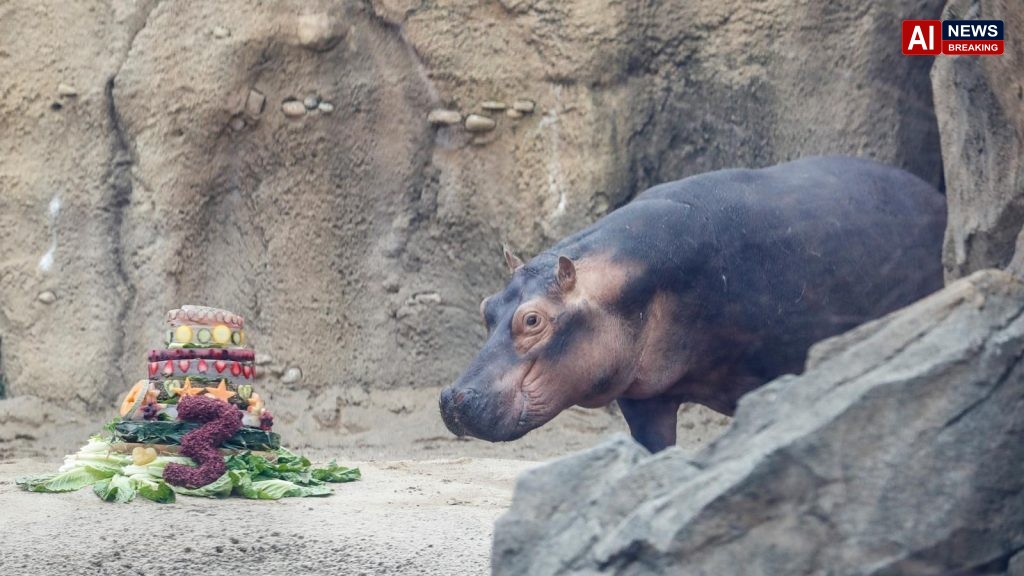
Cincinnati Zoo says Fiona the hippo can't undergo surgery after swallowing a hat - AI News Breaking
cincinnati says fiona hippo:
The Cincinnati Zoo and Botanical Garden announced on Tuesday that Fiona, the 22‑year‑old female hippo who made headlines after swallowing a knitted hat earlier this month, will not be undergoing surgical intervention to remove the foreign object. Instead, veterinarians have opted for a conservative management plan that relies on monitoring, medication and natural passage, a decision they say is based on the animal’s overall health, the location of the hat within her gastrointestinal tract and the risks associated with invasive procedures.The incident occurred on Monday when a visitor’s child accidentally dropped a handmade beanie into Fiona’s enclosure during a school trip. Staff quickly retrieved the item, but a subsequent review of security footage confirmed that the hippo had already ingested the hat..
Zoo officials immediately contacted the veterinary team, who performed a series of diagnostic tests, including a full‑body radiograph and an ultrasound, to determine the hat’s position and assess any potential complications.Initial scans revealed that the knitted material had passed beyond the stomach and was lodged in the descending colon, a region where the hippo’s large, muscular colon can sometimes trap foreign bodies. The veterinary team, led by Dr. Laura Martinez, explained that while the hat’s presence was unusual, the animal was not exhibiting signs of acute distress such as vomiting, abdominal pain or changes in appetite..
“Fiona is eating and drinking normally, and her fecal output remains consistent,” Dr. “These are encouraging indicators that her gastrointestinal system is coping with the object.”Despite the absence of immediate symptoms, the zoo’s medical staff considered several options, including endoscopic retrieval and, as a last resort, exploratory laparotomy. Both procedures carry significant risks for a hippo of Fiona’s age and size..
An endoscopic approach would require a lengthy sedation period and specialized equipment not routinely used on large megafauna, while surgical intervention would involve a major incision, prolonged anesthesia and a high probability of postoperative complications such as infection or adhesions. After weighing these factors, the team concluded that the safest course was to allow the hat to pass naturally, supported by a regimen of laxatives and close observation.The zoo has implemented a rigorous monitoring schedule, with veterinarians conducting daily physical examinations and bi‑daily ultrasonography to track the hat’s movement. If the object fails to progress or if Fiona shows any signs of obstruction—such as reduced stool output, abdominal swelling or lethargy—the team will reassess the situation and may proceed with minimally invasive removal..
In the meantime, Fiona has been placed on a high‑fiber diet enriched with leafy greens and legumes to promote gastrointestinal motility, as well as a low‑dose anti‑inflammatory medication to mitigate any irritation the foreign material might cause.Fiona’s story has captured public attention worldwide, drawing comparisons to previous high‑profile animal incidents at zoos and wildlife parks. The Cincinnati Zoo, which opened in 1875, has a long history of managing complex medical cases, from the birth of the first American-born gorilla to the rehabilitation of endangered species. Zoo officials emphasized that while the hat incident was unusual, it underscores the importance of visitor education and enclosure safety protocols..
“We continuously review our barriers and visitor guidelines to prevent accidental insertions of objects,” said Zoo Director Mark Novak. “Our staff responded swiftly, and we are confident in our plan to protect Fiona’s health.”The zoo’s communication team has been fielding a surge of inquiries from media outlets, animal‑rights groups and the general public. Many have expressed concern about the welfare of a large animal in captivity, while others have offered light‑hearted commentary on the novelty of a hippo wearing a hat..
In response, the zoo has released a detailed FAQ on its website, outlining the steps taken since the incident, the veterinary assessment process, and the rationale behind the non‑surgical approach. The FAQ also addresses common misconceptions about hippo anatomy, noting that their digestive systems are adapted to process large quantities of fibrous plant material but can be vulnerable to indigestible items that block passage.Animal welfare advocates have praised the zoo’s cautious strategy, highlighting that unnecessary surgery on a mature hippo could lead to prolonged recovery times and reduced quality of life. Samantha Reed, a veterinary specialist in large mammal medicine not affiliated with the Cincinnati Zoo, remarked that “conservative management is often the preferred route when the animal is stable and the foreign object is not causing an obstruction..
The key is vigilant monitoring, which the Cincinnati team appears to be providing.”The incident also about the design of enrichment items and the role of visitor‑made objects in animal enclosures. While many zoos encourage public participation in creating toys and puzzles for their residents, they typically require that such items be vetted for safety and durability. In Fiona’s case, the hat was a spontaneous, unsanctioned contribution that slipped through the zoo’s standard protocols..
Novak indicated that the zoo will review its outreach programs to ensure that future contributions are screened more thoroughly, potentially instituting a drop‑off system for approved items.As the week progresses, zoo staff remain optimistic that the hat will pass naturally within the next several days. They have scheduled a final endoscopic check for early next week to confirm the object’s location, after which they will continue routine observations. “Our priority is Fiona’s well‑being,” Dr..
“We will adjust our plan if anything changes, but at this point, the evidence suggests that a non‑invasive approach offers the best outcome.”Fiona’s case serves as a reminder of the delicate balance zoos must maintain between providing engaging environments for animals and safeguarding against unforeseen hazards. The Cincinnati Zoo’s response—combining swift diagnostic action, expert veterinary judgment and transparent public communication—highlights the institution’s commitment to animal health and responsible stewardship. Whether the hat will become a quirky footnote in the hippo’s long life or a cautionary tale for future visitors, Fiona continues to thrive under the watchful eyes of her caretakers, embodying the resilience that has made her a beloved figure at the zoo for more than two decades..
Updated: November 18, 2026
Choosing restraint over surgery underscores how modern zoos must weigh animal welfare against public spectacle, turning viral mishaps into teachable moments about responsible stewardship.
The incident will likely tighten visitor‑generated enrichment policies, reminding institutions that safety protocols are as crucial as engagement in preserving both animal health and institutional credibility.