The Supreme Court will decide whether assault weapons bans violate the Second Amendment
 A Critic of Beijing Falls Short in Taiwan’s Key Mayoral Election
 EPA says no rise in contamination after Army detonates lead azide stockpile in Iowa
 Israeli Strike Kills 2 Workers at Gaza Clinic, Doctors Without Borders Says
 McQueen Pre-Fall 2027
India named top travel destination for 2027 by global consultancy.
**
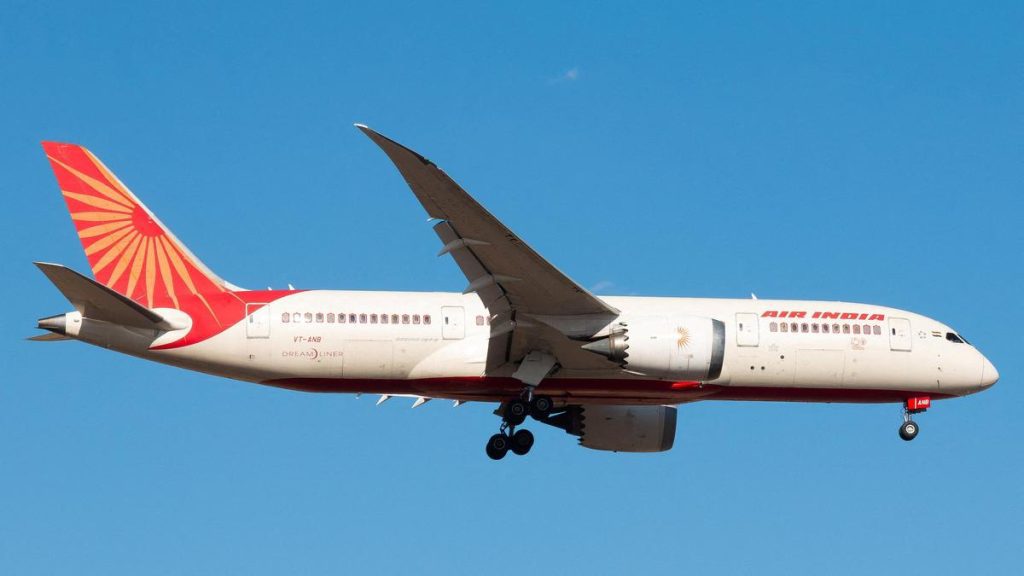
India named top travel destination for 2027 by global consultancy. - AI News Breaking
india named travel destination:
Anand Mahindra’s call to “don’t just celebrate, act” resonated across the Indian tourism sector on Tuesday, as the country was officially crowned the world’s top travel destination for 2027 by a leading global travel consultancy. The accolade, based on a composite index of visitor satisfaction, infrastructure readiness and cultural appeal, placed India ahead of traditional favourites such as Italy, Japan and the United States. While industry bodies and state governments rushed to applaud the recognition, Mahindra, chair of the Mahindra Group, warned that the honor would quickly fade if policymakers failed to translate enthusiasm into concrete measures that simplify travel, improve connectivity and protect the very assets that draw visitors.The announcement came at the closing session of the India Tourism Summit in New Delhi, where representatives from the Ministry of Tourism, state tourism boards and major private players gathered to chart the next phase of growth..
Mahindra, addressing a packed audience of hoteliers, tour operators and technology firms, underscored the disparity between India’s potential and the on‑ground realities faced by tourists. “We have world‑class heritage sites, breathtaking natural wonders and a culinary landscape that is unrivalled,” he said, “but we also have bureaucratic bottlenecks, fragmented transport networks and regulatory red‑tape that turn a dream itinerary into a logistical nightmare.”He urged the Centre and state governments to create “hassle‑free tourist circuits” that would stitch together popular attractions into seamless packages, reducing the need for multiple visas, permits and checkpoints. Mahindra cited successful models from Europe, where cross‑border rail passes and integrated ticketing systems enable travelers to move effortlessly between regions..
In India, he argued, a similar approach could be achieved through a unified digital platform that consolidates information on accommodations, heritage site timings, local guides and real‑time transport options, all accessible via a single mobile app.The call for integrated circuits aligns with the Ministry of Tourism’s recently unveiled “Incredible India 2025‑2030” roadmap, which earmarks INR 5,000 crore for upgrading airport infrastructure, expanding high‑speed rail corridors and digitising ticketing processes. However, Mahindra cautioned that funding alone would not suffice. “We need a paradigm shift in governance,” he said, emphasizing the importance of public‑private partnerships that can leverage technology to streamline approvals and improve service standards..
He highlighted the Mahindra Group’s own experiments with AI‑driven visitor analytics at heritage sites such as Hampi and the Sundarbans, which have helped predict crowd patterns and optimize resource allocation.Tour operators present at the summit echoed Mahindra’s concerns, noting that despite the surge in inbound traffic—India recorded 17.5 million foreign arrivals in the last fiscal year, a 22 per cent increase from the previous year—many travellers still abandon trips due to logistical hurdles. A recent survey by the Federation of Indian Hotels reported that 38 per cent of international visitors found transport connections between major attractions “inadequate”, while 27 per cent cited “unclear information on local regulations” as a deterrent to exploring off‑beat destinations. The data, the survey suggested, points to a gap between promotional messaging and the lived experience of tourists.State governments, which control the majority of heritage sites and regional transport networks, have begun to respond..
Karnataka’s tourism chief announced a pilot “circuit passport” that would allow tourists to purchase a single ticket granting access to a curated set of sites in the state, from the ruins of Belur to the coffee plantations of Coorg. Similarly, Kerala’s tourism department rolled out a digital “Kerala Explorer” platform that integrates ferry schedules, homestay bookings and cultural event calendars, aiming to reduce the average planning time for a week‑long visit from five days to under 24 hours.Yet challenges remain, particularly in the realms of environmental sustainability and cultural preservation. Critics of mass tourism warn that the push for higher visitor numbers could exacerbate pressure on fragile ecosystems such as the Western Ghats and the Himalayan foothills..
Mahindra acknowledged these concerns, urging that the creation of tourist circuits be paired with stringent caps on footfall, robust waste‑management systems and community‑led stewardship programmes. “Growth must be inclusive and responsible,” he asserted, pointing to the Mahindra Group’s own initiatives that fund local artisans and support eco‑friendly transport options in rural areas.The broader economic implications of the top‑destination label are significant. The World Travel & Tourism Council estimates that a one‑percentage‑point rise in international arrivals can generate an additional USD 15 billion in GDP for India, creating roughly 1.2 million jobs across hospitality, transport and ancillary services..
The government’s projected “tourism‑led growth” model envisions tourism contributing 12 per cent of the nation’s GDP by 2030, up from the current 9.2 per cent. Mahindra’s plea for actionable policies is therefore not just about preserving a moment of glory but about securing a sustainable engine of employment and revenue for the country’s burgeoning middle class.International observers have praised India’s achievement, noting that the country’s diversity and resilience have positioned it well to capture post‑pandemic travel demand. Nonetheless, they caution that the global market remains volatile, with shifting consumer preferences towards experiential and low‑impact travel..
In this context, Mahindra’s emphasis on “hassle‑free circuits” could serve as a differentiator, offering visitors a curated yet flexible itinerary that balances iconic landmarks with off‑the‑beaten‑path experiences. Such a strategy could also help distribute tourist flows more evenly, alleviating congestion in over‑visited hubs like Delhi and Goa while boosting lesser‑known regions.As the summit concluded, the sentiment in the hall was one of cautious optimism. The government pledged to convene an inter‑ministerial task force within the next quarter to draft legislation that would simplify inter‑state travel permits and standardise digital ticketing across all modes of transport..
Private sector players, including major airlines, rail operators and tech startups, signalled readiness to collaborate on the envisioned integrated platforms. Mahindra’s final remark encapsulated the mood: “We have the world’s attention; now let us turn it into a lasting legacy. Celebration is the first step, but decisive action is the only way to keep India at the top of every traveller’s list for years to come.”.
India’s accolade as 2027’s top travel destination is a double‑edged sword—if governance and infrastructure lag, the title will evaporate, underscoring the urgency for a coordinated public‑private overhaul that marries digital convenience with sustainable stewardship. The real test will be whether India can translate celebratory hype into a resilient, inclusive tourism ecosystem that keeps the country’s cultural and natural wealth intact while delivering seamless journeys for millions of visitors.