A Critic of Beijing Falls Short in Taiwan’s Key Mayoral Election
 EPA says no rise in contamination after Army detonates lead azide stockpile in Iowa
 Israeli Strike Kills 2 Workers at Gaza Clinic, Doctors Without Borders Says
 McQueen Pre-Fall 2027
 Mushfiqur Rahim to retire from Test cricket in February 2027
Far-Right Vigilantes Have Inflamed France’s Unrest, Officials Say
**
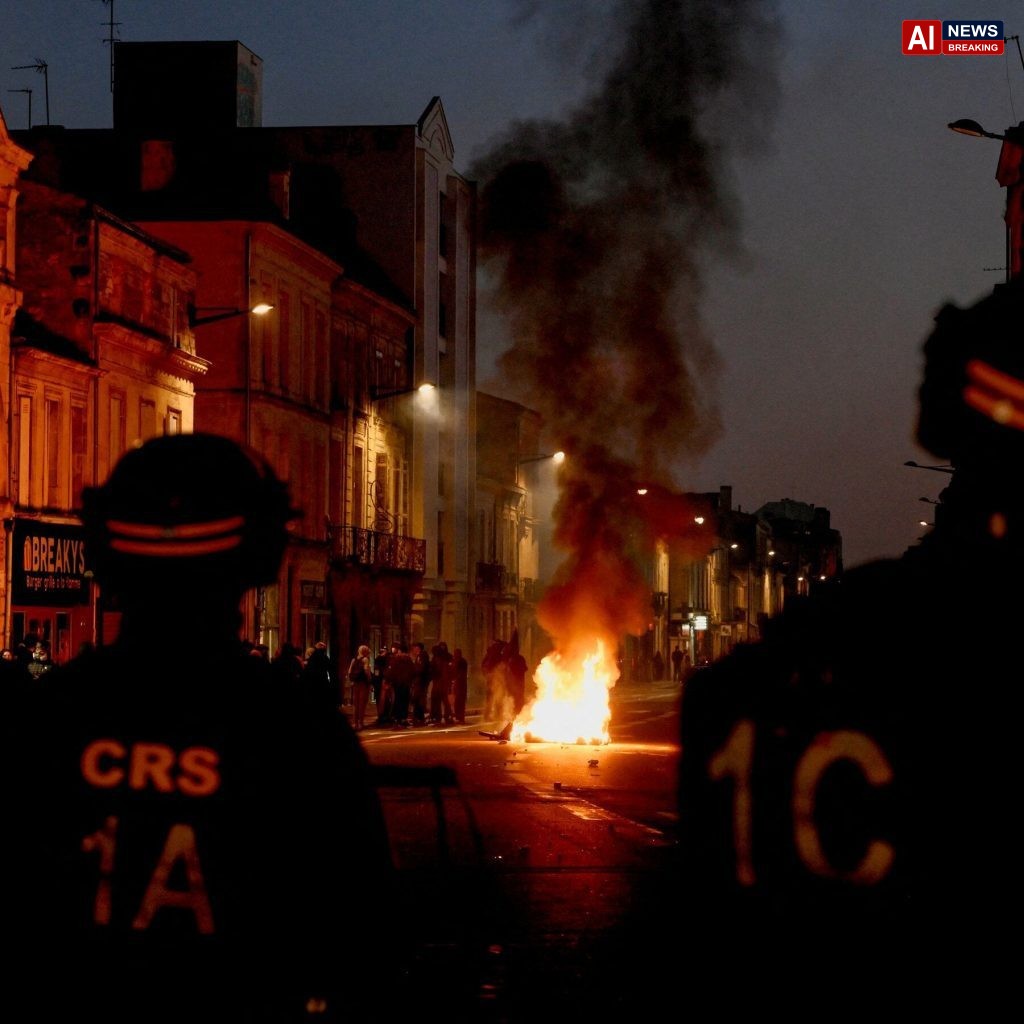
Far-Right Vigilantes Have Inflamed France’s Unrest, Officials Say - AI News Breaking
farright vigilantes have inflamed:
In recent weeks France has been gripped by a wave of anti‑government protests that have spilled over into violent confrontations across the country. While the initial spark was a series of demonstrations against proposed pension reforms, officials say the unrest has taken on a new dimension as hard‑right activists have entered the streets, often clashing with left‑wing groups in a series of confrontations that have been documented in at least ten towns. The escalation has prompted a heightened response from law‑enforcement agencies and renewed calls for political leaders to address the underlying social tensions that have been simmering for months.The first notable incident occurred in the industrial city of Lille, where a march organized by a coalition of trade unions and student groups was met by a counter‑rally of far‑right supporters brandishing nationalist symbols..
According to the local prefecture, the two sides converged on the city centre, and what began as a verbal exchange quickly descended into a melee. Police deployed water cannons and tear‑gas grenades to disperse the crowd, and several arrests were made for assault and public order offences. The incident set a precedent that was echoed in other locations, including Lyon, Marseille and Toulouse, where similar patterns of confrontation have been reported.In Lyon, the situation intensified when a group of self‑described “citizen defenders” – a loosely organised network of far‑right vigilantes who claim to protect neighbourhoods from perceived threats – blocked a planned protest route for left‑wing activists..
Witnesses recounted that the defenders erected makeshift barricades and shouted slogans denouncing “globalist” agendas. When a handful of protesters attempted to breach the barricades, a scuffle broke out, resulting in injuries to three demonstrators and two members of the vigilante group. The mayor of Lyon, a member of the centre‑right party, condemned the violence and called for an immediate dialogue between the parties involved, while emphasizing that any form of intimidation would not be tolerated.Marseille saw a different but equally volatile scenario..
A large gathering of far‑right supporters, many wearing the black and white colours associated with the National Rally, marched through the historic district of Le Panier, chanting anti‑immigration chants. Their route intersected with a parallel march organised by a coalition of environmental NGOs and left‑wing trade unions. The two processions collided near the Vieux Port, prompting a chaotic scene in which stones were thrown and several vehicles were set ablaze..
Police reported that the violence was “pre‑meditated” on both sides, citing intercepted communications that suggested coordination among certain groups to provoke confrontation.The pattern of clashes has not been confined to major urban centres. In the smaller town of Saint‑Étienne, a group of far‑right activists entered a community centre that had been hosting a workshop on workers’ rights. According to the town’s council, the activists shouted accusations of “class warfare” and attempted to forcibly remove the participants..
Local authorities intervened, and the incident was resolved without major injuries, but the episode underscored how the unrest is permeating even the most modest municipalities.National leaders have begun to address the phenomenon of far‑right vigilantes entering the public arena. Interior Minister Gérald Darmanin, speaking at a press conference on Thursday, described the groups as “dangerous actors who seek to exploit legitimate grievances for extremist ends.” He announced the deployment of an additional 2,000 police officers to hotspots identified by regional prefects, and vowed that “any illegal activity, regardless of its political colour, will be pursued with full rigor.” The minister also called for a review of existing legislation on public order, suggesting that new measures may be needed to curb the rise of paramilitary‑style organisations that operate outside formal party structures.Opposition parties, however, have cautioned against a heavy‑handed response that could further inflame tensions. In the National Assembly, a coalition of left‑wing deputies urged the government to focus on dialogue and socio‑economic reforms rather than expanding police powers..
“Cracking down on protests without addressing the root causes – stagnating wages, housing shortages, and the perceived erosion of democratic participation – will only deepen the divide,” said one deputy during a debate. The deputy also highlighted that several of the far‑right groups have links to online platforms that spread disinformation, complicating efforts to differentiate between peaceful protest and coordinated incitement.Security analysts note that the emergence of these vigilante groups reflects a broader European trend where extremist factions, often operating outside traditional party hierarchies, seek to insert themselves into mainstream protests. Claire Fontaine, a political sociologist at the University of Paris, explained that “the current climate of distrust towards institutions creates fertile ground for actors who present themselves as protectors of national identity or civic order.” She added that the groups often adopt a dual narrative: they claim to defend citizens from the chaos of left‑wing activism while simultaneously positioning themselves as opponents of the government’s perceived authoritarian drift.The impact of these confrontations on public opinion appears mixed..
Recent polling by IFOP indicates that while a majority of French citizens remain supportive of the pension reform protests, there is growing concern about the presence of extremist elements on both ends of the spectrum. Approximately 42 % of respondents said they felt “unsafe” attending demonstrations due to the risk of violence, and 38 % expressed support for stricter regulations on public assemblies. At the same time, a notable portion of the electorate, particularly in rural and peri‑urban areas, expressed sympathy for the far‑right groups’ emphasis on law and order, suggesting that the narrative of “vigilantism” resonates with certain segments of the population.As the unrest continues, the French government faces a delicate balancing act..
It must maintain public order while safeguarding the democratic right to protest, all the while preventing fringe groups from hijacking legitimate grievances for extremist purposes. The coming weeks will likely see further dialogue between municipal authorities, law‑enforcement agencies and civil society organisations as they seek to defuse the volatile situation. Whether these efforts will succeed in curbing the influence of far‑right vigilantes, or whether the confrontations will spiral into a broader societal fracture, remains an open question that will shape the political landscape of France in the months ahead..
Updated: November 28, 2026
The clash of pension protesters with far‑right vigilantes signals that France’s socioeconomic grievances are being weaponised, threatening to convert a policy dispute into a broader cultural war. How the state reins in paramilitary activism without stifling legitimate dissent will determine whether the unrest deepens societal fissures or forces a recalibration of the republic’s social contract.