A Critic of Beijing Falls Short in Taiwan’s Key Mayoral Election
 EPA says no rise in contamination after Army detonates lead azide stockpile in Iowa
 Israeli Strike Kills 2 Workers at Gaza Clinic, Doctors Without Borders Says
 McQueen Pre-Fall 2027
 Mushfiqur Rahim to retire from Test cricket in February 2027
Abroad, Spain’s Leader Is a Left-Wing Hero. Will He Lose Power at Home?
**
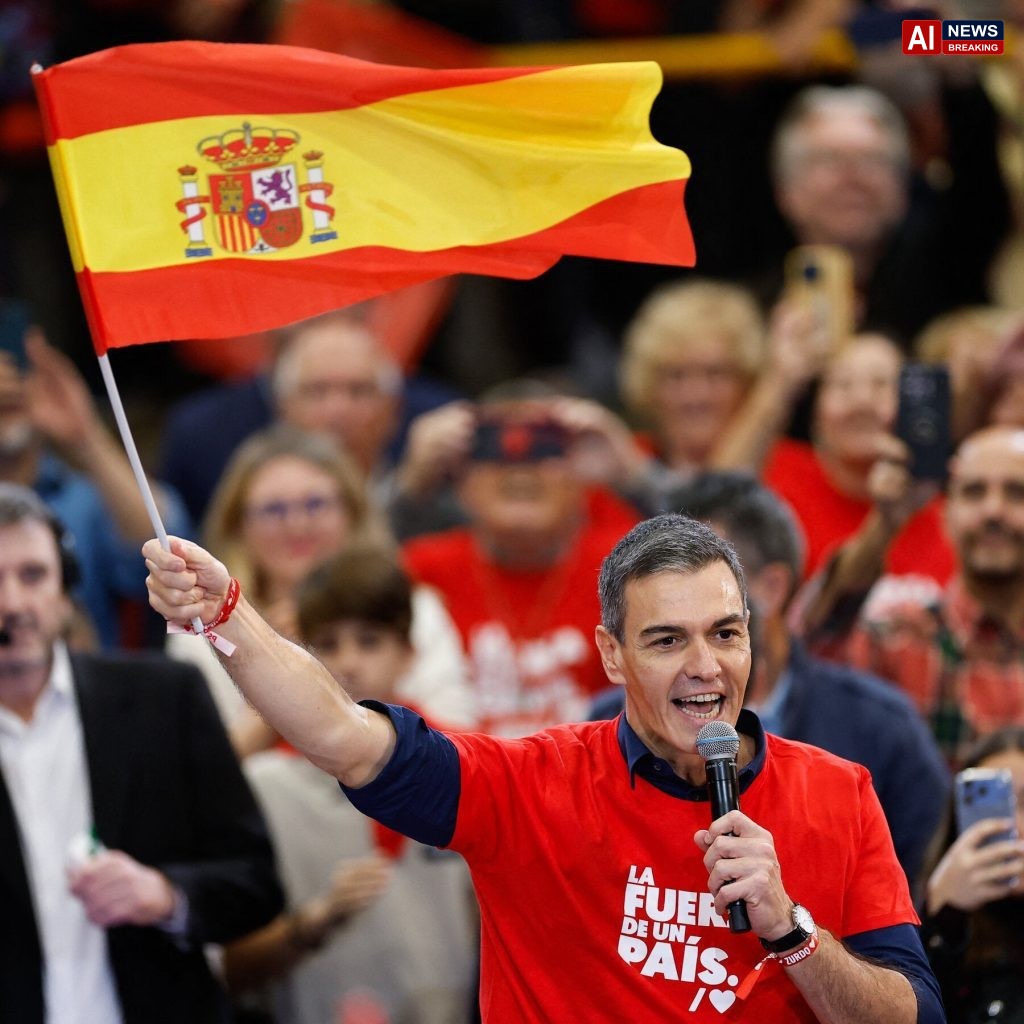
Abroad, Spain’s Leader Is a Left-Wing Hero. Will He Lose Power at Home? - AI News Breaking
abroad spains leader leftwing:
Prime Minister Pedro Sánchez, who has built a reputation abroad as a left‑wing champion for workers and progressive social policies, is now confronting a decisive challenge at home. As Spain’s general election approaches, the Spanish electorate faces a stark choice between the incumbent centre‑left coalition and a resurgent right‑wing bloc that has been gaining momentum in recent months. The stakes are high not only for Sánchez’s personal political survival but for the broader direction of Spain’s domestic and international policy agenda.Sánchez’s leadership style has earned him admiration overseas, particularly in the European Union and in Latin America, where he has positioned Spain as a forward‑thinking partner on climate change, gender equality and labour rights..
His critics, however, argue that his approach to national issues—especially economic management and regional autonomy—has weakened his appeal in the domestic arena. The Prime Minister’s recent statements on the importance of a robust social safety net, while lauded internationally, have been interpreted by some voters as an unwillingness to adopt tougher measures to curb Spain’s fiscal deficit.The right‑wing coalition, led by the conservative Popular Party, has capitalized on this perception. By emphasizing a return to traditional values and promising stricter immigration controls, the Popular Party has positioned itself as a defender of national identity and fiscal responsibility..
In the run‑up to the election, the party’s campaign has highlighted the economic downturn that has plagued Spain, citing high unemployment and an alarming rise in public debt. By framing Sánchez’s policies as reckless, the opposition seeks to erode the confidence of voters who feel uncertain about the future.At the heart of the election is the question of Spain’s economic future. Sánchez’s administration has pursued a policy of expansive public spending to boost social programs and infrastructure projects, citing the need to address the inequality gap that has widened after the financial crisis..
While these initiatives have improved living standards for some segments of the population, the fiscal costs have been significant. Analysts point to a growing national debt and the risk of a sovereign debt crisis if spending is not curtailed. The right‑wing party, on the other hand, promises to tighten budgets, reduce public spending, and implement reforms aimed at enhancing competitiveness in the global market.Regional dynamics also play an influential role in shaping the election outcome..
Spain’s autonomous communities have long been a source of political friction, and the Catalan independence movement remains a contentious issue. Sánchez’s government has pursued a strategy of dialogue and compromise, offering concessions in certain areas while maintaining a firm stance on national unity. The Popular Party, meanwhile, has adopted a hard‑line approach that appeals to voters who are weary of separatist rhetoric and eager for a unified national identity.The Prime Minister’s personal popularity is another key factor that will determine the election’s outcome..
Over the past few years, Sánchez has maintained a solid level of support, particularly among young voters and the urban middle class. However, his approval ratings have dipped in recent weeks, as concerns over the country’s economic performance and the perception of political instability grow. Meanwhile, the Popular Party’s charismatic leader has been able to connect with rural voters and those who feel left behind by the rapid changes in Spain’s social and economic landscape..
The political climate in Spain is thus shaped by a complex interplay of demographic, economic and cultural forces that may have a profound impact on the election outcome.A pivotal element in the election’s narrative is the ongoing debate about Spain’s position in the European Union. Sánchez has consistently advocated for a more collaborative and integrated approach, championing initiatives that promote social welfare, environmental sustainability and digital innovation. His critics, however, question whether such an approach is conducive to protecting Spain’s national interests, arguing that a more pragmatic stance is needed..
The Popular Party, conversely, emphasizes the importance of national sovereignty and seeks to strike a balance between cooperation and protecting Spain’s economic interests, especially in the context of the EU’s fiscal policy framework.Internationally, the Spanish electorate has been watching closely the performance of President Trump in the United States, who has been a vocal critic of Sánchez’s policies. The Prime Minister’s approach to foreign policy has been marked by an emphasis on multilateralism and cooperation with EU allies, which has earned praise from many global partners. However, the Spanish public has also been sensitive to the perceived weakness in negotiations with the United States, particularly regarding trade and defence agreements..
This complex international dynamic has contributed to the political tensions within the country.In the final analysis, the election presents a moment of transition for Spain, as the country must reconcile its internal aspirations and external commitments. While Sánchez’s left‑wing image has resonated with many overseas observers and segments of the domestic electorate, the right‑wing party’s appeal to those who value fiscal restraint and national identity cannot be understated. The outcome will depend on whether the electorate prioritises progressive social policies and a strong international presence or whether it chooses a more conservative and economically focused approach.As the nation heads to the polling stations, the political future of Spain will be determined by a complex mix of domestic concerns, regional dynamics, and international pressures..
Whether Pedro Sánchez will retain his seat at the helm or find himself replaced by a right‑wing coalition will shape Spain’s trajectory for years to come. The forthcoming election, therefore, remains one of the most consequential political events of the decade in the Spanish and European political arenas..
Updated: November 28, 2026
Summary: Spain’s general election pits Pedro Sánchez’s left‑leaning coalition against a resurgent right‑wing bloc that promises tighter fiscal policy and a stronger national identity. Voters face a choice between progressive social programmes and a conservative push for economic restraint and greater sovereignty.
Spain’s electorate is turning the battle of the headlines into a test of trust: voters weigh the promise of social progress against the fear of fiscal ruin, forcing Sánchez to decide whether to double down on his left‑wing agenda or pivot to a more pragmatic, market‑friendly stance. The election