A Critic of Beijing Falls Short in Taiwan’s Key Mayoral Election
 EPA says no rise in contamination after Army detonates lead azide stockpile in Iowa
 Israeli Strike Kills 2 Workers at Gaza Clinic, Doctors Without Borders Says
 McQueen Pre-Fall 2027
 Mushfiqur Rahim to retire from Test cricket in February 2027
Canada Faces Criticism Over Safe Third Country Rule Affecting Haitian Migrants
**
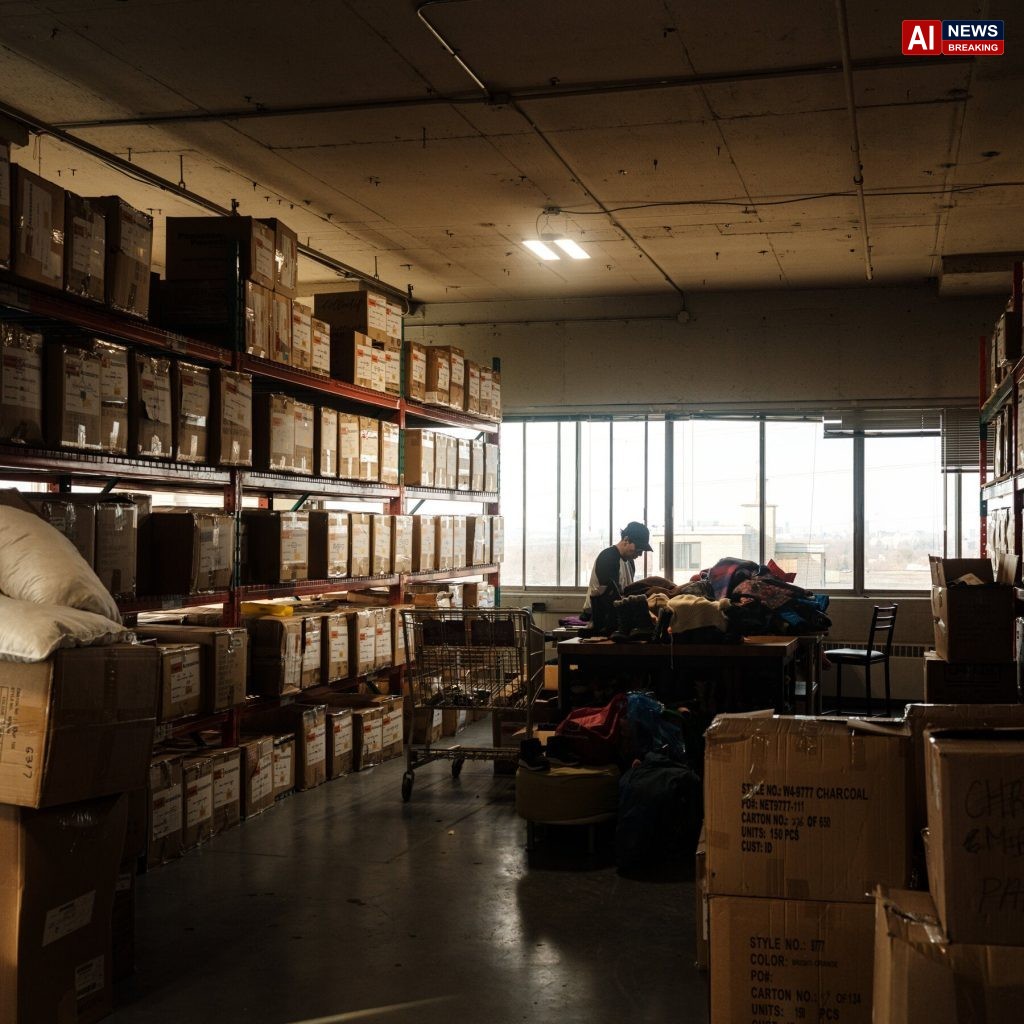
Behind the Story: Canada’s Border Rules Are Splitting Up Haitian Families - AI News Breaking
canada faces criticism safe:
The Safe Third Country Agreement, signed between Canada and the United States in 2004, was intended to streamline asylum procedures by requiring claimants to seek protection in the first safe country they entered. In practice, the rule has become a point of contention for Haitian migrants who, after fleeing political unrest and natural disasters, travel through the United States before attempting to cross into Canada. Under the current framework, only those who meet narrowly defined exceptions – such as having a family member already residing in Canada or possessing a valid visa – are allowed to lodge a refugee claim at a Canadian land border..
The majority are turned back, often to a U.S. immigration system that already faces criticism for its treatment of asylum seekers.The impact on Haitian families is stark. According to data from the Canadian Immigration and Refugee Board, the number of Haitian nationals seeking protection at Canada’s land borders has risen sharply since 2021, coinciding with a wave of migration triggered by the 2021‑2024 series of hurricanes and ongoing political instability..
Yet, the Safe Third Country rule has forced many to separate from spouses, children, or parents who are already in the United States. In several documented cases, a husband who arrived in Toronto after a successful claim was later denied entry for his wife, who remained in New York awaiting her own application. The couple’s children, born in the United States, have been placed under the care of relatives on either side of the border, creating a protracted legal and emotional ordeal.Legal experts argue that the rule contravenes Canada’s obligations under the 1951 Refugee Convention, which obliges signatories to ensure that asylum seekers are not returned to a country where they may face persecution..
While the United States is generally regarded as a safe country, critics note that Haitian migrants often encounter lengthy detention, limited access to counsel, and a high likelihood of removal proceedings. “The Safe Third Country Agreement was drafted without fully considering the systemic barriers Haitians face in the U.S. immigration system,” says Lina Patel, a professor of immigration law at the University of Toronto..
“When the exception criteria are so restrictive, it effectively creates a de‑facto barrier that splits families.”Human‑rights organizations have mounted a series of challenges against the policy. In 2023, the Canadian Civil Liberties Association filed a class‑action lawsuit alleging that the agreement discriminates on the basis of nationality and socioeconomic status. The suit points to internal government memos that highlight concerns about “potential abuse of the system” by migrants from the Caribbean, suggesting an underlying bias..
A parallel complaint lodged with the United Nations Human Rights Committee claims that the policy violates the right to family unity, a principle enshrined in the International Covenant on Civil and Political Rights, to which Canada is a party.The government’s response has been to emphasise the need for orderly migration management. Immigration Minister Ahmed Hussen reiterated in a parliamentary session last month that the Safe Third Country Agreement “protects Canada’s borders while ensuring that genuine refugees are processed efficiently.” He also noted recent amendments that broadened the definition of a “family member” to include certain extended relatives, a change praised by some advocacy groups but criticised as insufficient by others. “We are not closing doors,” Hussen said, “but we are ensuring that those who come to Canada do so through the proper legal channels.”For Haitian migrants caught in the limbo, the practical consequences are immediate and distressing..
Many report being detained in U.S. facilities for weeks while their Canadian claim is evaluated, a process that can take months. Detention conditions vary, but reports of overcrowding, limited medical care, and language barriers are common..
When claimants are ultimately rejected, they face the prospect of deportation back to Haiti, a country still grappling with economic hardship and frequent natural disasters. The United Nations High Commissioner for Refugees warns that the combination of climate‑induced displacement and restrictive asylum policies could exacerbate a humanitarian crisis in the Caribbean region.Community groups in Toronto, Montreal and Vancouver have stepped in to provide support. Non‑profits such as the Haitian Canadian Association offer legal clinics, translation services and temporary housing for families separated at the border..
Volunteers often accompany claimants to immigration hearings, helping to navigate a system that can be opaque even for those fluent in English or French. “We see families torn apart, children growing up without both parents, and the trauma that follows,” says Marie‑Claude Jacques, director of the association. “Our role is to mitigate the damage, but the policy itself creates the problem.”The issue has also entered the political arena..
In the federal election campaign of 2025, the New Democratic Party pledged to renegotiate or withdraw from the Safe Third Country Agreement, arguing that a more compassionate approach is required for climate‑displaced peoples. The Conservative Party, while acknowledging the need for reform, warned that abandoning the agreement could lead to a surge of irregular crossings and strain on Canada’s asylum infrastructure. Polls indicate that a majority of Canadians support a review of the policy, though opinions differ on the preferred direction of change.Internationally, Canada’s stance is being watched closely..
Several European nations have recently adjusted their own asylum frameworks to accommodate climate migrants, recognizing that traditional refugee definitions are increasingly inadequate. A joint statement issued by the International Organization for Migration earlier this year called on countries to develop “comprehensive, rights‑based mechanisms” for people displaced by environmental factors, implicitly critiquing agreements that rely on a binary safe‑country model.As the debate continues, the lived experience of Haitian families remains a barometer of the policy’s human cost. For many, the journey from Port‑au‑Prince to Toronto is not simply a legal hurdle but a struggle to keep loved ones together amidst uncertainty..
Whether Canada will amend the Safe Third Country Agreement to reflect evolving migration realities, or maintain its current course, will shape not only the futures of these families but also Canada’s broader reputation as a destination for those seeking safety and a new start..
Updated: November 28, 2026
Insight: The Safe‑Third‑Country rule is morphing from a bureaucratic shortcut into a de‑facto family‑separation wall, exposing Canada’s asylum system to the same humanitarian critiques it once used to justify the pact.
If the policy isn’t reshaped for climate‑driven displacement, Canada risks