 Netanyahu and Eisenkot fail
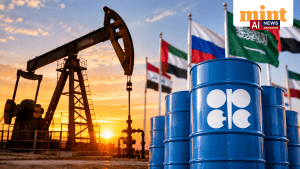
 Why is OPEC+ keeping oil production unchanged despite the Iran war, and what does it mean for global crude prices?
 Tripura youths held with 1.85 kg gold worth over ₹2.24 crore in DRI raid at New Jalpaiguri railway station
 KCCDC urges Karnataka
 New California insurance commissioner has a bold plan for state-run wildfire insurance
Why is OPEC+ keeping oil production unchanged despite the Iran war, and what does it mean for global crude prices?
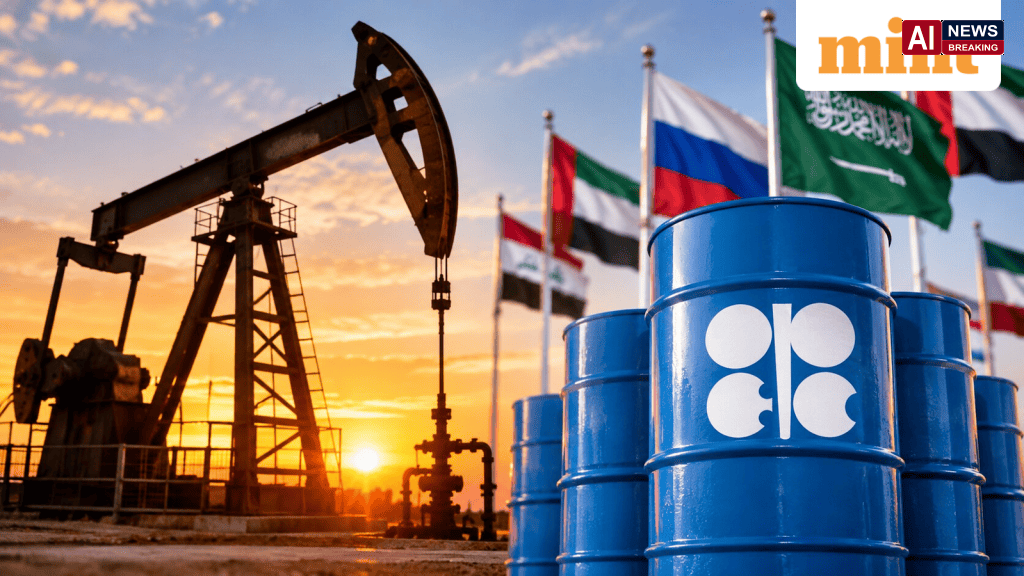
Why is OPEC+ keeping oil production unchanged despite the Iran war, and what does it mean for global crude prices? - AI News Breaking
opec keeping production unchanged:
The decision by the OPEC+ alliance to leave its production quotas untouched for the first quarter of 2027 has sent ripples through markets and policy circles alike. It comes at a time when the geopolitical climate remains highly volatile, most notably because of the ongoing conflict in Iran, and while the group faces internal pressure over the appropriate level of output. The choice to keep the output floor steady is a calculated bet by the producers to safeguard their collective revenue streams, but it also carries implications for global crude prices and for the economies that depend on them.Iran, a key member of OPEC+, has been at the center of a protracted war that threatens to destabilise supply routes and production facilities in the region..
In the past six months, the country has experienced a series of airstrikes and retaliatory actions that have disrupted some of its oil fields, but the damage has largely been limited to peripheral sites rather than the main export terminals. The group’s leadership has weighed this fact against the need to preserve a stable production schedule. The OPEC+ members concluded that even if the Iranian output dips for a short period, the shortfall can be absorbed by the rest of the alliance without a need to tighten the overall quotas.Another factor that has kept the group’s policy steady is the disagreement over the level of production capacity that can be sustained..
While some members argue that the current output cap is too generous, others point out that the global market is still in the recovery phase following the pandemic-induced slump. The balance between maintaining a market share and preventing a price collapse has been a tightrope that the group has been walking for years. The 2027 target, set at roughly 30 million barrels per day, is a figure that many analysts interpret as a signal that the group is still confident in its ability to control the market’s supply side.The impact on oil prices has been noticeable..
For the last two months, Brent crude has hovered around $75 a barrel, a level that reflects the expectations that the supply side will not tighten. In contrast, the Asian markets have seen a slight uptick in prices, as the region’s dependence on Middle Eastern crude remains high. Analysts estimate that a sustained production cap will keep the price curve relatively flat for the next few months, but it also risks creating a bubble if the underlying demand does not keep pace.From the perspective of the economies that rely on oil revenue, the OPEC+ decision is a mixed bag..
On the one hand, steady production means that the revenue streams will remain stable, providing a cushion for governments that depend on the export of crude. On the other hand, the lack of a coordinated response to the Iranian conflict might embolden speculators to bet on a sudden spike in prices, which could destabilise economies that are already reeling from high inflation and debt burdens.The global oil market has also been watching the energy transition narrative. As Europe pushes ahead with its net-zero commitments, and the United States continues to increase its domestic production, there is a growing call for the producers to reduce output to avoid oversupply..
The OPEC+ members have not yet taken a definitive stance on this front, but the current production target suggests that they will continue to monitor the situation closely.In terms of supply disruptions, the OPEC+ leadership has pointed to a number of incidents in the Gulf region that could affect production volumes. While the current pipeline infrastructure remains largely intact, there are concerns about the potential for future attacks on the strategic oil shipping lanes. The group’s response to this threat has been to maintain a buffer in the production schedule that allows for quick adjustments if the situation deteriorates.The decision has also been framed as a test of the alliance’s internal cohesion..
Over the past year, there have been disputes between Saudi Arabia and Russia over how to structure their output cuts, with each side wanting to gain a larger share of the market. The current production plan, which keeps the overall output flat, is a way to sidestep these disagreements while still preserving the group’s influence on the market. It will be interesting to see if this approach will hold when new production capacity is added in the coming months.One can argue that the OPEC+ decision reflects a broader trend of strategic patience in the oil market..
The group’s leaders are aware that any sudden change in production could trigger a cascade of price movements that would be difficult to manage. By maintaining the status quo, they hope to create a more predictable environment for all stakeholders, from producers to consumers. The next few quarters will reveal whether this strategy will be successful in preventing volatility.For investors, the current production policy presents a somewhat stable backdrop against which to evaluate their portfolios..
The lack of a dramatic shift in output suggests that the risk of a sudden price spike is lower than it would be if the group had decided to cut or raise production. However, the underlying geopolitical tensions mean that the market can still be subject to rapid changes if the situation in Iran escalates.The broader implication for global crude prices is that the OPEC+ production plan will likely keep the market in a state of equilibrium for at least the next six months. In the longer term, the group will need to reassess its strategy as new production capacity comes online and as demand patterns shift with the rise of renewable energy sources..
Until then, the current policy appears to be a deliberate choice to maintain a stable supply that will help anchor price expectations in an uncertain world..
By holding 2027 quotas steady, OPEC+ bets on a “price‑floor” that steadies producer earnings while quietly widening the room for speculators to gamble on a sudden Iranian supply shock. This patience masks internal rivalry—Saudi and Russian factions trade blows in the shadows—yet signals the alliance