 KCCDC urges Karnataka
 New California insurance commissioner has a bold plan for state-run wildfire insurance
 Pakistan Sends Troops to Saudi Arabia for Defense Amid War With Houthis
 Spain’s general elections approach with centre‑right gains.
 SpaceX Falcon 9 rocket launching private Cygnus XL cargo craft to the ISS today: Watch it live
KCCDC urges Karnataka
**
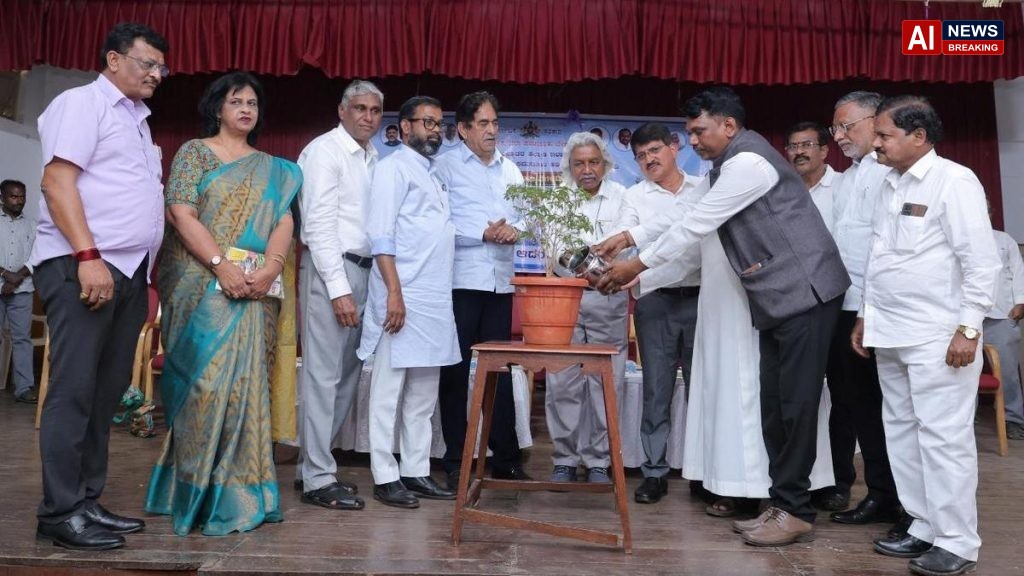
Christians in State urged to make use of govt. welfare schemes - AI News Breaking
The Karnataka Christian Community Development Corporation (KCCDC) has launched a concerted appeal to Christians across the state to take full advantage of the myriad government welfare schemes that have been rolled out over recent years. In a statement released on Monday, the organisation underscored that these programmes, ranging from subsidised housing and agricultural subsidies to scholarships and skill‑development initiatives, are designed to promote economic, educational and social upliftment for all citizens, including minority communities. KCCDC’s outreach, which includes a series of town‑hall meetings and information drives in districts such as Mysuru, Bellary and Dakshina Kannada, seeks to bridge the gap between policy intent and grassroots participation, urging believers to move beyond scepticism and engage actively with state mechanisms.The call arrives against a backdrop of mixed reception to welfare measures in Karnataka, where a significant portion of the Christian population has historically expressed reservations about government schemes, citing concerns over bureaucratic red‑tape, perceived marginalisation, and occasional instances of discriminatory implementation..
Recent surveys by independent think‑tanks suggest that only about 45 per cent of eligible Christian households have accessed at least one major welfare benefit in the past three years, a figure that lags behind the state average of roughly 62 per cent. KCCDC attributes this disparity to a lack of awareness, language barriers, and the absence of dedicated liaison officers to guide applicants through the procedural labyrinth.In its appeal, KCCDC highlighted specific schemes that hold particular relevance for the community. The Mahatma Gandhi National Rural Employment Guarantee Act (MGNREGA), which guarantees 100 days of wage employment per year to rural households, has seen limited uptake among Christian farmworkers in districts like Chikmagalur and Hassan..
By organising workshops on documentation requirements and providing on‑site assistance for wage card applications, KCCDC aims to boost participation, arguing that increased engagement could translate into higher household incomes and reduced seasonal migration. Similarly, the corporation pointed to the Karnataka State Scholarship Scheme for Higher Education, which offers merit‑based financial aid to students from economically weaker sections, as a critical lever for improving educational outcomes among Christian youth.The state government, for its part, has repeatedly affirmed its commitment to inclusive development. In a recent press briefing, the Department of Social Welfare cited the 2023‑24 budget allocation of ₹1,800 crore for minority welfare as evidence of targeted investment..
Among the earmarked programmes are the ‘Aasara’ pension scheme for senior citizens, the ‘Kirana’ financial assistance for small traders, and the ‘Vidyarthi’ scholarship for professional courses. Officials noted that these initiatives are being rolled out through a network of 2,400 Panchayat Raj Institutions and 1,200 urban local bodies, with an emphasis on digitising applications to curtail delays and corruption.Nevertheless, critics argue that the effectiveness of such schemes depends heavily on implementation fidelity. A recent report by the Centre for Policy Research highlighted systemic bottlenecks, including delayed fund disbursements, inconsistencies in eligibility verification, and occasional politicisation of beneficiary lists..
While the report acknowledged progress in certain areas—such as the streamlined rollout of the ‘Pradhan Mantri Awas Yojana’ (PMAY) housing programme—it cautioned that marginalized groups, including Christians in remote taluks, remain disproportionately disadvantaged due to limited outreach and inadequate grievance redressal mechanisms.KCCDC’s strategy seeks to mitigate these challenges by fostering a community‑led monitoring framework. The corporation has established a volunteer cell of 150 members, drawn from parish councils, educational institutions and local NGOs, tasked with tracking application statuses, documenting obstacles and feeding real‑time feedback to district authorities. This model, reminiscent of participatory governance pilots in Kerala and Goa, aims to create a two‑way channel of communication that not only informs citizens of their rights but also holds officials accountable for timely service delivery..
KCCDC’s chairperson, Rev. Thomas D’Souza, emphasized that “empowerment is not merely about receiving benefits; it is about building the capacity to navigate the system and claim what the state promises.”The outreach effort also addresses cultural nuances that can influence programme uptake. In many Christian hamlets, especially those with a strong agrarian heritage, the concept of formal banking and digital transactions is still nascent..
To counter this, KCCDC has partnered with cooperative banks to set up “financial inclusion kiosks” where beneficiaries can open accounts, receive Direct Benefit Transfers (DBT) and access micro‑credit facilities without navigating complex bank procedures. These kiosks, staffed by bilingual personnel fluent in Kannada, Konkani and Malayalam, aim to lower the linguistic barriers that have historically deterred many from engaging with state portals.Education, a cornerstone of KCCDC’s developmental agenda, features prominently in its advocacy. The corporation points to the “Digital Literacy for All” mission launched by the Karnataka Information Technology Department, which offers free computer training and internet access in over 500 community centres..
By aligning this initiative with the Christian community’s emphasis on schooling, KCCDC hopes to equip students and adults alike with the digital skills necessary to apply for scholarships, monitor pension disbursements and engage in e‑governance platforms. In pilot programmes conducted in Mangalore and Bidar, participation rates have risen by 30 per cent, suggesting that targeted interventions can yield measurable gains.While the emphasis on welfare utilisation is clear, KCCDC also warns against complacency, urging the Christian populace to remain vigilant about the quality and fairness of services rendered. The organisation has called for the establishment of an independent oversight committee, comprising representatives from civil society, academia and the Christian clergy, to audit the distribution of benefits and recommend corrective actions where disparities surface..
Such a body, it argues, would complement existing grievance redressal channels like the Karnataka State Commission for Backward Classes, ensuring that complaints are addressed promptly and transparently.In the weeks ahead, KCCDC plans to roll out a multimedia campaign, leveraging local radio, social media and church bulletins to disseminate information about eligibility criteria, application timelines and success stories. By showcasing testimonials from families who have successfully secured housing loans or secured employment through MGNREGA, the corporation hopes to build confidence and counter the narrative of bureaucratic apathy. The overarching message, as articulated by Rev..
D’Souza, is that “the state’s welfare architecture is a resource, not a privilege; it is incumbent upon each citizen, irrespective of creed, to claim it responsibly and collectively.” If the outreach gains traction, Karnataka’s Christian community could witness a measurable uplift in socio‑economic indicators, aligning the region’s developmental trajectory.
Updated: November 29, 2026
Insight: By converting welfare programs from distant promises into community‑driven claim‑processes, Karnataka’s Christians can turn bureaucratic inertia into a catalyst for socioeconomic mobility, reshaping minority empowerment from passive entitlement to active citizenship.
If the KCCDC model scales, it could pressure the state to tighten implementation across all groups, making transparent, localized monitoring the new benchmark for inclusive development.