A Critic of Beijing Falls Short in Taiwan’s Key Mayoral Election
 EPA says no rise in contamination after Army detonates lead azide stockpile in Iowa
 Israeli Strike Kills 2 Workers at Gaza Clinic, Doctors Without Borders Says
 McQueen Pre-Fall 2027
 Mushfiqur Rahim to retire from Test cricket in February 2027
Amazon staff to strike and rally on busiest weekend of the year
**
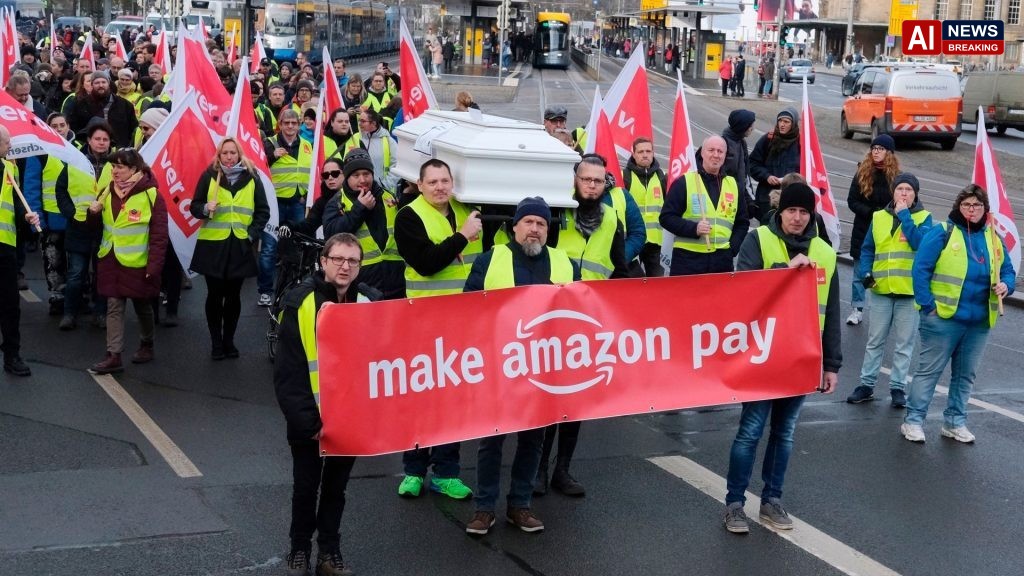
Amazon staff to strike and rally on busiest weekend of the year - AI News Breaking
amazon staff strike rally:
Amazon workers across several countries are preparing to stage coordinated walk‑outs and rallies on Black Friday, the busiest shopping day of the year, in a bid to press the online retailer over what they describe as low wages, excessive performance targets and inadequate health and safety standards. The action, which is being organised by a loose coalition of trade unions and grassroots employee groups, will see staff in warehouses, fulfillment centres and delivery networks suspend work for several hours on 29 November, the day after the United States’ Thanksgiving holiday.The campaign, dubbed “Black Friday, Not Black Lives,” marks the first time that Amazon employees in multiple jurisdictions have synchronized their protest on a single calendar date. In the United Kingdom, the GMB union has announced that around 1,500 workers at the company’s 12‑mile Fulfilment Centre in Tilbury, Essex, will join a “strike and rally” that is expected to last three to four hours..
Similar actions are planned at Amazon sites in Germany, France, Italy, Spain and the United States, where the United Food and Commercial Workers (UFCW) Local 1000 has called on roughly 4,000 warehouse staff in New Jersey, Pennsylvania and Connecticut to walk out. Organisers say the timing is intentional: by disrupting the flow of orders on the day retailers traditionally see a surge in sales, they hope to highlight the human cost of Amazon’s rapid‑delivery model.Union representatives argue that Amazon’s pay structure, which they say relies heavily on “speed incentives” and “time‑on‑site” bonuses, leaves many workers dependent on overtime to make a living wage. In the United Kingdom, the GMB has highlighted that the average hourly rate for a fulfilment centre operative is £10.90, a figure that sits just above the national living wage but, according to the union, does not reflect the physical demands of the job or the cost of living in the surrounding area..
In the United States, UFCW officials have pointed to a 2022 internal study that found a majority of Amazon warehouse employees were earning less than $15 an hour after overtime, prompting the union to demand a baseline wage of $18 per hour for all full‑time staff.Beyond pay, activists are focusing on what they describe as “oppressive” working conditions. Workers in Germany’s Leipzig hub, for instance, have reported that the company’s “productivity dashboard” requires them to pick an average of 130 items per hour, a pace that, according to the European Trade Union Confederation, can lead to repetitive strain injuries and chronic fatigue. Similar grievances have been voiced in France, where employees at the Montreuil fulfillment centre claim that break times are routinely reduced during peak periods, and in Italy, where a recent audit uncovered that safety protocols for handling heavy parcels were not consistently applied..
The coordinated protests will feature placards and chants highlighting these issues, with organisers promising to distribute flyers outlining specific incidents of alleged mistreatment.Amazon’s corporate response has been measured but firm. In a statement issued on Tuesday, the company said it “recognises the right of employees to organise and voice concerns” and that it “is committed to providing safe, inclusive workplaces and fair compensation”. The statement added that Amazon “continues to invest in its workforce, offering a starting wage of $15 an hour in the United States and a range of benefits, including health coverage, tuition assistance and parental leave”..
It also warned that any disruption to operations could affect customers and partner businesses, urging “all parties to engage in constructive dialogue rather than actions that could jeopardise the holiday shopping season”.Legal experts note that the timing of the strike may place it in a delicate position under national labour laws. In the United Kingdom, the GMB must provide at least seven days’ notice before a lawful strike, a requirement it says has been met. However, the company could seek an injunction if it believes the action threatens public safety or breaches contractual obligations..
In the United States, the National Labor Relations Board has previously ruled that “work stoppages” at Amazon fulfilment centres constitute protected activity, but employers can still pursue disciplinary measures if they can demonstrate that the stoppage is not covered by a collective bargaining agreement. Observers suggest that the multinational nature of the protest could complicate any legal challenges, as each jurisdiction will apply its own standards for industrial action.Economists are watching the development closely, given the potential impact on Amazon’s quarterly earnings. Black Friday traditionally accounts for a significant share of the retailer’s annual revenue, with the company reporting that more than 50 per cent of its total sales in the fourth quarter are generated between Thanksgiving and the end of December..
A disruption in the supply chain, even if limited to a few hours, could cascade through the logistics network, delaying shipments and prompting customers to turn to rival platforms. Analysts at Morgan Stanley have warned that “any visible labour unrest on the busiest shopping day could erode consumer confidence and amplify cost pressures for Amazon’s already thin margins”.The protests also intersect with a broader debate about the future of work in the e‑commerce sector. Over the past decade, Amazon has pioneered the use of automation, robotics and data‑driven performance metrics to accelerate order fulfilment..
While these innovations have boosted efficiency, they have also sparked criticism that the company places excessive pressure on human workers to keep pace with machines. A recent study by the International Labour Organization found that high‑intensity work environments, like those reported in Amazon warehouses, can lead to higher rates of absenteeism and turnover, ultimately increasing recruitment and training costs. Union leaders argue that a sustainable model must balance speed with employee wellbeing, suggesting that better staffing ratios, more generous break policies and transparent wage structures would benefit both workers and the company’s bottom line.Public reaction to the planned strikes appears mixed..
Consumer advocacy groups such as the Consumer Rights Alliance have expressed solidarity with the workers, urging shoppers to consider the ethical implications of ultra‑fast delivery and to support retailers that demonstrate fair labour practices. Conversely, some retail analysts warn that heightened awareness of Amazon’s labour practices could simply shift demand to other “same‑day” delivery services, potentially fragmenting the market. Social media platforms are already seeing a surge of hashtags like #AmazonStrike and #FairPayNow, with both supporters and detractors weighing in..
Early polls conducted by YouGov indicate that roughly 38 per cent of UK adults view the strike favourably, while 45 per cent remain neutral, citing concerns about possible price increases or supply shortages.In the weeks leading up to Black Friday, negotiations between Amazon’s senior management and union representatives are slated to continue. Both sides have signalled a willingness to meet, though they remain far apart on key issues such as the baseline.
Updated: November 27, 2026
Amazon workers in the UK, Europe and the US will stage synchronized walk‑outs on Black Friday, demanding higher pay, safer conditions and reduced productivity pressure, as unions warn the protests could disrupt the retailer’s peak‑season sales. Amazon says it respects workers’ rights and offers a $15‑hour starting wage, but legal experts note the coordinated action may face injunctions and could impact the company’s earnings and holiday logistics.
Amazon’s synchronized Black‑Friday walk‑outs turn the retailer’s own holiday‑season lever into a bargaining chip, forcing investors and shoppers to weigh speed against the hidden cost of a bruised workforce.
If the strikes dent even a few hours of sales, the market will see a concrete example that relentless automation