A Critic of Beijing Falls Short in Taiwan’s Key Mayoral Election
 EPA says no rise in contamination after Army detonates lead azide stockpile in Iowa
 Israeli Strike Kills 2 Workers at Gaza Clinic, Doctors Without Borders Says
 McQueen Pre-Fall 2027
 Mushfiqur Rahim to retire from Test cricket in February 2027
Mercury in cosmetics: What does the Keralam case reveal about health risks of skin-lightening creams | Explained
**
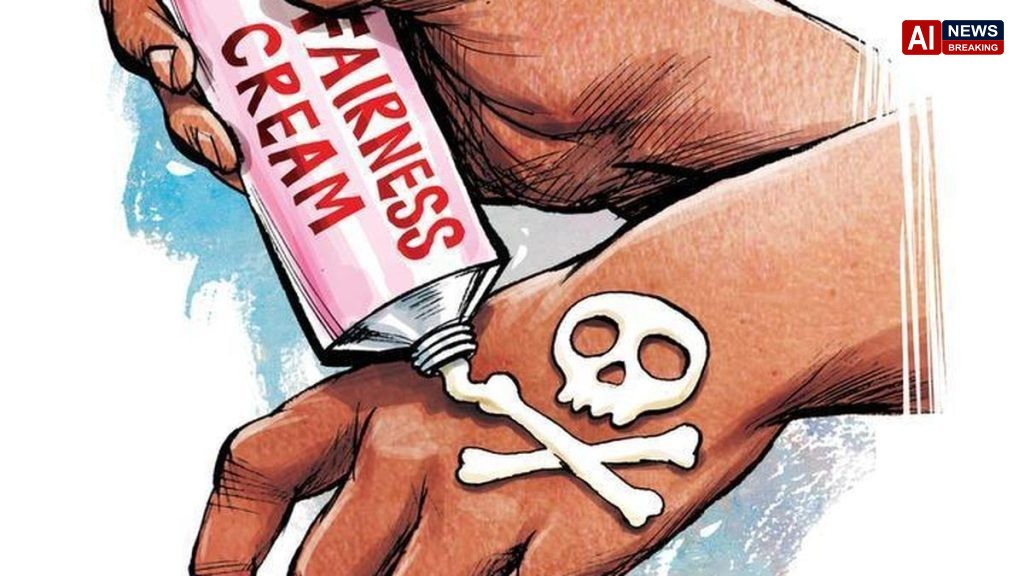
Mercury in cosmetics: What does the Keralam case reveal about health risks of skin-lightening creams | Explained - AI News Breaking
mercury cosmetics what does:
The discovery of mercury‑laden skin‑lightening creams in Kerala has thrust an often‑overlooked public‑health danger into the national spotlight, prompting renewed scrutiny of cosmetic regulation and the silent toll of toxic ingredients on vulnerable populations. The case began when a batch of popular whitening lotions, widely sold in local markets and online platforms, was seized after routine laboratory testing revealed mercury concentrations far exceeding the permissible limit of 1 ppm set by the Drugs and Cosmetics Act. Subsequent investigations identified a network of manufacturers and distributors operating across state lines, exposing a supply chain that had evaded detection for years despite repeated warnings from health authorities about the hazardous nature of mercury in topical products.Mercury, a heavy metal with well‑documented neurotoxic and nephrotoxic properties, has long been employed in skin‑lightening formulations for its ability to inhibit melanin production..
When applied to the skin, inorganic mercury compounds such as mercuric chloride are absorbed transdermally, entering the bloodstream and accumulating in vital organs. The kidneys, tasked with filtering blood, become primary sites of deposition; chronic exposure can precipitate tubular necrosis, proteinuria, and eventually irreversible renal failure. In severe cases, the metal also disrupts the immune system, leading to hypersensitivity reactions, dermatitis, and, in rare instances, systemic mercury poisoning that manifests as tremors, memory loss and mood disturbances.The Kerala incident underscores how these health effects can remain hidden until a tipping point is reached..
Victims who initially reported only mild skin irritation often delayed seeking medical help, attributing symptoms to allergic reactions rather than systemic toxicity. By the time laboratory analyses confirmed mercury presence, many had already accumulated levels above the World Health Organization’s tolerable weekly intake of 4 µg per kilogram of body weight. This delay is not merely a clinical oversight; it reflects broader socio‑economic factors, including limited awareness of product composition, the cultural premium placed on lighter skin tones, and the allure of inexpensive, readily available creams that promise rapid aesthetic change.Regulatory safeguards in India are anchored by the Drugs and Cosmetics Act of 1940, which classifies mercury as a prohibited substance in cosmetics, and the subsequent 2016 amendment that tightened permissible limits for trace elements..
The Central Drugs Standard Control Organization (CDSCO) is tasked with pre‑market approval, while state‑level drug controllers monitor post‑market compliance through random sampling and consumer complaints. However, the Kerala episode reveals systemic gaps: a fragmented enforcement framework, insufficient laboratory capacity to test every batch, and the prevalence of informal retail channels that bypass official scrutiny. Moreover, the rapid growth of e‑commerce platforms has complicated jurisdiction, allowing sellers to market products across state boundaries with minimal oversight.In response, the Ministry of Health and Family Welfare launched a multi‑pronged action plan aimed at curbing the influx of mercury‑containing cosmetics..
Immediate measures included an emergency recall of identified products, the issuance of public advisories in regional languages, and the deployment of mobile testing units to high‑risk districts. Longer‑term strategies involve the establishment of a centralized digital registry of approved cosmetic ingredients, mandatory batch‑wise testing for heavy metals before registration, and stricter penalties for non‑compliance, including the seizure of assets and imprisonment of repeat offenders. The plan also calls for enhanced coordination between the Food Safety and Standards Authority of India (FSSAI) and the CDSCO, recognizing that many skin‑lightening products straddle the line between cosmetics and quasi‑pharmaceuticals.Beyond regulatory reform, the Kerala case has ignited a broader public‑health conversation about the societal pressures that fuel demand for whitening creams..
Advocacy groups argue that education campaigns must address deep‑seated colorism, which perpetuates a market for harmful products. Initiatives led by NGOs and the National Institute of Dermatology are now focusing on community outreach, disseminating information about safe alternatives and the legal ramifications of using unregistered cosmetics. Schools and colleges are being targeted with curricula that include lessons on chemical safety, aiming to equip younger generations with the knowledge to question dubious product claims.Medical professionals have also been urged to maintain a high index of suspicion for mercury poisoning when presented with unexplained renal or dermatological symptoms, especially in patients with a history of using skin‑lightening agents..
Training modules for primary‑care physicians now incorporate guidelines on urine and blood mercury testing, as well as protocols for chelation therapy where indicated. The Indian Association of Dermatologists, Venereologists and Leprologists (IADVL) has published a consensus statement recommending routine screening for heavy metals in patients presenting with chronic dermatitis unresponsive to conventional treatment, a move that could expedite diagnosis and mitigate long‑term organ damage.Internationally, the Kerala episode aligns with a pattern of mercury misuse observed in other South‑Asian markets, where lax enforcement and cultural preferences converge to create a clandestine industry. The United Nations Environment Programme’s Minamata Convention, which India ratified in 2016, obliges signatories to eliminate the use of mercury in cosmetics by 2020..
While the convention provides a framework for phased reduction and encourages the development of mercury‑free alternatives, implementation remains uneven. India’s recent legislative actions signal an intention to honor its commitments, yet effective enforcement will require sustained political will, resource allocation for laboratory infrastructure, and cross‑border cooperation to dismantle transnational supply chains.Consumer vigilance has emerged as a critical line of defense. Experts advise shoppers to verify product authenticity by checking for the CDSCO logo, batch numbers, and expiration dates, and to avoid unbranded items sold in informal markets or through unverified online vendors..
Mobile applications now allow users to scan QR codes and access real‑time safety data, a technological lever that could empower consumers and reduce reliance on post‑market enforcement alone. Nonetheless, affordability remains a decisive factor; many low‑income buyers opt for cheaper, unregulated creams despite known risks, highlighting the need for affordable, safe alternatives that meet aesthetic desires without compromising health.The Kerala mercury case, while alarming, offers a pivotal learning opportunity for policymakers, health professionals, and the public. It illustrates how hidden chemical hazards can infiltrate everyday consumer products, the cascading impact on organ systems such as the kidneys, and the necessity of robust, coordinated safeguards to protect public health..
As India advances toward stricter compliance with global standards and invests in awareness campaigns, the hope is that the legacy of this episode will be a more informed citizenry, a resilient regulatory apparatus, and a market that prioritises safety over superficial beauty ideals..
The Kerala scandal exposes how entrenched colorism fuels a shadow market that sidesteps even the strongest statutes, turning cosmetic desire into a public‑health time bomb. Unless India couples punitive oversight with affordable, mercury‑free alternatives and a cultural shift away from skin‑whitening, the same invisible toxins will re‑emerge under new brand names.