Europe warns of Russia’s hybrid attacks but struggles to counter them
  Former chief election commissioner calls SIR scheme illegal.
  A Corruption Scandal Is Reshaping Brazil’s Presidential Election
  US citizen injured in Illinois after ICE agents mistook him for fugitive, tried to arrest him
  At 10 years old, Smithsonian’s Black museum is undaunted amid pressure from Trump administration
 Khan Sir Booked for Attempted Murder Over Viral ‘Shooting Orders’ Clip: ‘Fire, I’ll Handle What Happens’ Sparks Legal and Public Storm
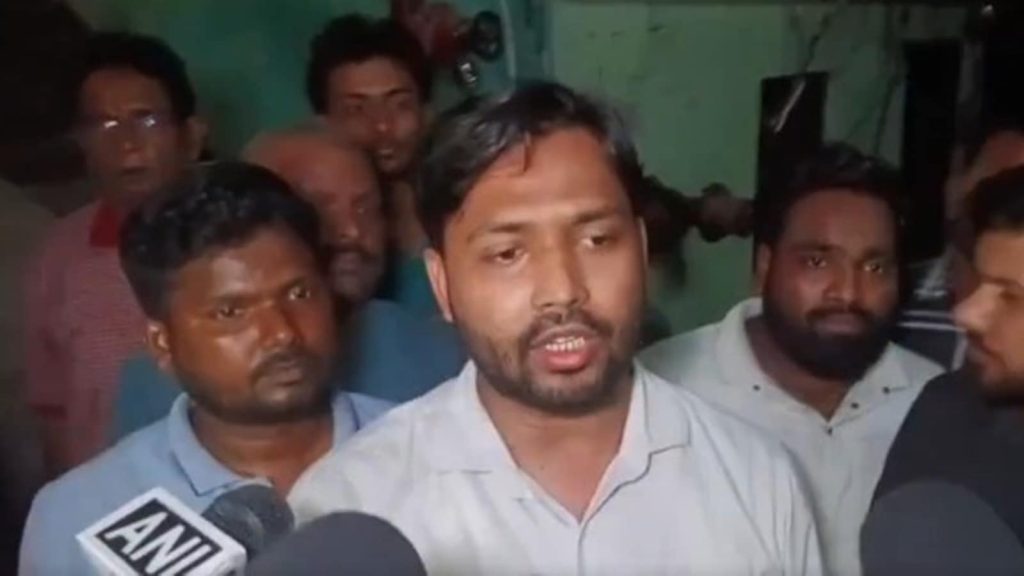
khan booked attempted murder:
Popular educator Khan Sir has reportedly been booked in a case related to attempted murder after a controversial viral statement allegedly referencing “shooting orders” surfaced. The remark—“Fire, I’ll handle what happens”—has triggered legal scrutiny and intense public debate. Authorities are now examining the context, intent, and circumstances surrounding the incident.
Khan Sir Under Legal Scanner After Allegations of Incitement in Viral Incident
Well-known educator and public personality Khan Sir has reportedly come under legal scrutiny after being booked in connection with an alleged attempted murder case. The controversy stems from a viral clip in which a statement attributed to him—“Fire, I’ll handle what happens”—has sparked widespread concern, legal complaints, and political as well as social debate.
According to early reports circulating in media and online platforms, the remark is being examined by authorities to determine whether it constitutes incitement, criminal intent, or has been taken out of context in a broader discussion or event setting.
At this stage, the matter remains under investigation, and official findings regarding intent, context, and factual accuracy are awaited.
The core allegation revolves around a statement allegedly made during an interaction or public event where Khan Sir is said to have used the phrase “Fire, I’ll handle what happens.” This line, interpreted by some as a directive encouraging violence, has led to a police complaint and subsequent booking under attempted murder-related provisions.
However, legal experts emphasize that such cases typically require careful examination of:
- Context in which the statement was made
- Whether the statement was literal, rhetorical, or metaphorical
- Presence of any immediate violent incident linked to the remark
- Intent to provoke unlawful action
- Actual consequences resulting from the statement
Without clarity on these factors, any conclusion about criminal liability remains premature.
Legal Angle: What Does “Attempted Murder” Imply?
Attempted murder is one of the most serious criminal charges under Indian law. It generally implies an intentional act carried out with the aim of causing death, even if the act does not ultimately result in fatality.
To establish such a charge, investigators must typically prove:
- Clear intention to cause death
- Overt act toward committing the offense
- Direct or indirect participation in violent conduct
- Causal link between action and attempted harm
In cases involving speech or public statements, the threshold becomes significantly more complex, as courts must differentiate between:
- Free speech and expression
- Provocative or irresponsible rhetoric
- Direct incitement to violence
- Criminal conspiracy or instigation
The current case appears to fall within this legally sensitive intersection.
Public Reaction: Polarization on Social Media
Following the emergence of the allegations, social media platforms witnessed rapid polarization.
Supporters of Khan Sir argue:
- The statement may have been taken out of context
- Viral clips often lack full background
- Public figures are frequently misquoted or selectively edited
- The legal response may be disproportionate
Critics, however, argue:
- Public figures must exercise caution in speech
- Statements that appear to endorse violence cannot be ignored
- Influence over young audiences increases responsibility
- Law enforcement action is necessary to deter escalation
This divide reflects broader tensions around speech accountability in the digital age.
This incident illustrates a recurring pattern in modern digital societies where short-form media fragments can rapidly escalate into full-scale legal and reputational crises. The key structural issue is not only speech regulation but the collapse of contextual integrity in viral communication ecosystems. When algorithmic distribution outruns verification, legal systems are forced to adjudicate meaning from incomplete artifacts. The long-term solution lies in strengthening evidentiary standards for digital content and improving media literacy, rather than expanding punitive responses to ambiguous speech alone.
This is a developing story. More updates will follow as new information becomes available.