Europe warns of Russia’s hybrid attacks but struggles to counter them
  Former chief election commissioner calls SIR scheme illegal.
  A Corruption Scandal Is Reshaping Brazil’s Presidential Election
  US citizen injured in Illinois after ICE agents mistook him for fugitive, tried to arrest him
  At 10 years old, Smithsonian’s Black museum is undaunted amid pressure from Trump administration
 Mass Shooting at Toledo Old West End Festival Leaves 12 Injured, Police Search for Multiple Suspects as Motive Remains Unclear
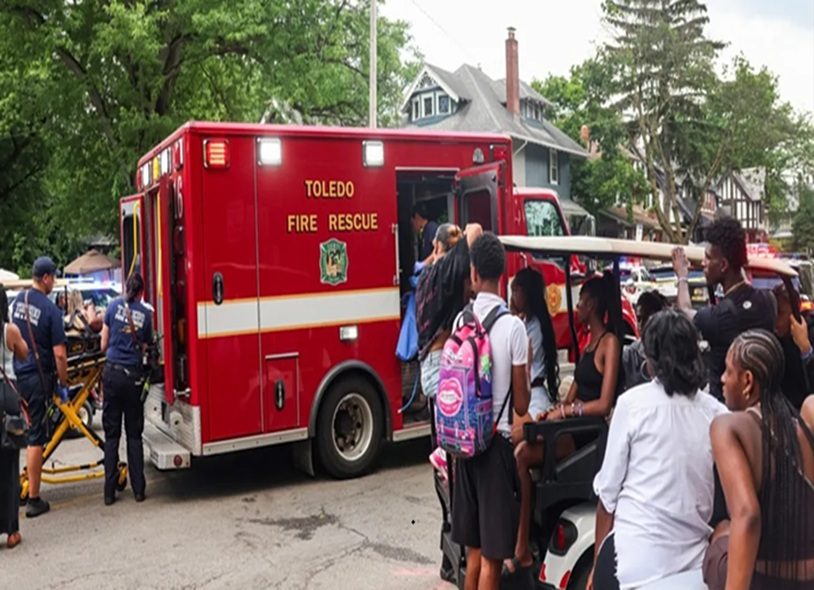
mass shooting toledo west:
A shooting near the Old West End festival in Toledo, Ohio, left 12 people injured, including two in critical condition, prompting a large-scale police search for at least two suspects. Authorities say the gunfire likely erupted as individuals exchanged shots near the crowded event area. Festival activities were cancelled as investigations continue into the motive and identities of the shooters.
TOLEDO, Ohio — What was meant to be a weekend celebration of heritage architecture, live music, and neighborhood pride turned into chaos on Saturday evening when gunfire erupted near the Old West End festival, leaving 12 people injured and sending hundreds of attendees fleeing into nearby streets.
By Sunday morning, police confirmed that at least two shooters remained at large, while investigators continued to piece together what they described as a rapidly unfolding exchange of gunfire in one of Toledo’s most historic and densely attended cultural events.
Authorities said two of the victims remained in critical condition as of the latest update, while others sustained injuries ranging from serious to stable.
The incident has shaken a community that had gathered for one of the city’s most cherished annual traditions, now overshadowed by questions about public safety, motive, and the identity of those responsible.
A Celebration Interrupted by Gunfire
The Old West End festival, held annually in one of Toledo’s most architecturally significant neighborhoods, typically draws large crowds for home tours, street performances, and local food vendors.
On Saturday, just after 5:30 p.m., the atmosphere shifted abruptly.
According to Toledo police deputy chief Joseph Heffernan, the shooting appears to have involved multiple individuals firing at each other in close proximity to the festival area.
Heffernan described the situation as a likely exchange of gunfire between at least two shooters, suggesting that the victims may have been caught in the crossfire of a dispute that escalated rapidly in a crowded public space.
The exact sequence of events remains under investigation, but preliminary accounts indicate that the shooting occurred near the perimeter of festival activity, where foot traffic was heavy and visibility limited by crowd density and temporary structures.
Witnesses reported hearing multiple rapid bursts of gunfire, followed by panic as people ran for cover, ducked behind cars, or rushed into nearby buildings.
Immediate Chaos and Emergency Response
Within minutes of the first reports of gunfire, emergency services flooded the area. Police units, paramedics, and fire responders converged on the scene, establishing triage points and securing nearby streets.
Victims were transported to multiple hospitals across Toledo. Officials later confirmed that 12 individuals had sustained gunshot wounds.
Emergency responders described the scene as “fluid and chaotic,” with initial uncertainty about the number of shooters and whether the threat had been fully contained.
Law enforcement quickly cordoned off several blocks around the festival area, while officers searched for evidence including shell casings, surveillance footage, and eyewitness accounts.
The rapid escalation from celebration to mass casualty event underscored the challenges of managing large public gatherings in open urban environments.
Police Investigation: Multiple Shooters Suspected
Authorities have stated that at least two suspects are believed to have been involved in the shooting. The possibility of additional individuals has not been ruled out.
Investigators are currently focusing on:
- Ballistic analysis of recovered shell casings
- Review of surveillance cameras from surrounding buildings and street fixtures
- Mobile phone footage recorded by festival attendees
- Witness interviews conducted across multiple hospitals and shelters
Deputy Chief Heffernan emphasized that early evidence suggests an exchange of gunfire rather than a single-direction attack, though investigators have not yet determined what triggered the confrontation.
Police have not released descriptions of the suspects, citing the ongoing nature of the investigation and the need to verify witness accounts.
The search continued into Sunday, with increased patrols and tactical units deployed in surrounding neighborhoods.
Festival Organizers Cancel Sunday Events
In response to the shooting, organizers of the Old West End festival announced the cancellation of all scheduled Sunday events.
The decision was made in coordination with law enforcement, who advised against continuing public gatherings while the investigation remains active and suspects are still at large.
The cancellation marks a rare disruption in the festival’s long-standing history, reflecting both immediate safety concerns and the emotional impact on the community.
For many residents, the Old West End festival is more than a cultural event—it is a symbolic celebration of Toledo’s architectural heritage and neighborhood identity.
This year, however, the tone has shifted dramatically, with empty streets replacing music and crowds.
Community Shock and Fear
Residents of the Old West End neighborhood expressed shock at the violence, noting that the area is typically associated with cultural tourism, historic preservation, and community engagement rather than violent crime.
Many witnesses described scenes of confusion and fear as the shooting unfolded.
Some attendees reported initially mistaking the gunfire for fireworks or stage effects before realizing the severity of the situation.
Others recounted scrambling with children and family members to find cover behind buildings, vehicles, and vendor stalls.
The psychological impact of such incidents often extends beyond physical injuries, leaving communities grappling with trauma and a sense of insecurity in spaces previously considered safe.
Victims and Medical Condition Updates
Officials confirmed that 12 people were injured in the shooting, with two individuals reported to be in critical condition.
The remaining victims sustained varying degrees of injury, with some expected to recover and others requiring ongoing medical care.
Hospital officials have not released detailed identities or conditions, citing privacy considerations and ongoing family notifications.
Medical teams across Toledo hospitals remain on alert as investigations continue and additional information is gathered from incoming reports.
Law Enforcement Challenges in Crowded Event Spaces
The Toledo shooting highlights recurring challenges faced by law enforcement agencies managing large public festivals:
- High-density crowds limiting visibility and response time
- Difficulty identifying shooters in rapidly evolving situations
- Multiple simultaneous eyewitness accounts with conflicting details
- Limited perimeter control in open urban festival layouts
Such environments can complicate both immediate response and post-incident investigation, particularly when suspects blend into dispersing crowds.
Officials have not yet commented on whether additional security measures will be implemented for future events.
Unclear Motive and Ongoing Questions
At this stage, investigators have not confirmed a motive for the shooting.
While police suggest the gunfire may have resulted from a confrontation between individuals who began shooting at each other, the underlying cause of the dispute remains unknown.
Key unanswered questions include:
- Whether the suspects knew each other prior to the incident
- Whether the dispute was personal, gang-related, or spontaneous
- How firearms were brought into the festival area
- Whether prior threats or intelligence were missed
These questions are central to the investigation as authorities attempt to reconstruct the timeline of events leading up to the shooting.
Broader Context: Public Space Violence in the U.S.
The Toledo incident adds to a broader pattern of gun violence occurring in or near public gatherings across the United States.
Festivals, parades, concerts, and community events have increasingly faced security challenges due to:
- Easy access to firearms
- Difficulty monitoring large outdoor spaces
- Spontaneous conflicts escalating into shootings
- Limited real-time intervention capabilities
While each incident has its own circumstances, the recurring theme underscores ongoing debates over public safety, gun regulation, and event security planning.
Local Governance and Security Implications
For city officials in Toledo, the immediate focus remains on supporting victims and assisting the police investigation. However, longer-term questions are likely to emerge around:
- Security planning for large cultural events
- Coordination between organizers and law enforcement
- Emergency evacuation protocols
- Funding for surveillance and monitoring infrastructure
The Old West End festival, as a major annual event, may also face revised safety frameworks in future editions.
Community Recovery and Next Steps
As the investigation continues, the Toledo community faces the dual task of recovering from immediate trauma while preparing for potential policy responses.
Residents, organizers, and city officials are expected to engage in discussions around how to preserve the cultural significance of the festival while ensuring improved safety measures.
For now, however, the focus remains on identifying the suspects and understanding how a celebration turned into a scene of mass panic and injury in a matter of moments.
The Toledo festival shooting illustrates how modern urban violence often unfolds in transitional public spaces—events designed for openness, cultural expression, and dense social interaction. These environments amplify both opportunity and vulnerability: they are difficult to secure without fundamentally altering their character. As a result, cities increasingly face a structural tension between preserving accessible public culture and implementing layered security systems capable of responding to rapidly escalating interpersonal violence.