
 Tamil Nadu CM orders Chennai flood‑prevention review.
  India and Bangladesh work
  Shikhar Mohan in India A squad for last two four-dayers against New Zealand A
  Belagavi police arrest two MES leaders.
  Arms Race Intensifies in Korea as the North Is Emboldened by Russia Alliance
 India’s ED raids betting payment hubs across five states
**
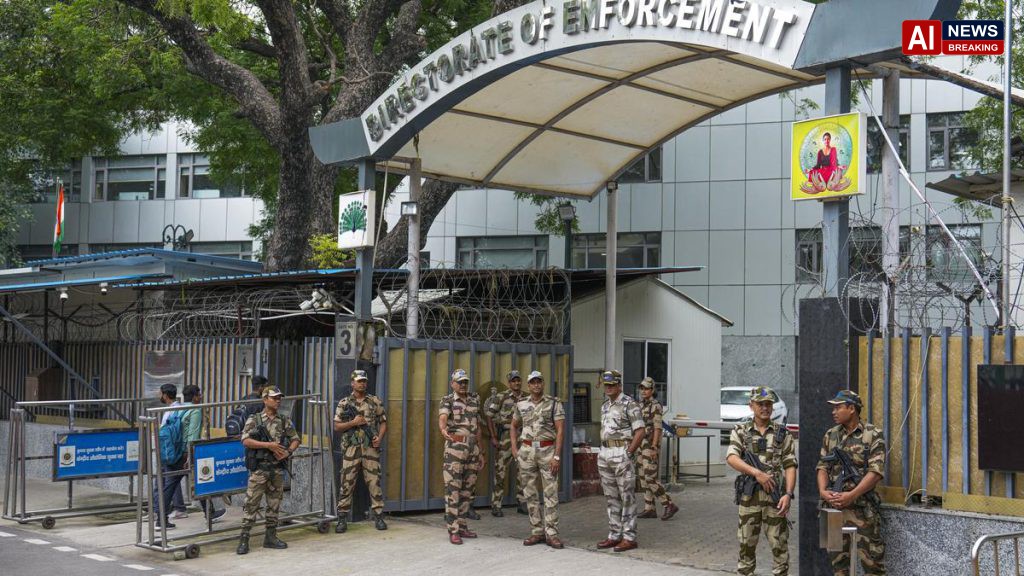
ED raids payment companies, CAs in online betting case - AI News Breaking
indias raids betting payment:
Law enforcement authorities in India have launched a widespread crackdown on the backend infrastructure of the online betting industry, executing search operations across multiple states and targeting key financial facilitators. The Enforcement Directorate, India’s premier financial intelligence and enforcement agency, conducted coordinated raids on five locations in Maharashtra, four in the Delhi-NCR region, two in Rajasthan, and one in Gujarat. These operations mark a significant escalation in the government’s efforts to dismantle the underground economy fueling illegal gambling platforms, shifting focus from mere user engagement to the systemic enablers who process billions of rupees in illicit transactions.The primary targets of this investigation were payment aggregator companies and chartered accountants who allegedly facilitated the movement of funds for unlicensed betting operators..
By interrogating these financial intermediaries, investigators aim to trace the flow of money from individual bettors to offshore betting servers, thereby establishing a concrete paper trail that exposes the organized crime syndicates behind these digital platforms. This strategic pivot underscores a growing recognition among regulatory bodies that shutting down apps is insufficient without severing the financial arteries that sustain them.In Maharashtra, the raids were particularly intense, focusing on hubs in Mumbai and Pune where several prominent fintech firms operate. Authorities seized servers, laptops, and substantial volumes of documentary evidence, including payment gateway records and bank statements..
The presence of chartered accountants in these raids suggests that the investigation has zeroed in on sophisticated money laundering techniques, where legitimate business accounts are allegedly used to layer and integrate ill-gotten gains from betting proceeds. This complexity highlights the efforts of operators to mask their activities within the veneer of legitimate commerce.Simultaneously, in the Delhi-NCR region, four separate locations were searched, aiming to uncover the network of local agents and digital marketing firms that often serve as the front ends for these betting companies. These entities are crucial in acquiring users and managing on-ground operations, often working in tandem with the payment processors to ensure smooth deposit and withdrawal mechanisms..
The coordinated nature of the raids in the capital region indicates a well-prepared operation, likely based on months of surveillance and financial analysis by the ED’s intelligence wing.In Rajasthan and Gujarat, the raids, though fewer in number, were strategically targeted at specific nodes within the distribution and payment processing network. Gujarat, known for its rigorous stance on gambling, saw one location searched, while Rajasthan witnessed two. These operations were aimed at disrupting the regional supply chains of illegal betting, which have grown exponentially in states where traditional bookmaking has faced severe crackdowns..
The inclusion of these western states reveals the pan-India nature of the scandal, demonstrating how digital platforms have erased geographical barriers to illegal gambling.The involvement of chartered accountants in this high-stakes investigation raises serious questions about professional oversight and compliance within the financial sector. These professionals are typically expected to uphold strict ethical standards and ensure adherence to anti-money laundering laws. Their alleged participation in facilitating transactions for unlicensed betting entities suggests either a willful ignorance or active complicity in financial crimes..
The ED is expected to press charges under various sections of the Prevention of Money Laundering Act, which imposes severe penalties for aiding and abetting such financial misconduct.Payment companies, often celebrated for their role in India’s digital payment revolution, now find themselves under intense scrutiny. The raids highlight the dual-use nature of fintech tools, which can be exploited by malicious actors to bypass regulatory filters. While many payment aggregators have robust know-your-customer and anti-money laundering protocols, the investigation alleges that certain entities either failed to enforce these measures or intentionally turned a blind eye to high-value, suspicious transactions linked to betting domains..
This exposes critical vulnerabilities in the digital financial architecture that regulators are now determined to plug.The legal backdrop to these raids is complex, given the ambiguous status of online betting in India. While the Public Gambling Act of 1867 largely prohibits running or visiting gambling houses, it is a central law that states can amend or replace. Consequently, gambling is primarily a state subject, leading to a patchwork of regulations..
Some states have explicitly banned online betting, while others remain silent or have recent attempts to regulate rather than prohibit it. This legal gray area has allowed operators to exploit loopholes, often hosting servers overseas and using Indian payment gateways to process transactions, thereby challenging the jurisdictional limits of Indian law.Financial experts note that the volume of funds moving through these channels is staggering. Estimates suggest that the online betting industry in India has grown into a multi-billion dollar sector, largely driven by aggressive digital marketing and the widespread availability of smartphones and high-speed internet..
The ED’s focus on payment companies is a direct attempt to quantify this illicit economy and recover stolen funds. By seizing assets and freezing bank accounts, the agency aims to send a strong deterrent message to other financial institutions that may be tempted to facilitate such transactions for business gains.The human cost of this industry is also coming under increased attention. The proliferation of betting apps has been linked to rising cases of debt, addiction, and mental health crises, particularly among young men and students..
Regulatory bodies argue that by punishing the facilitators, they are not just enforcing financial laws but also addressing a broader social menace. The raids are thus framed as a necessary step toward protecting citizens from the predatory practices of unregulated betting platforms that operate with impunity, often lacking any consumer protection mechanisms or fair-play guarantees.Looking ahead, the evidence gathered from these raids is expected to lead to further investigations and potentially large-scale prosecutions. The collaboration between financial regulators and law enforcement agencies is intensifying, with plans to implement stricter monitoring of payment gateways and enhanced regulations for fintech companies..
This could lead to new guidelines that mandate real-time transaction monitoring and immediate reporting of suspicious activities related to betting. The government is also considering amendments to existing laws to explicitly criminalize the facilitation of online betting, thereby closing the loopholes that have long been exploited by these syndicates.As the investigation deepens, the industry is holding its breath. Legitimate gaming companies, which operate under strict regulatory frameworks and contribute to the national economy through taxes and job creation, are concerned about being swept up in the crackdown..
There are calls for clear distinctions between skill-based gaming and chance-based betting, a debate that has long divided legal experts and policymakers. The outcome of this case could set a precedent for how India approaches the regulation of the entire digital gaming ecosystem, balancing consumer protection with business innovation.The widespread nature of the raids, spanning five states and targeting both financial and professional intermediaries, signals that the Indian state is no longer willing to tolerate the shadow economy of online betting. By striking at the root of the financial support system, the Enforcement Directorate is attempting to dismantle a sophisticated criminal enterprise that has thrived in the digital age..
The coming months will be critical, as the evidence collected is analyzed and legal proceedings begin, potentially reshaping the landscape of digital finance and gaming regulation in the country..
Updated: September 2, 2026
India’s Enforcement Directorate has launched coordinated raids across five states to dismantle the financial networks fueling illegal online betting. Action targets payment aggregators and chartered accountants allegedly facilitating money laundering for unlicensed operators.
Insight: This pivot from chasing apps to strangling fintech facilitates exposes the uncomfortable truth that regulatory filters are often compromised by profit incentives. It suggests that without holding financial gatekeepers accountable, the black market will simply migrate to new underground rails.