 Tamil Nadu CM orders Chennai flood‑prevention review.
  India and Bangladesh work
  Shikhar Mohan in India A squad for last two four-dayers against New Zealand A
  Belagavi police arrest two MES leaders.
  Arms Race Intensifies in Korea as the North Is Emboldened by Russia Alliance
 Monsoon floods cause $5bn damage in Nepal, impacting key sectors
The monsoon deluge in Nepal has caused an estimated $5 bn of damage—around one‑tenth of the country’s GDP—destroying roads, bridges, crops and tourism infrastructure, and pushing the fragile economy into a severe fiscal and humanitarian crisis.
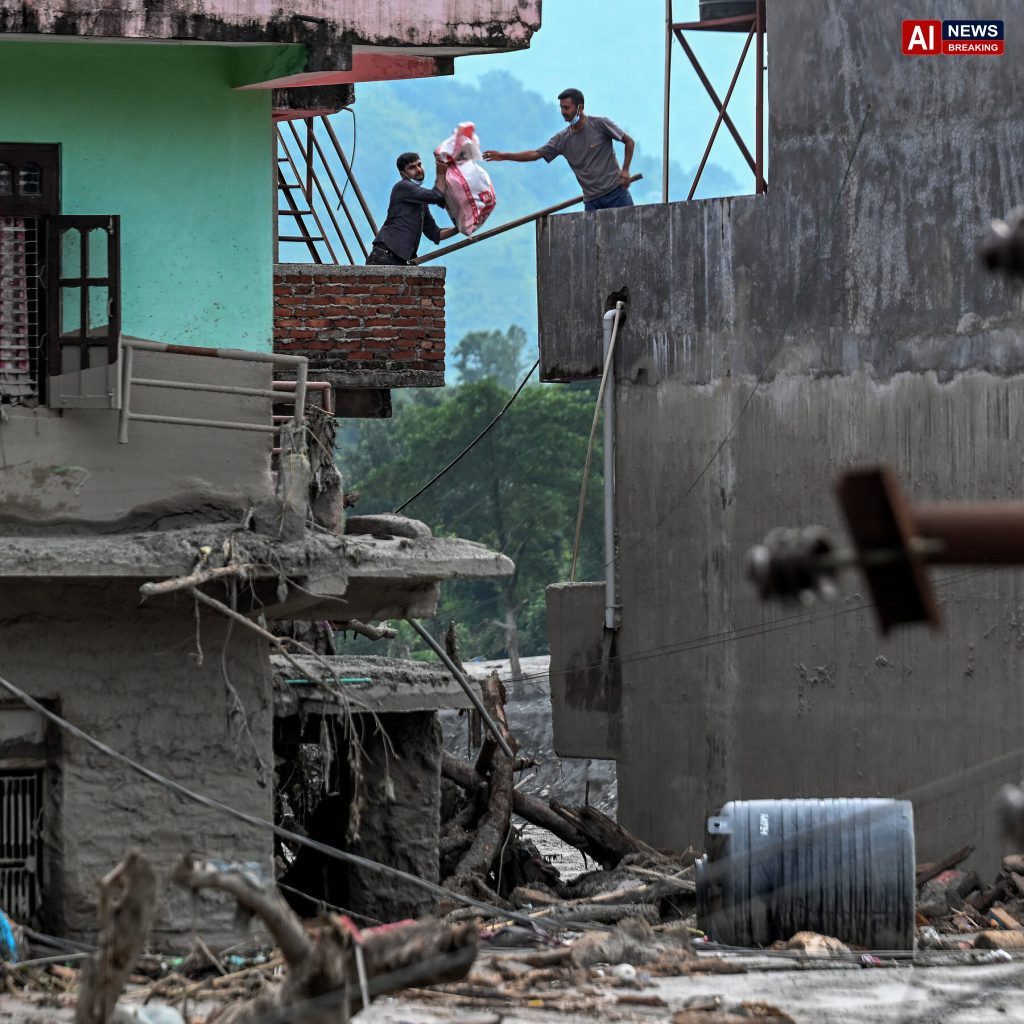
Nepal’s Economy Has Few Ways to Absorb the Cost of Flood Damage - AI News Breaking
monsoon floods cause damage:
The monsoon rains that recently lashed Nepal did more than simply saturate the soil; they fundamentally shook the foundations of a nation already grappling with fragile economic stability. The government’s preliminary assessment indicates that the catastrophic flooding has inflicted approximately $5 billion in damages, a staggering figure that represents roughly one-tenth of the country’s entire Gross Domestic Product. This assessment places the disaster in a category of economic trauma that few developing nations can easily withstand without significant external intervention..
For a country where infrastructure remains underdeveloped and fiscal buffers are thin, absorbing such a shock is not merely a logistical challenge but a systemic threat to recent developmental gains.The scale of the devastation is evident in the widespread destruction across the country’s mid-hills and Terai regions. Roads that serve as the primary arteries for commerce have been severed, isolating entire districts and halting the movement of goods, people, and services. Bridges, many of which were built decades ago with limited engineering safeguards, have collapsed into swollen rivers, leaving communities cut off from markets and emergency services..
The visual landscape of the aftermath is one of mud, debris, and suspended animation, where daily life has been paused for countless thousands. This physical fragmentation translates directly into economic paralysis, as supply chains are disrupted and local economies, reliant on the steady flow of trade, are brought to a standstill.Agriculture, which employs nearly half of Nepal’s workforce and contributes significantly to its food security, has been particularly hard-hit. The floods submerged fields during critical planting and harvesting seasons, wiping out crops that smallholder farmers depend on for both sustenance and income..
Rice, maize, and wheat, the staples of the Nepalese diet for millions, have been lost to rising waters and mudslides. For these farmers, who often operate on razor-thin margins and lack access to comprehensive insurance schemes, the loss of a season’s harvest is not just a financial setback but a humanitarian crisis in the making. The immediate consequence is a sharp rise in food prices in urban centers, as the disruption in supply from rural areas creates scarcity and drives up costs for the most vulnerable populations.The tourism sector, another pillar of Nepal’s economy, faces an uncertain future in the immediate wake of the disaster..
While the iconic trekking routes in the Himalayas may remain physically intact, the perception of safety and accessibility is damaged. Many tourists are hesitant to travel to regions where infrastructure is compromised and emergency response capabilities are overstretched. For the countless hospitality workers, guides, and porters who rely on the annual influx of visitors for their livelihoods, this hesitation translates to lost wages and deepening poverty..
The government recognizes that restoring confidence in the tourism brand will take time, requiring concerted marketing efforts and visible improvements in safety infrastructure to reassure international travelers that the country is open for business and ready to welcome them.Compounding the physical damage is the immense fiscal strain placed on the federal and provincial budgets. Nepal’s public debt is already at historically high levels, limiting the government’s ability to finance large-scale reconstruction efforts through domestic borrowing. Interest payments on existing debt consume a significant portion of annual revenue, leaving little Fiscal space for unexpected expenditures..
The state must now choose between directing limited resources toward immediate humanitarian relief, such as food distribution and emergency shelter, or investing in long-term infrastructure repair. This dilemma is acute, as neglecting either short-term needs or long-term resilience poses severe risks. The government’s financial maneuvering room is effectively non-existent, forcing it to seek urgent support from international lenders and donor countries.International aid has been pledged by various bilateral partners and multilateral institutions, but the coordination and disbursement of these funds present their own challenges..
Donors often require specific conditions or tie assistance to broader policy reforms, which may not align perfectly with the government’s immediate priorities for reconstruction. Furthermore, the logistics of delivering aid to remote, flood-stricken areas are complex and expensive. Roads that would normally facilitate the transport of materials are washed out, necessitating the use of helicopters and other costly methods..
This inefficiency increases the overall cost of reconstruction, meaning that every dollar of aid stretches further, but also that the total resource requirement grows, exacerbating the funding gap.The banking sector in Nepal is also feeling the pressure of the disaster. Non-performing loans are expected to rise as businesses and individuals struggle to repay debts amidst the economic disruption. Small and medium-sized enterprises, which are the backbone of the private sector, have suffered significant asset damage and loss of revenue, making their solvency questionable..
Banks, wary of further credit defaults, are likely to tighten lending standards, which could stifle economic recovery by restricting access to capital for those who need it most to rebuild. This credit crunch poses a secondary crisis, where the initial physical damage is followed by a financial constriction that slows down any attempt at economic normalization.Social safety nets, which are essential in protecting the poorest citizens from poverty traps, are being tested to their limits. The existing programs, such as the Social Security Allowance, are underfunded and poorly targeted, often failing to reach those most affected by sudden shocks..
The floods have pushed millions of people closer to the poverty line, increasing the demand for social protection. However, the government lacks the administrative capacity and financial resources to scale up these programs rapidly. Without effective safety nets, the human cost of the disaster will deepen, leading to increased malnutrition, educational dropouts among children, and long-term social instability that will hinder economic growth for years to come.The environmental implications of the floods further complicate the economic recovery narrative..
Landslides triggered by the heavy rains have destroyed forests and degraded soil quality, reducing the land’s agricultural productivity for years. Deforestation, already a significant issue in Nepal, has accelerated, undermining carbon credit potential and biodiversity conservation efforts. Restoring the environment is not just an ecological imperative but an economic one, as healthy ecosystems provide critical services such as water regulation and soil retention..
The cost of environmental rehabilitation adds another layer to the financial burden, requiring specialized expertise and sustained investment that the government cannot easily muster on its own.Looking ahead, the path to recovery will require a comprehensive strategy that goes beyond simple reconstruction. It must incorporate climate-resilient infrastructure, improved disaster risk reduction measures, and diversified economic opportunities to reduce vulnerability to future shocks. International cooperation will be crucial in transferring technology and knowledge, as well as providing concessional financing to support these structural changes..
The World Bank and the Asian Development Bank have indicated their willingness to support Nepal’s recovery, but the terms of this support will shape the country’s economic trajectory for decades. A debt-for-nature swap or concessional loans tied to green infrastructure projects could offer a pathway to manage the debt burden while building resilience.The psychological impact of the disaster should not be underestimated, as it affects economic productivity and social cohesion. Communities that have lost homes and livelihoods face a period of trauma and uncertainty that.
Updated: September 2, 2026
With fiscal space eroded and credit turning toxic, Nepal’s recovery hinges less on physical reconstruction than on securing concessional finance that offsets soaring debt burdens. This crisis exposes the lethal intersection of climate vulnerability and financial fragility, demanding a structural pivot toward resilient infrastructure to prevent economic paralysis.