Trump administration offers mixed messages on limits to Ukraine’s Starshield access
 US Treasury proposes a rule to crack down on high-tech investments in China, other adversaries
 Calley Means, a key MAHA advocate, resigns as a top RFK Jr. adviser
 Spotify Tightens Family Plan Controls with QR Code Verification
 Use of Chief Minister C. Joseph Vijay’s deep fake videos to collect money: Rajasthan youth moves Madras High Court seeking bail
AI-Native Studios Can Create Original IP While Traditional Studios Keep Their Edge, VFX Veteran Hong Jae Cheol Says at Busan
**
AI-Native Studios Can Create Original IP While Traditional Studios Keep Their Edge, VFX Veteran Hong Jae Cheol Says at Busan - AI News Breaking
ainative studios create original:
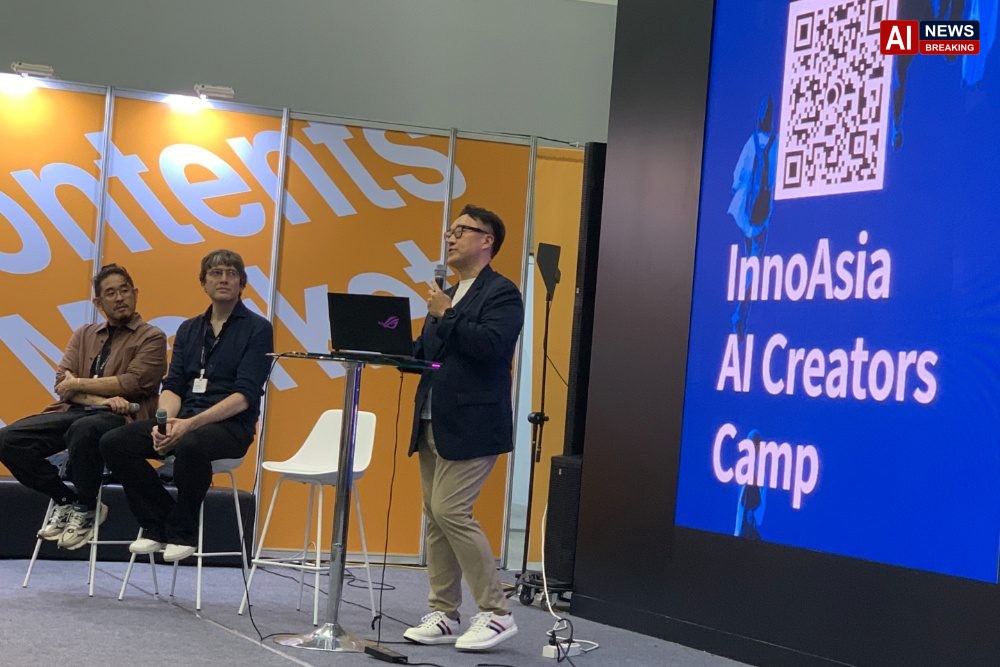
AI‑native studios are emerging as a distinct breed of production houses that can generate original intellectual property with unprecedented speed and cost efficiency, but they are unlikely to eclipse the entrenched strengths of traditional studios, veteran visual‑effects artist Hong Jae‑Cheol told reporters at the Busan International Film Festival this week. Hong, who now serves as a producer‑director at the South Korean visual‑effects firm Viscode after a two‑decade career at Industrial Light & Magic and credits on blockbusters such as “Iron Man 3” and “Avatar,” outlined a nuanced view of how artificial intelligence is reshaping the creative landscape without rendering conventional film‑making obsolete.Speaking on a panel titled “AI in Narrative Cinema,” Hong explained that AI‑native companies differ fundamentally from legacy studios in their operational model. “We run largely automated pipelines,” he said, describing a workflow where generative‑image models, text‑to‑video tools and AI‑driven asset libraries handle tasks that once required dozens of artists over weeks..
“A small team can spin up a concept, produce a full‑length feature, and own the IP without the massive overhead that a studio like Disney or Warner Bros. would incur.” According to Hong, this lean structure enables rapid prototyping, iterative storytelling, and the ability to test market reception through data‑driven analytics before committing to full‑scale distribution.Nevertheless, Hong cautioned that the efficiency gains of AI do not automatically translate into cultural impact. “Original IP is only as valuable as its resonance with audiences,” he noted..
“Traditional studios have the advantage of deep‑rooted franchises, extensive production infrastructure, and a talent pool that can bring nuanced performances and high‑stakes spectacle to the screen.” He cited examples such as the Marvel Cinematic Universe and the “Star Wars” saga, where decades of brand equity, cross‑media tie‑ins and a global distribution network create a barrier that AI‑native outfits cannot easily breach.The panel discussion also touched on the quality of AI‑generated content. While generative models can produce convincing visual effects and background environments, Hong argued that they currently lack the subtlety required for complex character work. “You can render a cityscape in seconds, but capturing a performance that conveys layered emotion still relies on human actors, directors, and cinematographers,” he said..
“The technology is a tool, not a replacement, and the creative decisions that shape a story remain a distinctly human domain.”Hong’s assessment of the market dynamics was rooted in his own experience transitioning from a classic VFX pipeline to an AI‑enhanced workflow at Viscode. He described the company’s recent venture into a sci‑fi thriller that was entirely storyboarded by an AI language model, with visual assets generated by diffusion networks. “We were able to produce a 90‑minute rough cut in three months, a timeline that would have taken a traditional studio a year or more,” he recounted..
Yet, when the film was screened for test audiences, feedback highlighted a lack of emotional depth and character cohesion, prompting Viscode to bring in seasoned writers and actors to re‑work key scenes. The final version, a hybrid of AI‑driven visuals and human‑crafted narrative, received moderate praise but fell short of blockbuster expectations.Industry analysts present at the festival echoed Hong’s view that AI will act as a catalyst rather than a usurper. Mina Lee, a media economics professor at Seoul National University, observed that AI‑native studios are likely to occupy a niche focused on genre content, interactive media and localized productions where budgets are modest and turnaround times critical..
“The real competitive edge of legacy studios lies in their ability to marshal large‑scale marketing campaigns, secure worldwide theatrical releases, and leverage ancillary revenue streams such as merchandising and theme parks,” Dr. “These are assets that cannot be replicated by an algorithm.”The conversation also turned to the implications for talent development. Hong warned that the rise of AI could displace certain entry‑level VFX roles, but also create new opportunities for artists who can curate, fine‑tune and direct AI outputs..
“The skill set is shifting from rote execution to prompt engineering, data curation and interdisciplinary collaboration,” he said. “Those who adapt will find themselves at the forefront of a new creative economy.” He cited Viscode’s internal training program, which pairs junior artists with AI specialists to teach them how to shape model outputs into cinematic language.When asked about the ethical considerations surrounding AI‑generated IP, Hong emphasized the importance of transparent provenance and responsible use of copyrighted material. “Many generative models are trained on massive datasets that include existing artworks, which raises legitimate concerns about originality and compensation for creators,” he remarked..
“Studios—whether AI‑native or traditional—must adopt clear policies for attribution and revenue sharing to avoid legal entanglements and preserve the integrity of the industry.”In closing, Hong expressed cautious optimism about the future of film production. “AI is expanding the toolbox available to storytellers,” he said, “but the heart of cinema—its ability to move people, to provoke thought, to build shared myths—still depends on human imagination and the institutions that can bring those stories to the world at scale.” He predicted a collaborative ecosystem where AI‑driven startups incubate fresh concepts that can be licensed or co‑produced with established studios, thereby enriching the overall creative pipeline without eroding the foundational pillars of the film business.The panel’s consensus was clear: while AI‑native studios will increasingly carve out a space for original, cost‑effective content, the dominance of traditional studios in franchise development, distribution muscle and talent cultivation will persist for the foreseeable future. As Hong and his peers noted, the industry stands at a crossroads where technology offers new possibilities, but the enduring values of storytelling and audience connection remain the ultimate arbiters of success..
Updated: October 11, 2026
AI‑native studios can now crank out original films at breakneck speed and low cost using automated pipelines, but they still fall short on the emotional depth and brand power that legacy studios wield. Experts at Busan say AI will be a valuable tool and niche player, while traditional studios remain dominant in franchise building, distribution and audience appeal.
AI‑native studios will become the “indie labs” of Hollywood, churning low‑budget concepts fast enough to feed the data‑hungry pipelines of legacy giants, but they’ll still need the narrative gravitas and brand muscle that only big studios can supply.
In practice, the real winners