 Odisha moves Supreme Court against Andhra Pradesh over rural poll notice in Kotia area
  NASA outlines Artemis III test flight plan
  Sacha Baron Cohen Says Donald Trump Has ‘Elements of Brilliance’ and ‘We Were Too Easy to Dismiss Him as a Nincompoop’
  Legal action ordered against officials over irregularities in voter list in Pilibhit
 AISA president Neha Bora demands urgent higher education reforms
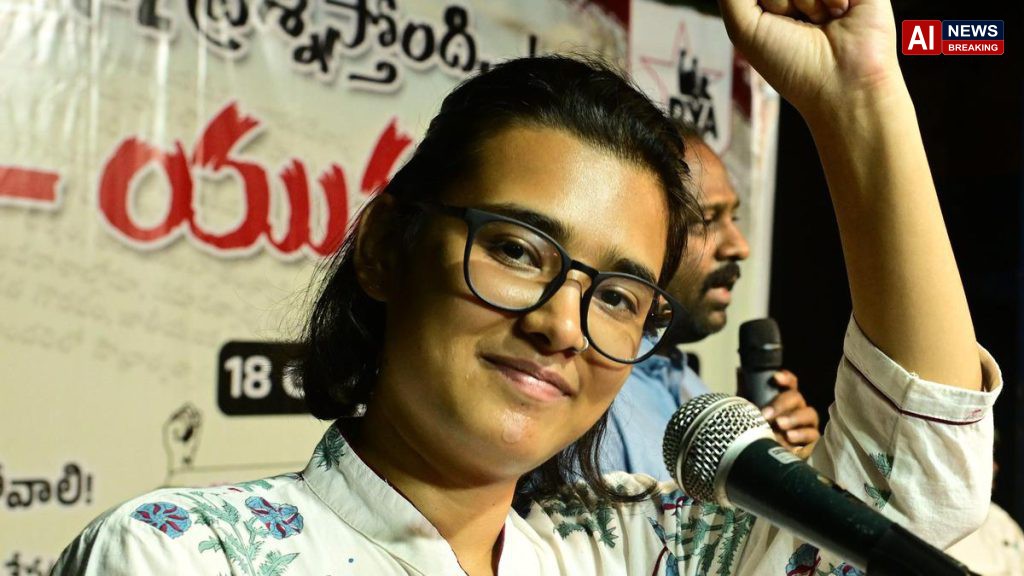
AISA president Neha Bora demands urgent higher education reforms - AI News Breaking
Neha Bora, the national president of the All India Students’ Association, has issued a stark critique of the central government’s approach to higher education, accusing the administration of displaying a profound indifference to the pressing concerns of students and the youth demographic. In a series of public addresses and written statements circulated across university campuses from Delhi to Guwahati, Bora argued that the current policy framework fails to address the systemic inequities that plague the academic landscape. She called for comprehensive and immediate reforms, asserting that the status quo is unsustainable and detrimental to the future of the nation’s intellectual capital..
The association’s leadership contends that without substantial structural changes, the disconnect between educational institutions and the realities facing students will continue to widen, leading to increased unrest and a decline in democratic engagement among young Indians.The central argument of Bora’s campaign rests on the premise that the government has prioritized bureaucratic convenience and political expediency over the pedagogical needs of learners. She highlighted that recent policy decisions, often implemented with minimal consultation with student bodies, have exacerbated existing disparities in access to quality education. According to the AISA, the lack of meaningful dialogue between the Ministry of Education and student representatives has created an environment of alienation..
Bora insisted that students are not merely passive recipients of policy but active stakeholders whose voices must be integrated into the decision-making process. This sentiment has found resonance across various universities, where faculty and student unions have increasingly aligned their demands for greater autonomy and accountability.One of the primary focal points of the proposed reforms is the issue of affordability and financial aid. Bora pointed out that despite rising tuition fees and the escalating cost of living on campus, the central financial assistance mechanisms have remained largely inadequate..
She cited data showing that a significant proportion of students from marginalized communities are forced to drop out due to economic pressures, a trend that undermines the principle of meritocracy. The AISA national president demanded a revamp of the scholarship and loan systems, advocating for need-based grants that are disbursed promptly and without excessive bureaucratic hurdles. She argued that true educational equity cannot be achieved if financial barriers continue to exclude talented individuals from marginalized backgrounds from accessing higher learning opportunities.Beyond financial concerns, Bora placed significant emphasis on the deteriorating quality of education and the crisis of infrastructure within public universities..
She noted that many institutions are operating with chronic understaffing, outdated curriculum, and inadequate laboratory facilities, which severely hamper the academic experience. The association calls for a substantial increase in funding for research and development, arguing that India’s global competitiveness depends on robust academic ecosystems. Bora criticized the government’s tendency to outsource core academic functions to private entities, a move she described as the corporatization of education..
She warned that this shift prioritizes profit margins over pedagogical excellence, ultimately compromising the intellectual independence of institutions.The issue of democratic rights within educational institutions also forms a crucial pillar of Bora’s reform agenda. She expressed deep concern over the recent suspension of student unions in several prominent universities, characterizing these actions as an assault on campus democracy. Bora argued that student unions serve as vital training grounds for leadership and civic engagement, providing young adults with the opportunity to negotiate, debate, and organize..
By dismantling these structures, she contended, the state is removing essential platforms for political socialization. The AISA president called for an immediate reversal of these suspensions and the establishment of a neutral regulatory body to oversee student elections, ensuring they are free, fair, and transparent.Furthermore, the mental health crisis among students has been brought to the forefront of the debate. Bora highlighted the alarming rise in anxiety, depression, and suicide rates within the academic community, attributing much of this distress to the intense pressure of competitive examinations and the lack of supportive counseling services..
She urged the government to integrate comprehensive mental health support into the standard curriculum and to ensure that every university has adequate professional counseling staff. Bora argued that an education system that ignores the psychological well-being of its students is fundamentally flawed. She called for a cultural shift within universities that destigmatizes help-seeking behavior and promotes a more humane approach to academic assessment.The labor conditions of teachers and non-teaching staff also feature prominently in the association’s demands..
Bora emphasized that the quality of education is inextricably linked to the welfare of educators. She pointed to the widespread use of contractual appointments, which have created a two-tier system in academic employment, with permanent staff enjoying job security and benefits while contractual employees face precarious working conditions and low wages. The AISA president called for the regularization of all contractual teachers and the establishment of clear career progression pathways..
She argued that investing in the stability and satisfaction of the academic workforce is essential for maintaining high educational standards and retaining talented educators within the public sector.In addition to internal reforms, Bora addressed the need for stronger international collaborations and exchange programs. She noted that while Indian students increasingly seek higher education abroad, the domestic system often lacks the infrastructure to facilitate meaningful global engagement. The association advocates for policies that simplify visa processes, recognize foreign credits more easily, and encourage joint research initiatives with international universities..
Bora argued that in an increasingly interconnected world, Indian students must be equipped with global perspectives and cross-cultural competencies. She urged the government to invest in soft power diplomacy through education, positioning Indian universities as hubs of international knowledge exchange rather than isolated enclaves.The political implications of these educational issues cannot be overlooked. Bora warned that the continued neglect of student concerns is fostering a sense of disenfranchisement that could translate into broader political alienation..
She noted that many young voters feel that their aspirations are ignored by mainstream political parties, leading to a decline in trust in democratic institutions. The AISA president called on all political actors to prioritize education in their agendas, arguing that the future stability of the nation depends on an empowered and educated youth population. She emphasized that students are not a monolithic bloc with uniform demands but a diverse group with varied needs that require nuanced and inclusive policy responses.Critics of the AISA’s stance have argued that the association’s demands are overly idealistic and fail to account for the fiscal constraints facing the government..
Some experts suggest that rapid, comprehensive reforms could destabilize the current system before new structures are fully operational. However, Bora rebuts these claims by arguing that the cost of inaction is far higher than the cost of reform. She cited rising unemployment rates among graduates as evidence that the current system is failing to produce job-ready individuals..
According to her analysis, investing in education is not merely a social obligation but an economic imperative that can yield significant long-term returns for the national economy.As the debate intensifies, the AISA plans to organize a series of nation-wide consultations to gather detailed feedback from students, faculty, and civil society organizations. Bora has stated that these consultations will inform a detailed policy blueprint to be presented to the parliament in the coming months.
Updated: August 19, 2026