
 NASA outlines Artemis III test flight plan
  Sacha Baron Cohen Says Donald Trump Has ‘Elements of Brilliance’ and ‘We Were Too Easy to Dismiss Him as a Nincompoop’
  Legal action ordered against officials over irregularities in voter list in Pilibhit
  Floods force evacuations and rooftop rescues
  Revival Rugs Birthday Sale: 20 Percent Off Sitewide Through Sunday
 Trump plans second summit with Kim Jong
**
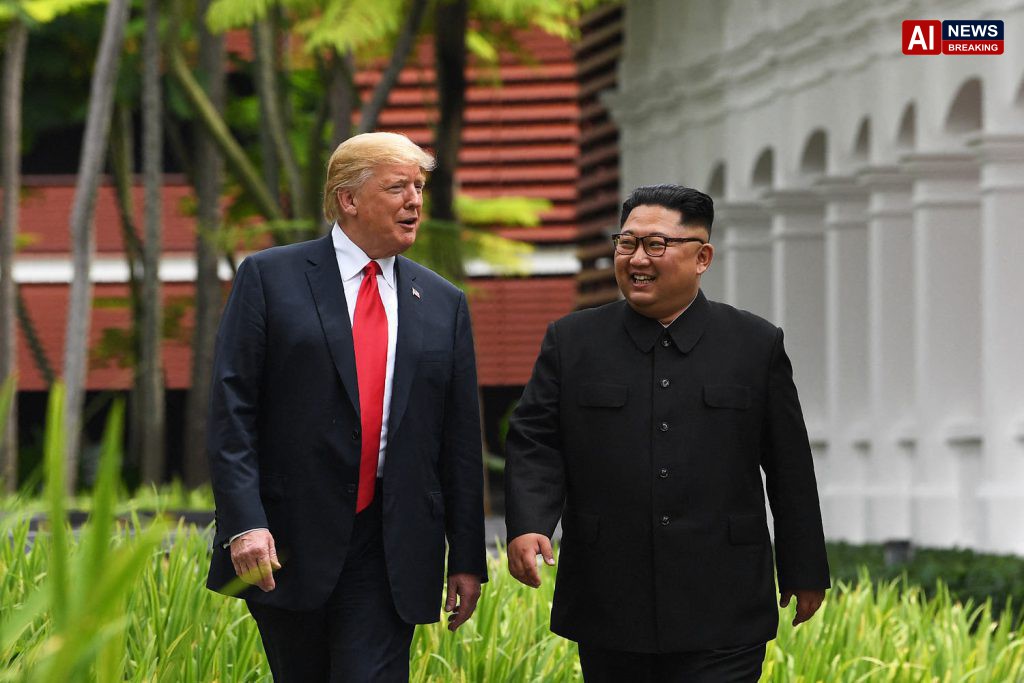
Trump plans second summit with Kim Jong - AI News Breaking
President Donald Trump told reporters on Thursday that he intends to arrange a second summit with North Korean leader Kim Jong Un before the end of the year, a development that marks an unprecedented step for a sitting United States president. The comment, made during a press briefing at the White House, followed a series of diplomatic overtures that have kept the Korean Peninsula in the global spotlight since the historic meeting in Singapore last June. Trump said he believes “there is still a lot of work to be done” and that a follow‑up meeting would build on the progress made at the first encounter.The prospect of a second Trump‑Kim summit has been met with a mixture of cautious optimism and scepticism among analysts..
Supporters of the president argue that direct dialogue remains the most effective way to reduce the nuclear threat posed by North Korea, citing the thaw in relations that followed the Singapore talks. Critics, however, point out that no concrete steps have yet been taken to dismantle Pyongyang’s nuclear infrastructure, and they warn that another high‑profile meeting could lend legitimacy to a regime that continues to violate human‑rights standards.In the months since the Singapore summit, diplomatic channels have remained open but fragile. Senior officials from the United States, South Korea and Japan have been working behind the scenes to secure verifiable commitments from North Korea on denuclearisation, while also addressing the broader security architecture in the region..
The United Nations Security Council has continued to impose sanctions, albeit with occasional calls for relief in exchange for concrete disarmament actions. The Trump administration has signalled a willingness to adjust sanctions, but has not provided a clear framework for what such adjustments would entail.North Korean state media responded to the president’s announcement with a brief statement lauding the “friendship and trust” that has been established between the two leaders. The Korean Central News Agency quoted Kim Jong Un as saying that the United States “has shown a sincere desire for peace” and that the Korean people “look forward to further fruitful discussions.” The language mirrors the conciliatory tone of the June summit, yet analysts note that North Korean rhetoric often serves domestic propaganda purposes as much as diplomatic signalling.The timing of the proposed meeting is significant, given the evolving geopolitical landscape..
In the Asia‑Pacific, China’s growing assertiveness, ongoing disputes in the South China Sea and concerns over Taiwan have heightened the strategic calculations of all parties involved. Washington has been seeking to reinforce its alliances with Seoul and Tokyo, while also managing a complex relationship with Beijing, which remains North Korea’s principal economic lifeline. A renewed US‑North Korea dialogue could therefore have ripple effects across the broader regional security architecture.Congressional leaders have expressed a range of reactions to Trump’s remarks..
Some Republican senators, echoing the president’s optimism, urged the administration to move forward quickly, arguing that a successful second summit could cement Trump’s foreign‑policy legacy. A handful of Democratic lawmakers, however, called for a more measured approach, insisting that any future talks be tied to verifiable steps toward denuclearisation and that the administration should not sideline congressional oversight. Several members of both parties highlighted the need for a transparent verification regime, citing past instances where North Korea has delayed or obstructed inspections.The White House has not disclosed a tentative date or venue for the proposed summit, noting only that “the groundwork is being laid” and that the administration is “in close contact” with allies and regional partners..
Diplomatic sources familiar with the process said that logistical preparations are underway, but that a number of hurdles remain, including agreeing on the format of the talks, the presence of third‑party mediators and the issue of whether the meeting will be public or conducted behind closed doors.International reactions have been mixed. The European Union issued a statement welcoming the prospect of renewed dialogue but reiterated its call for “concrete, irreversible steps toward the complete, verifiable, and irreversible dismantlement of North Korea’s nuclear weapons program.” Japan’s foreign ministry expressed cautious support, emphasizing the importance of a stable Korean Peninsula for regional peace, while also urging that any engagement be coupled with strict enforcement of existing sanctions. Meanwhile, human‑rights organisations warned that a high‑profile summit could be used by Pyongyang to deflect attention from its ongoing violations, urging the United States to keep the issue of civil liberties on the agenda.Historically, direct contact between a US president and a North Korean leader has been rare, with the 2018 Singapore meeting representing the first such encounter..
The outcome of that summit was a joint statement committing to the establishment of a “new relationship” and a “complete denuclearisation” of the Korean Peninsula, but concrete progress has been limited. Subsequent negotiations have stalled over disagreements on the sequencing of sanctions relief and denuclearisation steps, and the United States has repeatedly warned that any premature easing of pressure would be “counterproductive.”As the year draws to a close, the prospect of a second Trump‑Kim summit will likely become a focal point of both diplomatic effort and public debate. Observers will be watching closely to see whether the administration can translate rhetorical commitment into a verifiable roadmap for dismantling North Korea’s nuclear capabilities, or whether the meeting will serve more as a symbolic gesture in a complex geopolitical chessboard..
The outcome may well shape not only the future of US‑North Korean relations but also the broader balance of power in East Asia..
Updated: August 19, 2026
Prioritizing symbolic diplomacy over verifiable disarmament risks normalizing a nuclear-armed adversary without addressing the core security threat. This approach may stabilize headlines while leaving the regional power dynamics fundamentally unresolved and vulnerable to future provocations.