Indonesia denies foreign claim to rescued orangutans
 Turkey hosts COP31 climate talks in Antalya.
 Pope meets Argentine bishops.
 APOD: 2026 November 8 – Major Fireball Meteor
 Indonesian Horror Hit ‘Pabrik Gula’ Gets 2028 Sequel as MD Entertainment Lines Up Three Imax Films
Arab parties secure historic seats in Israel election.
**
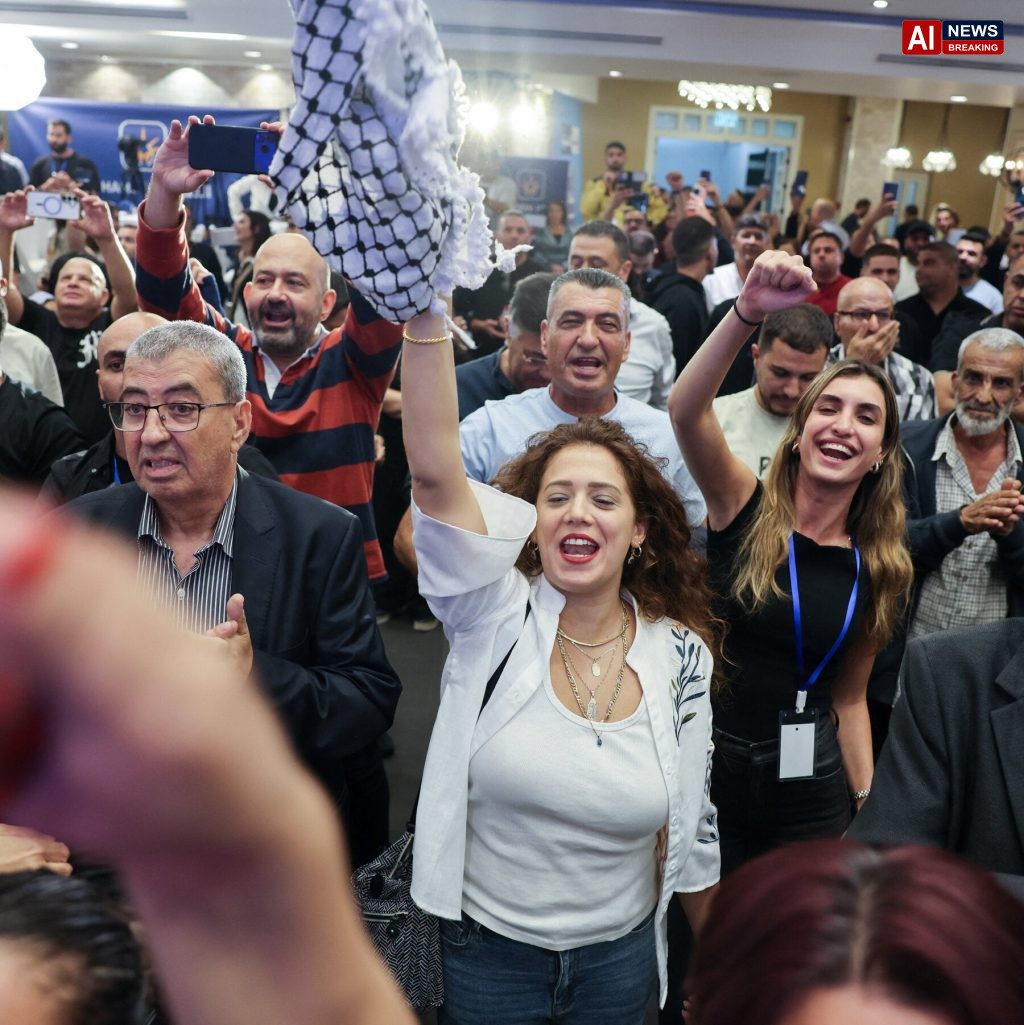
Arab parties secure historic seats in Israel election. - AI News Breaking
Voter turnout for Israel’s Arab parties surged in the latest legislative election, delivering a historic high that could give the two main Arab political formations a decisive influence over the composition of the next government. The Joint List, an alliance of several Arab parties, and Ra’am, the Islamist party that has previously entered a coalition with right‑wing partners, each secured more than 4 % of the national vote, crossing the electoral threshold for the first time since the 2022 polls. Their combined share of seats – ten out of 120 – may be enough to tip the balance in a fragmented Knesset where no bloc appears likely to command an outright majority.The boost in Arab support reflects a growing sense of disenfranchisement among Israel’s Arab minority, which makes up roughly 20 % of the population..
Polls conducted in the weeks before the election indicated that a sizeable proportion of Arab‑Israeli voters were motivated more by opposition to Prime Minister Benjamin Netanyahu’s right‑wing coalition than by enthusiasm for any particular party platform. The record turnout, estimated at around 75 % of eligible Arab voters, eclipses the 57 % participation rate recorded in the 2022 election and rivals the highest levels seen in any Israeli election since the country’s founding.Political analysts say the surge could force mainstream parties to reckon with Arab demands on a range of issues, from the status of the Arabic language in public life to the contentious question of land and settlement policies in the West Bank. While the Joint List’s platform calls for greater civil rights, an end to the occupation and increased investment in Arab towns, Ra’am’s agenda is more focused on religious and community concerns, yet it has also signalled willingness to engage in pragmatic governance if certain red‑lines are respected..
Both parties have stressed that their participation in any future coalition would be conditional on concrete steps toward equality and an end to policies they deem discriminatory.The prospect of Arab parties playing a king‑maker role emerges against a backdrop of political instability that has seen Israel hold four elections in the past two years. Netanyahu’s Likud party, although still the largest single faction, fell short of the 61 seats required for a majority, securing 30 seats in the latest vote. The centrist Yesh Atid bloc, led by former minister Yair Lapid, obtained 24 seats, while the far‑right Religious Zionist party captured 14..
Smaller parties on both the left and right, as well as new entrants such as the Israeli Labor Party’s revivalist platform, added to a highly fragmented parliamentary landscape. In such a scenario, the ten seats held by Arab parties could become pivotal in determining which coalition ultimately garners the confidence of the Knesset.Negotiations are expected to begin within days of the official certification of the results, with the President of Israel inviting the leader of the party most likely to form a viable coalition to try and assemble a government. Netanyahu, who has long dismissed Arab parties as “illegitimate,” may find his options limited if Arab votes prove indispensable to any potential bloc..
Yet his allies caution that any overt overture to Arab parties could alienate core supporters who view such moves as a betrayal of nationalist principles. The political calculus is further complicated by the fact that Ra’am, which previously entered a coalition with Netanyahu’s right‑wing allies in 2021, has publicly reiterated its willingness to negotiate, provided that its constituents’ security concerns and religious freedoms are guaranteed.The Joint List, meanwhile, has signalled that it will not join a government that includes parties it deems responsible for the continuation of the occupation or for policies that marginalise Arab citizens. Its spokesperson, Ahmed Tibi, emphasized that “participation must be based on tangible progress, not symbolic gestures.” This stance could limit the range of possible partners, effectively narrowing the field to centrist or left‑leaning blocs that are more likely to entertain policy concessions on equality and resource allocation..
However, the fragmented nature of the Knesset means that even a minority coalition could be viable if it secures the support of Arab parties on key votes, such as the budget or confidence motions.International observers note that the increased Arab representation could have ramifications beyond Israel’s domestic politics. The United States and European Union have both expressed concern over the growing polarization within Israeli society and have urged all parties to respect democratic norms. An Arab‑inclusive coalition, even if limited to a supporting role, might ease some diplomatic pressures by signalling a broader consensus on contentious issues..
Conversely, a hard‑line government that excludes Arab voices could exacerbate tensions with neighboring Arab states and further isolate Israel on the regional stage.Civil society groups within Israel have welcomed the heightened political engagement of the Arab community, arguing that it reflects a maturing democratic process. Organizations such as the Israel Democracy Institute have highlighted the need for a more inclusive political dialogue, warning that continued marginalisation could fuel unrest in mixed‑population areas. At the same time, some right‑wing NGOs have warned that granting Arab parties leverage could embolden extremist elements within the Palestinian territories, potentially destabilising security arrangements that have been painstakingly built over the past two decades.The upcoming weeks will test whether Israel’s political establishment can accommodate the new reality of a more vocal Arab electorate..
If Arab parties secure a meaningful role in the formation of the next government, they could push forward legislation on issues ranging from public transportation in Arab towns to the recognition of Arabic as an official language alongside Hebrew. Such reforms would mark a significant shift from previous administrations, which have often relegated Arab concerns to the periphery of policy debates. However, any progress will depend on the willingness of larger parties to compromise and on the ability of Arab politicians to navigate the complex terrain of coalition politics without alienating their base.As the nation awaits the outcome of the coalition talks, the record turnout among Arab voters stands as a clear message: a substantial segment of the electorate is prepared to use the ballot box to demand change..
Whether that demand translates into concrete policy influence will hinge on the delicate balance of power in a Knesset where no single bloc commands an outright majority, and where ten seats could prove decisive in shaping the direction of Israel’s next government..
Updated: October 28, 2026
Arab voter turnout hit a record 75%, sending the Joint List and Ra’am into the Knesset with ten seats that could tip the balance in an otherwise fragmented parliament. Their newfound leverage may force mainstream parties to confront Arab demands on civil rights, language policy and the West Bank, while determining which coalition can secure a governing majority.
Insight: Arab voters have turned their historic turnout into a lever that could force Israel’s fractious coalitions to confront long‑ignored equality demands, reshaping policy priorities beyond symbolic gestures. Yet the same leverage risks alienating Netanyahu’s nationalist base, setting the stage for a delicate power‑play where any concession may trigger new internal fissures.