Indonesia denies foreign claim to rescued orangutans
 Turkey hosts COP31 climate talks in Antalya.
 Pope meets Argentine bishops.
 APOD: 2026 November 8 – Major Fireball Meteor
 Indonesian Horror Hit ‘Pabrik Gula’ Gets 2028 Sequel as MD Entertainment Lines Up Three Imax Films
Science is successful only when it benefits society: PM Modi
**
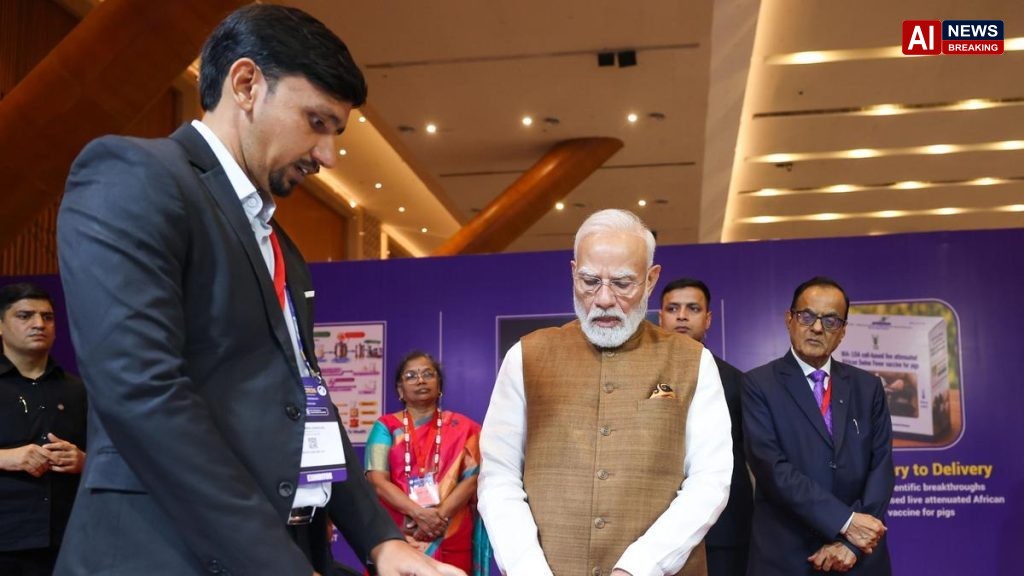
Science is successful only when it benefits society: PM Modi - AI News Breaking
science successful only when:
Prime Minister Narendra Modi reiterated the age‑old maxim that science must serve the public good, urging India’s research community to accelerate the transition from laboratory breakthroughs to tangible benefits for society. Speaking at the inauguration of the National Science and Innovation Forum in New Delhi, Modi underscored that “science is successful only when it benefits society,” a call that resonated with policymakers, industry leaders and academicians alike. He warned that a focus on pure curiosity, while valuable, must be balanced with an eye toward practical applications that improve health, agriculture, energy and infrastructure across the country’s diverse population.The prime minister’s remarks arrived at a pivotal moment for India’s science ecosystem, which has seen a surge in funding and the establishment of new research institutions over the past decade..
Government initiatives such as the “Atmanirbhar Bharat” (Self‑Reliant India) campaign and the ambitious “Science, Technology and Innovation Policy” aim to reduce dependence on imported technology and to position the nation as a global hub for cutting‑edge research. Yet, despite increased investment, critics have pointed out a persistent gap between discovery and deployment, often referred to as the “valley of death” where promising prototypes stall before reaching the market. Modi’s call to “take innovations from laboratory to land” is therefore both a political imperative and a strategic directive to bridge that chasm.In his address, Modi highlighted several recent Indian success stories that exemplify the desired trajectory..
He cited the development of a low‑cost, portable ventilator that was rapidly scaled up during the COVID‑19 pandemic, and the home‑grown COVID‑19 vaccine, Covaxin, which moved from pre‑clinical trials to emergency use authorization within a year. Both examples, he noted, demonstrated how coordinated effort between government agencies, the private sector and research institutes can compress timelines and deliver life‑saving solutions. He urged scientists to emulate these models, stressing that “measurable outcomes” should be embedded in every research proposal, with clear pathways to commercialization or public service.The prime minister also stressed the importance of interdisciplinary collaboration, a theme that has gained momentum in policy circles worldwide..
He called for greater integration of engineering, data science and social sciences with traditional basic research, arguing that complex challenges such as climate change, water scarcity and food security cannot be solved in silos. To this end, Modi announced a new grant scheme that would prioritize projects with cross‑sector partnerships and include performance‑based funding tied to milestones such as field trials, patents filed, or products launched. By linking financial support to concrete deliverables, the government hopes to incentivize researchers to think beyond publications and citations.Industry reaction to the speech was largely positive, with senior executives from pharmaceuticals, renewable energy and information technology firms praising the government’s renewed focus on translation..
In a statement, the Confederation of Indian Industry (CII) said the prime minister’s emphasis on “measurable outcomes” aligns with global best practices and will help Indian startups attract venture capital. However, some industry observers cautioned that without a robust intellectual property framework and streamlined regulatory processes, the intended acceleration may be hampered. They pointed to existing bottlenecks in clinical trial approvals and environmental clearances that can add months or even years to product rollout.Academic institutions, too, have expressed cautious optimism..
The Vice‑Chancellor of the Indian Institute of Science (IISc) welcomed the call for impact‑driven research but warned that universities must retain the freedom to pursue fundamental science, which often yields breakthroughs only after decades of inquiry. “We must not let the pressure for immediate applicability stifle curiosity,” she said, adding that many of today’s transformative technologies—such as graphene and CRISPR—originated from pure research with no immediate commercial agenda. Balancing short‑term deliverables with long‑term exploratory work will require nuanced policy instruments, including flexible funding pools and protected time for basic research.Beyond the domestic sphere, Modi’s message reflects India’s broader ambition to become a leader in the global innovation race..
The country’s recent entry into the G20’s “Science and Technology” agenda and its bid to host the International Science and Engineering Fair underscore a desire to showcase indigenous capabilities on the world stage. By championing a pipeline that moves swiftly from bench to market, the prime minister hopes to attract foreign investment, foster talent retention, and counter the brain drain that has historically afflicted the Indian scientific community. He also highlighted the role of diaspora scientists, inviting them to contribute expertise and mentor emerging innovators back home.The prime minister concluded with a call to action for the next generation of scientists, urging them to view their work through the lens of societal impact..
He referenced the Sustainable Development Goals and stressed that “every experiment, every line of code, every field trial must be measured against the betterment of human lives.” In doing so, he framed scientific progress not merely as a national priority but as a moral imperative. The speech, broadcast across television and digital platforms, was met with a surge of social media discussion, with many young researchers expressing renewed enthusiasm while others debated the practicality of outcome‑based metrics in a traditionally curiosity‑driven field.As India moves forward, the true test of Modi’s vision will be in the policies that follow and the concrete results they produce. Whether the nation can effectively nurture a culture where discovery seamlessly translates into deployment will depend on coordinated efforts across funding bodies, regulatory agencies, industry partners and academia..
If successful, the country could witness a wave of home‑grown technologies that address its unique challenges—from affordable diagnostics for rural health centers to climate‑resilient crop varieties—thereby fulfilling the prime minister’s assertion that science must ultimately serve the society that supports it..
Updated: October 28, 2026
Modi’s push for outcome‑driven research could turn India’s burgeoning R&D spend into a competitive export engine, but without overhauling patent law and regulatory bottlenecks the “valley of death” will simply shift from lab to bureaucracy.
The real test will be whether policymakers can safeguard basic curiosity while tethering funding to measurable impact—otherwise the drive for quick wins may erode the very breakthroughs that have historically propelled India onto the global innovation stage.