Europe warns of Russia’s hybrid attacks but struggles to counter them
  Former chief election commissioner calls SIR scheme illegal.
  A Corruption Scandal Is Reshaping Brazil’s Presidential Election
  US citizen injured in Illinois after ICE agents mistook him for fugitive, tried to arrest him
  At 10 years old, Smithsonian’s Black museum is undaunted amid pressure from Trump administration
 Arunachal Pradesh Sees Rising Alarm Over Illegal Immigration Amid Border Pressures and Identity Concerns
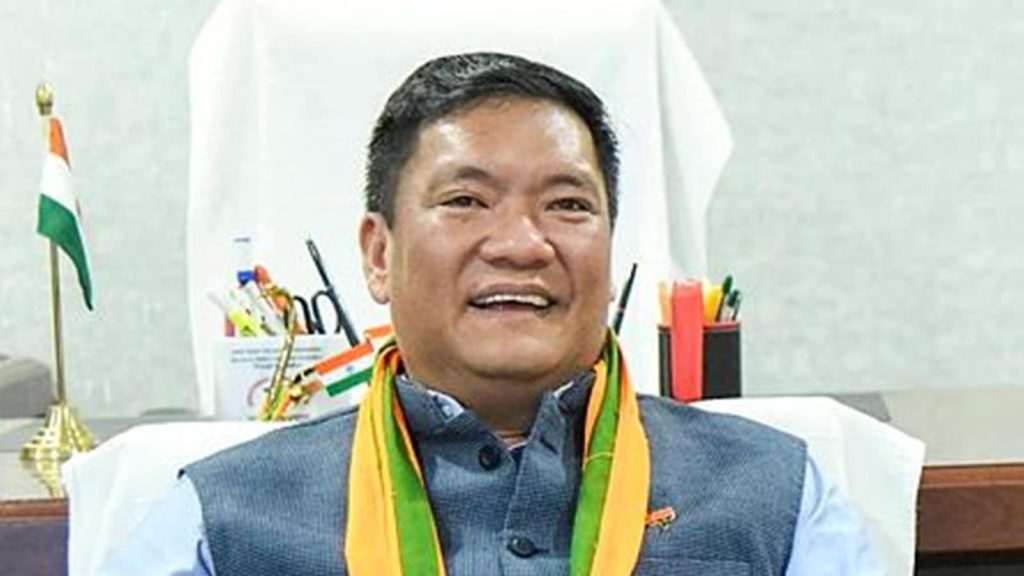
Concerns over alleged illegal immigration are increasingly shaping political discourse in Arunachal Pradesh, driven by its sensitive international borders, demographic anxieties, and fears over cultural dilution among indigenous communities. The issue has gained traction in public debate as state leaders and civil society groups call for stricter enforcement and verification measures.
Arunachal Pradesh, India’s strategically critical northeastern frontier state, is witnessing a renewed and increasingly vocal debate over illegal immigration — a subject that intertwines security concerns, demographic change, and identity politics in one of the country’s most sensitive border regions.
The conversation has intensified in recent months as local political leaders, student unions, and indigenous rights groups raise alarms about what they describe as “unchecked infiltration” from across international borders and neighboring states. While official data on illegal migration remains contested and often limited, the perception of demographic pressure has become a powerful political issue.
Strategic Border Location Fuels Sensitivities
Arunachal Pradesh shares a long and disputed border with China, alongside porous boundaries with Assam and other northeastern states. This geography makes it both strategically significant and administratively challenging.
Security analysts note that border sensitivity in the region has historically contributed to heightened vigilance over population movement. Even small-scale migration flows tend to be interpreted through a national security lens due to the state’s proximity to contested international boundaries.
This has allowed concerns over illegal immigration to gain political traction more easily than in many other parts of India.
Demographic Anxiety Among Indigenous Communities
A central driver of the current discourse is demographic anxiety among Arunachal’s indigenous tribal communities. The state is home to multiple ethnic groups with distinct languages, traditions, and land ownership systems that are closely tied to identity.
Community organizations argue that even modest changes in population balance can have long-term effects on political representation, land rights, and cultural preservation.
There is growing concern that migration—whether from neighboring Indian states or across international borders—could dilute indigenous identity and strain already limited resources such as land, employment, and public services.
Political Mobilisation Around the Issue
The issue has increasingly entered electoral and political narratives. Local parties and leaders have raised demands for stricter identification checks, updated resident verification systems, and stronger enforcement of inner-line regulations designed to control entry into the state.
Student bodies and civil society groups have also staged campaigns calling for protection of indigenous rights and more robust monitoring of settlement patterns.
At the same time, opposition voices caution against the politicisation of migration concerns, warning that exaggerated narratives could create social divisions or target vulnerable communities.
Role of Inner Line Permit System
Arunachal Pradesh operates under the Inner Line Permit (ILP) system, which restricts entry of non-residents into protected tribal areas. Despite this, enforcement challenges persist due to administrative gaps, documentation issues, and informal movement across regional boundaries.
Advocates for stricter controls argue that strengthening the ILP regime is essential to preventing unauthorized settlement. Critics, however, point out that over-reliance on permit systems alone may not address deeper structural issues such as economic migration and lack of local employment opportunities.
Economic Pressures and Labour Migration
Another factor contributing to the debate is labour mobility. Arunachal Pradesh, like several northeastern states, relies on migrant workers from other parts of India for construction, agriculture, and service-sector jobs.
While much of this migration is legal and documented, it often becomes entangled in broader public perceptions about demographic change. In periods of economic stress or rapid development projects, local concerns about job competition and land use tend to intensify.
This economic dimension has added complexity to what might otherwise be framed solely as a border security issue.
Security Narrative and National Context
The national discourse around border security and immigration has also influenced local conversations. Increased attention to cross-border infiltration in other parts of India has amplified sensitivities in Arunachal Pradesh, where geopolitical tensions with China remain a constant backdrop.
Security agencies maintain that monitoring population movement in frontier regions is essential not only for demographic reasons but also for intelligence and strategic stability.
This alignment of local concerns with national security narratives has contributed to the growing resonance of the issue.
Challenges in Data and Verification
One of the key difficulties in addressing the issue is the lack of reliable, updated demographic data at granular levels. Migration patterns in remote and mountainous regions are often difficult to track accurately, and official records may not capture informal movement.
This data gap allows space for competing narratives — with some groups arguing that illegal immigration is underreported, while others contend that the issue is overstated or politically amplified.
Balancing Identity Concerns and Rights
Human rights advocates caution that migration debates must be handled carefully to avoid stigmatization of communities, particularly in a region with a history of ethnic sensitivity.
They argue that while border control and legal enforcement are legitimate state functions, policies must ensure that legitimate residents and workers are not unfairly targeted or excluded.
The challenge, therefore, lies in balancing indigenous protections with constitutional rights and economic realities.
The issue of illegal immigration in Arunachal Pradesh is unlikely to fade in the near term. Instead, it is expected to remain a recurring theme in state politics, especially as development projects expand and migration pressures continue.
Future policy responses are likely to focus on strengthening documentation systems, improving border management, and refining the ILP framework, while also addressing local economic concerns that often underpin migration debates.
The rising prominence of illegal immigration concerns in Arunachal Pradesh reflects a broader pattern seen in frontier regions worldwide, where security geography, identity preservation, and labour mobility intersect. In such contexts, migration is rarely just a demographic issue—it becomes a proxy for anxieties about cultural continuity and political control. Sustainable policy responses will require more than enforcement mechanisms; they will depend on improving data accuracy, expanding local economic opportunities, and ensuring that identity concerns do not evolve into exclusionary or destabilizing politics.